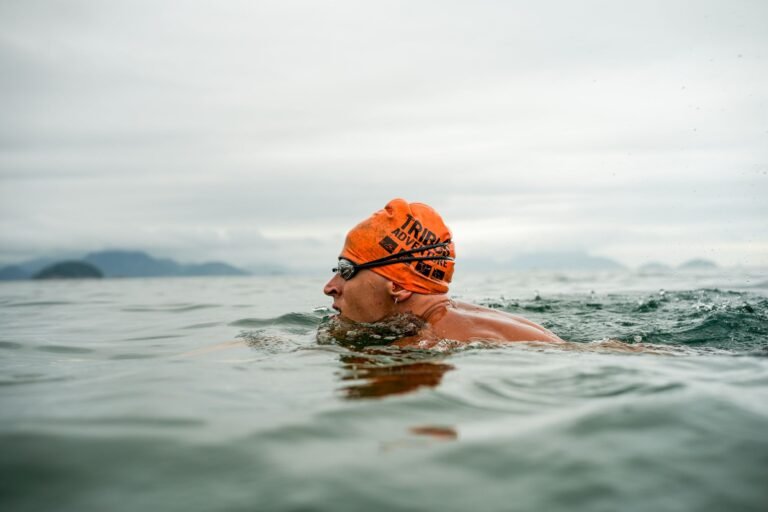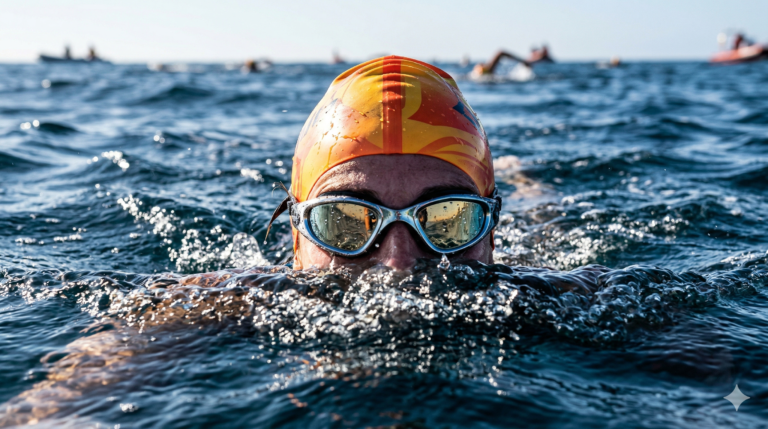
Where you line up can decide how the whole swim feels
A triathlon swim start looks simple from the beach: everyone moves toward the same buoy. In the water, it feels different. Feet flash in front of your face, someone cuts across your shoulder, your goggles take a knock, and the clean stroke you had in warm-up suddenly turns into survival swimming. The right start position does not make you fearless. It gives you enough space to swim like yourself.
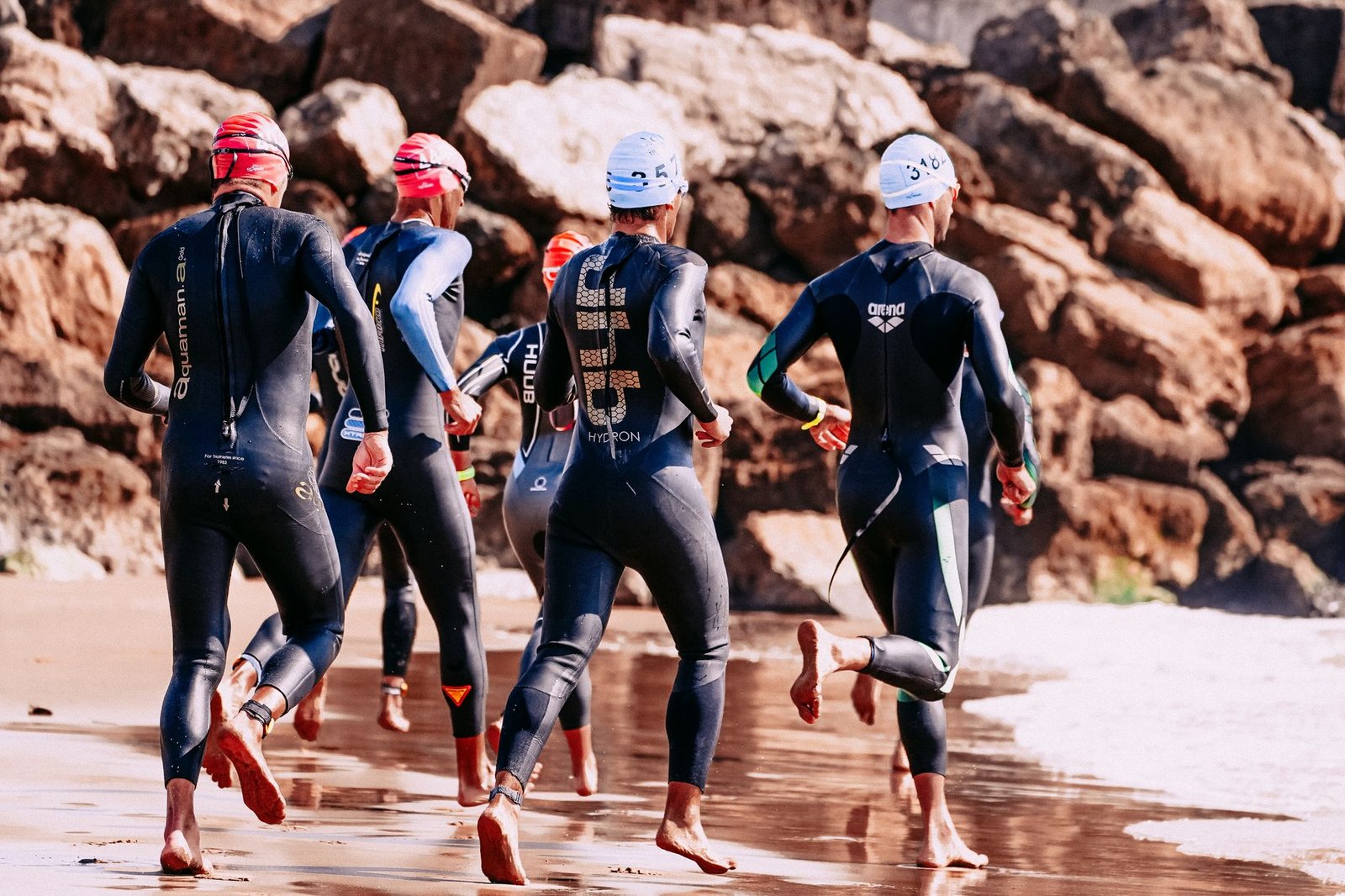
The quick answer
The best triathlon swim start position is the place where your expected pace, confidence, sighting ability and crowd tolerance match the people around you. Faster, confident swimmers can start closer to the front and inside line. Nervous or newer open-water swimmers usually swim better by starting slightly wide or a few rows back, where there is room to breathe, sight and settle into rhythm.
The mistake is choosing a start position based only on distance. The shortest line to the first buoy can become the slowest line if you spend the first three minutes fighting, stopping, swallowing water or fixing your goggles.
A good start position should help you answer three questions before the horn goes: Can I see? Can I breathe? Can I swim my own rhythm?
Start position is not about bravery
Many athletes treat the swim start like a courage test. They think moving toward the front proves they are ready. But the water does not reward optimism. It rewards honest placement.
If you start too far forward, faster swimmers will climb over you and you will spend energy defending space. If you start too far back, you may get boxed in behind slower swimmers and burn matches trying to pass. If you start too close to the inside buoy line, you may save distance but absorb the most contact. If you start too wide, you get cleaner water but must accept a longer route.
The four swim start zones
Most triathlon swim starts can be understood as four zones. The exact layout changes by race, but the trade-offs are similar.
Front and inside
This is the aggressive line. It is shortest, crowded and fast. Choose it only if you can hold pace immediately, sight under pressure and handle contact without changing your stroke.
Front but slightly wide
This is good for strong swimmers who want cleaner water but do not need the absolute shortest route. It can be a smart compromise when the first buoy is chaotic.
Middle pack
This is where many athletes belong, but it can be messy. You need patience, short sighting looks and the discipline not to sprint every time someone touches your feet.
Back or outside edge
This is not failure. It is often the best choice for beginners, nervous swimmers or athletes who need the first few minutes to settle before building effort.
How to choose your position before the race starts
Do not wait until everyone is already walking into the water. Decide your start strategy while you can still think clearly.
- Look at the first buoy. If it is close, expect a traffic jam. If it is far away, the pack has more time to stretch before the turn.
- Watch the wind and chop. If waves are coming from one side, the comfortable breathing side for many swimmers may change, and the pack may drift.
- Check the sun angle. If the first buoy sits in glare, the inside line may be harder to sight than it looks from shore.
- Listen to the athletes around you. If people near you are talking about swim times much faster than yours, move back. If they sound nervous and you are confident, move forward or wide.
- Decide your first two minutes. Your goal is not to win the swim at the horn. Your goal is to find water where your stroke can settle.
Match your start position to your swim personality
A calm swimmer and a powerful swimmer are not always the same person. Choose based on how you behave under contact, not just how fast you swim in the pool.
| Swimmer type | Best starting area | Why it works | Watch out for |
|---|---|---|---|
| Fast and contact-comfortable | Front third, closer to the direct line | You can hold position and avoid getting trapped behind slower swimmers. | Going out too hard just because the pack surges. |
| Fast but dislikes contact | Front third, slightly wide | You get cleaner water without starting behind athletes you will immediately pass. | Adding too much distance by drifting even wider after the start. |
| Steady middle-pack swimmer | Middle, on an outside shoulder | You can draft if useful but still escape if the group bunches up. | Getting pulled into another swimmer’s poor line. |
| Nervous open-water swimmer | Back third or outside edge | You get room to breathe, avoid early panic and build rhythm gradually. | Starting so far wide that sighting becomes confusing. |
| Strong cyclist/runner, weaker swimmer | Back-middle, clean side | You protect your day by exiting the swim calm instead of exhausted. | Chasing feet that force you above your comfortable swim effort. |
Inside line vs wide line: the real trade-off
The inside line is tempting because it looks efficient. But in triathlon, distance is not the only cost. Contact has a cost. Panic has a cost. Fogged goggles from stopping and treading water have a cost. A broken stroke costs more than a few extra meters.
The best line is often a diagonal compromise: start a little wide, sight early, then merge toward the buoy once the pack stretches out.
Your goggles matter more at the start than people think
A crowded start is when weak goggles reveal themselves. You do not need a luxury pair, but you do need a pair you trust when your heart rate jumps and the water gets busy.
- Seal stability: the goggles should stay sealed if someone brushes your shoulder or you lift to sight.
- Lens visibility: you should be able to pick up the first buoy quickly, especially in glare or low light.
- Strap position: the strap should sit securely under or over your swim cap setup without sliding.
- Anti-fog routine: the lens should be prepped before you enter the start chute, not while the race is already moving.
- Backup pair: if your main pair feels wrong during warm-up, you need a second option before the horn.
If you are still deciding what kind of goggles match your race conditions, start with the weather-based goggle choice guide, the open-water lens color guide, and the backup goggles race-day guide.
A simple race-morning positioning routine
Use this before every swim start, even if you already know the course. Conditions change, and the smartest position may not be the same one you would choose on a calm training day.
- Stand where you can see the first buoy. Notice if glare, waves or other swimmers block your view.
- Choose a tall backup landmark. A building, tree line, pier or hill can help when the buoy disappears behind chop.
- Seed yourself by honest pace. Do not stand with swimmers you cannot hold for the first 200 meters.
- Leave yourself an exit side. If the pack squeezes, you want one direction where you can move into cleaner water.
- Commit to a calm first minute. Fast hands and panic breathing make you feel busy, not efficient.
- Sight earlier than you think. Do not wait until the first buoy feels lost. Confirm direction while you are still relaxed.
What to do in the first 200 meters
The opening 200 meters can feel louder than the rest of the swim. That is normal. Your job is to avoid turning noise into bad decisions.
If someone hits your feet
Do not kick harder out of irritation. Hold your line, keep your kick controlled and let the swimmer decide whether to pass or settle behind you.
If your goggles take a knock
Keep moving if the seal holds. If water enters, roll slightly to breathe, reset with one hand if safe, and avoid a full stop unless you cannot see.
If you feel boxed in
Do not surge straight through the mess. Take two or three controlled strokes toward your open side, then resume rhythm.
If you cannot see the buoy
Use your backup landmark for one or two sighting cycles. The buoy often reappears once the wave or swimmer in front moves.
Common start-position mistakes
- Starting at the front because you are nervous. Nerves make some athletes move forward because they want the swim to be over sooner. That usually creates more contact, not less.
- Starting too wide without a plan to merge. Clean water is useful, but you still need a sighting plan that brings you back toward the course.
- Standing with friends who swim a different pace. Social comfort on the beach can become physical chaos in the water.
- Ignoring the first turn buoy. If the first turn comes quickly, the inside line may compress hard. If it is far away, the pack may spread before the turn.
- Changing goggles at the last second. Race morning is not the time to test an unfamiliar seal, strap or lens tint.
Training this before race day
You can practice start positioning even without a full race pack. The point is to learn how your body reacts when rhythm is interrupted.
The wide-start drill
Begin several meters away from your direct line, then sight and merge gradually toward the target. Learn how much extra distance still feels controlled.
The contact reset drill
With a training partner, swim side by side and allow light shoulder contact. Practice keeping stroke length and breathing calm.
The first-buoy drill
Swim 100 to 200 meters toward a buoy, turn around it, then settle immediately into steady pace. Do not let the turn break the next minute of swimming.
For more rhythm work, use the guide on sighting without losing rhythm and the article on why swimmers drift off course.
Final takeaway
Your triathlon swim start position should protect the swim you trained for. That might mean front and direct. It might mean front and wide. It might mean starting behind the chaos, breathing calmly, and passing later once the water opens.
The goal is not to prove anything in the first minute. The goal is to exit the water with your goggles sealed, your breathing under control, your line reasonably clean and enough composure left for the bike and run.
Related guides
Not sure which swim goggles are right for you?
Answer a few quick questions about where you swim, your face fit, lens needs, and comfort priorities.