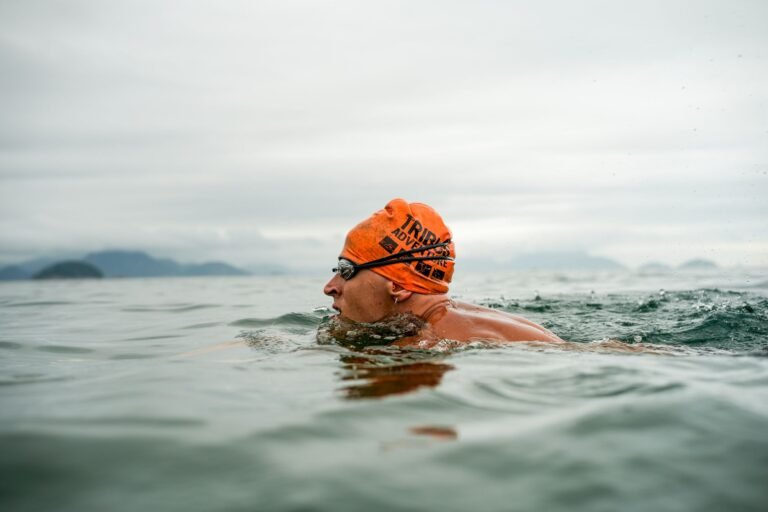
How tight should open water goggles be?
Tight enough to stay put when you sight, turn your head, and take a little chop to the face — but not so tight that the gasket collapses, your eyes ache, or you finish the warm-up with deep red rings before the swim has even started.
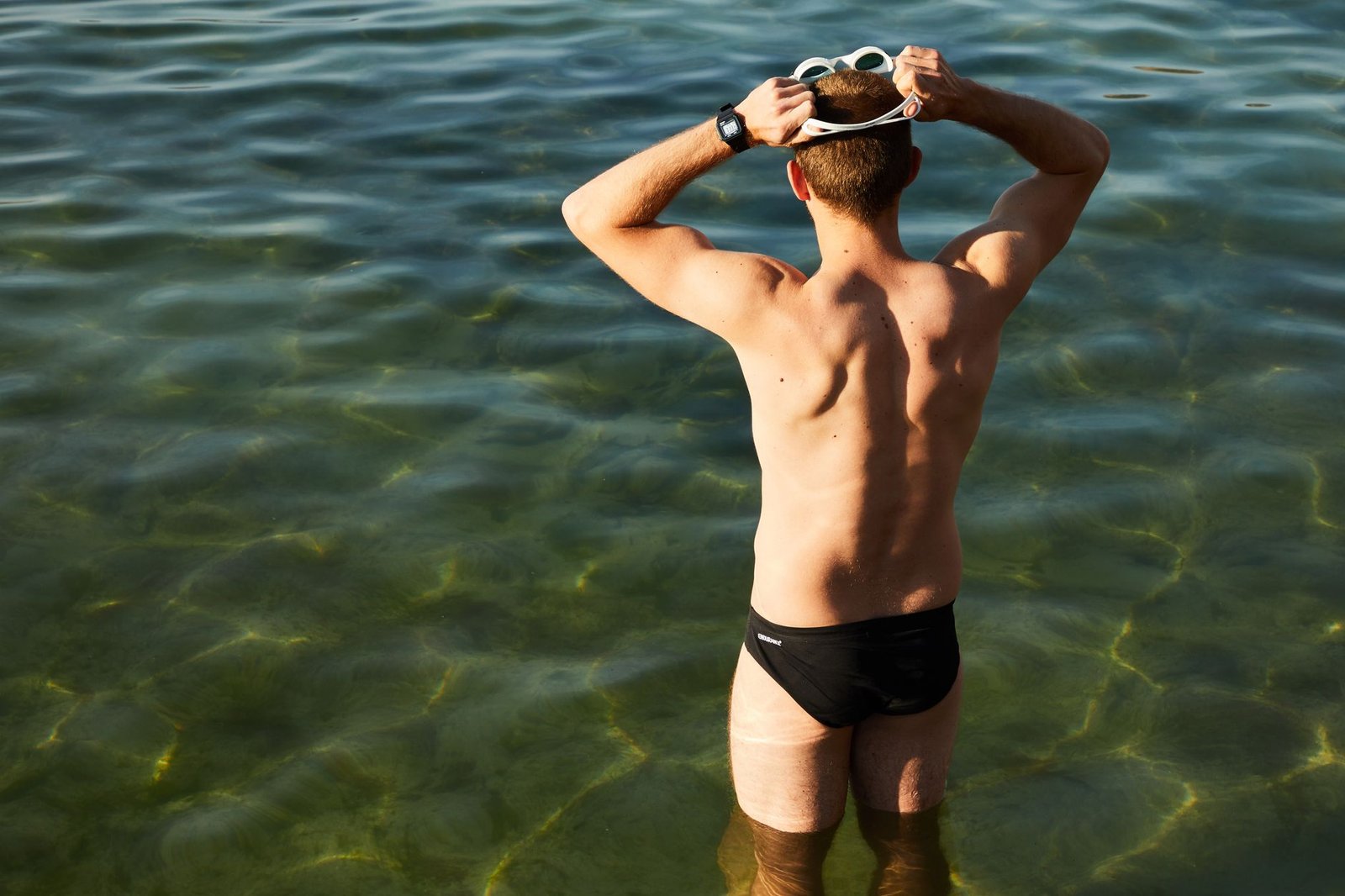
The quick answer
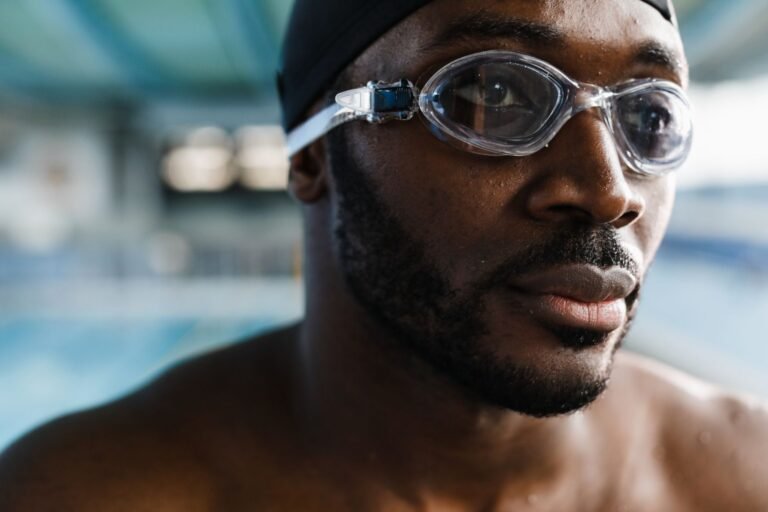
Open water goggles should feel secure, evenly sealed, and lightly compressed — not painfully tight. The gasket should create most of the seal against your face. The strap should hold that seal in place. If the strap has to be cranked down to stop leaks, the goggles probably do not match your face shape, cap position, or lens/gasket style.
A good fit has a quiet feeling. You press the goggles on, the seal lands evenly, the strap sits high enough to resist slipping, and you can blink and move your face without feeling like the frame is trying to tunnel into your eye sockets.
Open water adds more movement than a pool: sighting, waves, other swimmers, cold water, sunscreen and cap edges. That makes stability important, but stability is not the same as maximum tension.
Why tighter can actually leak more
The most common mistake is treating the strap like a clamp. You feel a little seep near the nose, so you pull the strap tighter. The leak stops for two minutes, then returns worse. By the end of the swim, you have pressure marks and still have water in one lens.
The gasket folds
Soft silicone needs room to sit flat. Too much strap pressure can wrinkle the gasket or roll the edge, especially near the nose bridge.
The frame pulls wide
On some faces, a tight strap pulls the outer corners back and opens a small channel near the inner eye.
Your face fights back
Squinting, jaw tension and forehead tension can change the seal. Pain makes you tense, and tension makes small leaks harder to diagnose.
The 60-second fit test before open water
Do this before a lake swim, ocean session, or race warm-up. It is simple, but it catches most bad setups before you are standing in waist-deep water trying to fix things with cold fingers.
- Start with a clean face. Wipe away sunscreen, moisturizer or sand around the eye area. Even a small slick patch can break the seal.
- Press the goggles on without the strap. You are not looking for a painful suction cup. You want an even, brief seal that does not immediately fall away on one side.
- Set the strap high on the back of the head. If the strap sits too low, it can pull the goggles downward and create leaks when you sight.
- Tighten one small step at a time. Stop as soon as the frame feels stable. Do not tighten until the discomfort becomes obvious.
- Move like you swim. Turn your head to both sides, look forward as if sighting, smile slightly, then relax your face. A race-day seal has to survive movement.
This test is more useful than simply pressing the goggles on in a mirror. Open water leaks usually show up when the body moves, not when you are standing still.
What “just right” feels like
| Fit signal | What it usually means | Adjustment to try |
|---|---|---|
| Light, even pressure around both eyes | The gasket is doing its job | Leave it alone; do not tighten just because race nerves want you to. |
| Deep red marks after a short swim | Too much pressure or gasket too narrow | Loosen slightly, check strap height, or try a softer/wider gasket style. |
| Leak near the nose | Bridge fit, gasket angle or face width mismatch | Try a different nose bridge if available; avoid simply pulling the strap tighter. |
| Leak when sighting | Head lift changes the seal or strap sits low | Move strap higher, reduce chin lift, and test with your normal sighting motion. |
| Goggles feel secure but fog quickly | May be heat/moisture, not fit | Use an anti-fog routine and avoid touching the inside of the lens. |
| One lens always leaks | Asymmetry in face/gasket contact | Reset from scratch; adjust strap evenly; consider a different frame shape. |
Open water strap position matters more than most swimmers think
In a pool, a slightly low strap may still feel fine. In open water, the moment you sight forward or take a splash across the face, the goggles can shift. A higher strap line usually gives a more stable pull angle.
- Split straps should cradle the back of the head. One band slightly higher, one slightly lower, so the goggles resist both upward and downward movement.
- Under-cap can feel more secure for racing. Many triathletes put the goggle strap under the swim cap so the strap is harder to knock loose in a crowded start.
- Over-cap is easier to adjust in training. For relaxed lake sessions, wearing the strap over the cap makes mid-swim adjustment simpler.
- Long hair changes the strap line. A bun or ponytail can push the strap too high or too low. Test the exact hair setup you will use on race day.
For race-day setup, pair this with the open water goggles checklist before race.
Fit changes when the water gets cold, salty, or choppy
A pair that feels perfect at the indoor pool can behave differently in a cold lake or rough ocean. Your face feels tighter, your breathing changes, and small waves hit the lens from odd angles.
Cold water
Cold water can make your face feel less relaxed. Start with a normal strap setting, then give yourself a few minutes before deciding the goggles are too loose.
Saltwater
Saltwater sting makes every tiny leak feel bigger. Rinse the gasket after ocean swims so dried salt does not roughen the seal for the next session.
Choppy water
Chop exposes unstable strap position. If the goggles lift when waves hit, move the strap first before adding tension.
Sunscreen
Sunscreen migration is a quiet seal killer. Keep oily sunscreen away from the gasket contact area and recheck fit after applying it.
When tightness is not the real problem
If you keep adjusting tighter and tighter, pause and diagnose the pattern. The location and timing of the leak usually tells you more than the feeling of looseness.
- Leak near the inner eye: often a nose bridge or gasket width issue.
- Leak near the outer eye: sometimes caused by the frame being pulled back too aggressively.
- Leak only when breathing to one side: check head rotation and facial tension, not just strap tightness.
- Leak after applying sunscreen: clean the gasket and the skin where the seal lands.
- Leak after 20 minutes: the strap may be slipping, or the gasket may not match your eye socket shape once your face relaxes.
If the issue is persistent water entry rather than pressure, read Why Open Water Goggles Leak. If the issue is face shape, compare options in our small-face goggles guide.
Race morning: do not make the strap tighter because you are nervous
This is the part many swimmers learn the hard way. On race morning, adrenaline makes every piece of gear feel suspicious. You tug the strap one notch tighter “just to be safe,” then ten minutes into the swim your eye sockets hurt and the seal starts acting strange.
- Put the goggles on before the start and leave them for a few minutes to feel pressure points.
- Look forward twice as if sighting the first buoy.
- Check that the cap has not pushed the strap down.
- Bring a backup pair if the swim is important, especially for triathlon or cold-water events.
- If you adjust, adjust in tiny steps. One big pull often creates a new problem.
The bottom line
Your goggles should feel secure enough that you can sight, breathe, and take a small wave without thinking about them. They should not feel like a test of pain tolerance. The best strap setting is usually the lightest tension that keeps an already-good seal stable.
If you remember one thing, make it this: the gasket creates the seal; the strap protects it. When you ask the strap to do the gasket’s job, comfort drops, leaks get confusing, and race-day confidence disappears quickly.