Buying Guide
Choosing the right open water swimming goggles starts with fit, light conditions, face shape, comfort needs, and whether you are training, racing, or swimming casually. Price matters less than choosing a pair that matches how and where you swim.
This guide explains how to choose open water goggles based on fit, seal, lens type, anti-fog performance, field of view, comfort, and swim conditions.
If you already know your priorities and want to compare options by condition, use the Open Water Goggles Finder.
Quick Answer: What Makes Good Open Water Goggles?
Good open water goggles should seal comfortably, stay clear, provide enough visibility for sighting, protect your eyes from UV exposure, and match the light conditions you usually swim in.
Best for Bright Sun
Choose polarized, mirrored, or smoke lenses to reduce glare and brightness during sunny ocean, lake, or outdoor pool swims.
Best for Low Light
Choose clear or lightly tinted lenses for cloudy days, early morning swims, indoor pools, or shaded water.
Best for Sighting
Choose wide-view goggles if you need better peripheral awareness, easier buoy sighting, and more confidence in open water.
Open Water Goggles Buying Checklist
Before buying, use this checklist to narrow down what matters most for your type of swimming.
| Feature | Why It Matters | Best Choice |
|---|---|---|
| Fit and Seal | Prevents leaking and reduces the need to over-tighten the strap. | Soft gasket, correct nose bridge, stable frame |
| Field of View | Helps you sight buoys, waves, other swimmers, and shorelines. | Wide-view or curved lens design |
| Lens Type | Controls brightness, glare, and visibility in different conditions. | Polarized, mirrored, clear, smoke, or photochromic |
| Anti-Fog | Helps keep vision clear during long swims and race starts. | Quality coating plus proper care |
| Comfort | Important for long-distance swims and repeated training sessions. | Soft silicone gasket and balanced pressure |
| UV Protection | Protects your eyes during outdoor swimming. | UV-protective outdoor swim lenses |
| Strap Adjustment | Keeps the goggles secure without slipping or pulling hair. | Split strap or easy side adjustment |
Step 1: Start With Fit and Seal
Fit is the most important part of choosing swim goggles. Even the best lenses and most advanced anti-fog coating will not help if the goggles leak or feel painful.
A good pair of goggles should seal gently around your eyes without needing extreme strap tension. The strap should hold the goggles in place, not force a bad gasket shape to work.
Signs of a Good Fit
- The goggles hold light suction without the strap.
- The gasket sits evenly around the eye socket.
- There is no sharp pressure on the nose bridge.
- The seal stays stable when you move your head.
- You do not need to over-tighten the strap.
Signs of a Poor Fit
- Water leaks near the inner corners of the eyes.
- The goggles leave deep marks after short use.
- The frame sits too wide on your face.
- The nose bridge pinches or gaps.
- You need painful strap tension to stop leaking.
If most adult goggles leak on you, read our guide to triathlon goggles for small faces.
Step 2: Choose the Right Lens Type
Lens type has a major effect on comfort and visibility. The best lens for bright ocean swimming may be too dark for cloudy mornings, while a clear pool lens may feel harsh in direct sun.
| Lens Type | Best For | Main Benefit | Possible Drawback |
|---|---|---|---|
| Clear | Indoor pools, cloudy days, early morning | Maximum brightness and visibility | Poor glare protection outdoors |
| Smoke / Tinted | General outdoor swimming | Reduces brightness | Less specialized than polarized lenses |
| Mirrored | Bright sun and outdoor racing | Reduces brightness and looks race-focused | Can be too dark in low light |
| Polarized | Ocean glare, sunny lakes, outdoor pools | Reduces surface glare from water | Not ideal for indoor or low-light swims |
| Photochromic | Changing light conditions | Adapts tint as light changes | Usually more expensive |
For a deeper comparison, read our guide to photochromic vs polarized swim goggles.
Step 3: Match Goggles to Your Swim Environment
Ocean Swimming
For ocean swimming, prioritize wide visibility, glare control, and a secure seal that stays stable in waves. Polarized or mirrored lenses are useful in bright conditions.
Lake Swimming
Lakes can have strong surface glare on sunny days and low visibility in cloudy conditions. Choose lens tint based on your usual time of day.
Triathlon
Triathlon goggles should be secure, easy to adjust, and reliable under race pressure. Choose lens tint based on race start time and expected sun.
Outdoor Pool Training
For outdoor pools, smoke, mirrored, or polarized lenses can reduce brightness. For indoor pools, clear lenses are usually better.
Step 4: Think About Field of View
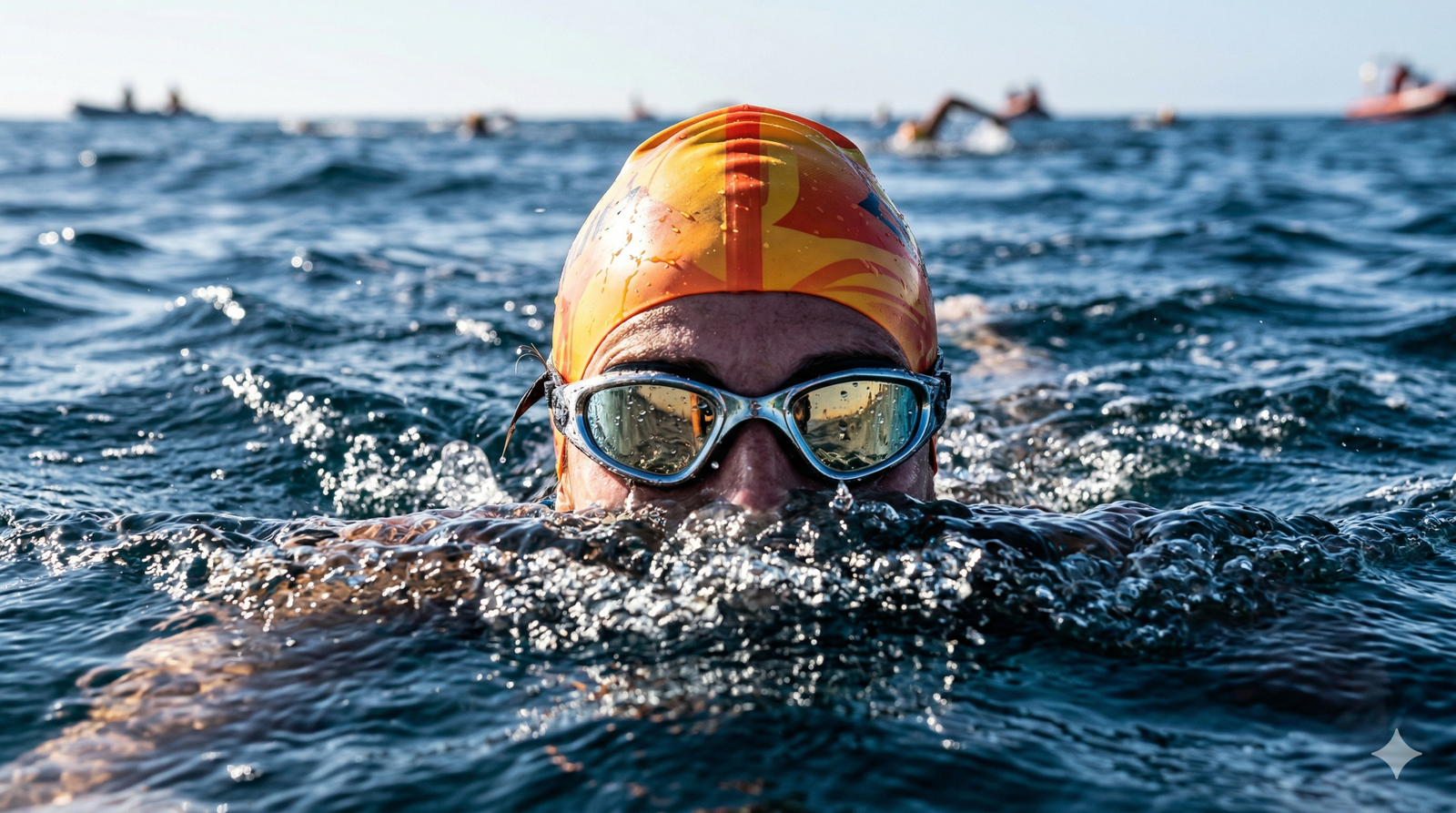
Open water swimmers need to see more than the line at the bottom of a pool. You may need to watch for buoys, boats, waves, other swimmers, shorelines, and changing conditions.
Wide-view goggles can make open-water swimming feel more comfortable and less disorienting. However, some swimmers still prefer compact race goggles because they feel faster and more secure.
Wide-View Goggles Are Best If You Want:
- Better peripheral awareness
- Easier sighting
- A more open visual feel
- More confidence in ocean or lake water
- A comfort-first open-water fit
Compact Race Goggles Are Better If You Want:
- A low-profile fit
- A secure racing feel
- Less bulk on the face
- A hydrodynamic shape
- A pool-to-triathlon crossover design
Step 5: Do Not Overlook Anti-Fog Performance
Fogging is one of the most common problems in open water. It can make sighting harder, increase anxiety, and interrupt your rhythm during long swims or races.
Good anti-fog performance depends on the lens coating, fit, seal, humidity, water temperature, and how you care for the goggles. Even premium goggles can fog if the inner lens coating is damaged.
To protect anti-fog coating:
- Rinse goggles gently with cool fresh water after swimming.
- Do not rub the inside of the lenses unless the manufacturer says it is safe.
- Let goggles air dry away from direct sunlight.
- Store them in a protective case.
- Use anti-fog spray only after the factory coating starts to fade.
See our guide to the best anti-fog swim goggles for open water.
Step 6: Choose Based on Your Face Shape
Face shape matters more than many swimmers realize. A goggle that works perfectly for one swimmer may leak badly on another.
| Face / Fit Need | What to Look For | Avoid |
|---|---|---|
| Small or narrow face | Smaller gasket, adjustable nose bridge, custom fit | Very wide adult frames |
| Wide face | Flexible frame, wider gasket, soft silicone | Very compact racing goggles |
| Sensitive eye socket | Soft gasket and comfort-focused design | Hard, narrow race goggles |
| Prominent nose bridge | Adjustable bridge or flexible frame | Fixed narrow bridge designs |
| Leak-prone fit | Custom-fit or suction-tested gasket shape | Over-tightening a poor match |
How to Match Open Water Goggles to Your Use Case
| Use Case | Recommended Type | Example Guide |
|---|---|---|
| Bright ocean swims | Polarized wide-view goggles | Best Polarized Goggles |
| Fog-prone swimmers | Premium anti-fog goggles | Best Anti-Fog Goggles |
| Small or narrow faces | Custom-fit or narrow race goggles | Best Goggles for Small Faces |
| Ocean sighting | Wide-view goggles | Best Wide View Goggles |
| Nearsighted swimmers | Prescription or optical goggles | Best Prescription Goggles |
Common Mistakes When Buying Open Water Goggles
Avoid these mistakes:
- Choosing goggles only because they look fast.
- Buying dark lenses for low-light swimming.
- Ignoring fit and trying to fix leaks by over-tightening.
- Using indoor pool goggles for bright ocean conditions.
- Rubbing the inside lens and damaging anti-fog coating.
- Using brand-new goggles for the first time on race day.
- Assuming one pair will be perfect for every condition.
Open Water Goggles Setup Before a Swim
Before You Enter the Water
- Check the seal with a gentle suction test.
- Adjust the strap before the swim starts.
- Make sure the lens tint matches the light.
- Rinse or treat the lens according to the manufacturer’s instructions.
- Carry a backup pair for race day or long events.
After the Swim
- Rinse with fresh water.
- Do not rub the inner lens.
- Let the goggles air dry.
- Store them in a case.
- Keep them away from heat and direct sunlight when not in use.
Frequently Asked Questions
What should I look for in open water swimming goggles?
Look for a comfortable seal, enough field of view for sighting, good anti-fog performance, UV protection, and a lens tint that matches the conditions in which you usually swim.
Are polarized goggles good for open water?
Yes. Polarized goggles are useful for bright open-water swims because they reduce glare from sunlight reflecting off the water surface.
Should open water goggles be clear or tinted?
Clear lenses are better for low light, cloudy days, and indoor pools. Tinted, mirrored, or polarized lenses are better for bright outdoor conditions.
Why do my open water goggles keep leaking?
Leaking usually happens because the gasket does not match your face shape, the nose bridge is wrong, or the goggles are over-tightened. Try a different fit instead of simply tightening the strap.
Are wide-view goggles better for open water?
Wide-view goggles are often better for open water because they improve peripheral awareness and make sighting easier. Some racers still prefer compact goggles for a faster feel.
How many pairs of open water goggles should I own?
Many swimmers benefit from owning at least two pairs: one clear or light-tint pair for low light, and one polarized or mirrored pair for bright outdoor swims.
Final Verdict
To choose the right open water swimming goggles, start with fit and seal. Then choose lens type based on light conditions, field of view based on your sighting needs, and anti-fog performance based on how long and how often you swim.
For bright outdoor swims, consider polarized or mirrored lenses. For low light, choose clear or lightly tinted lenses. For ocean swimming and beginner open-water confidence, wide-view goggles can make the experience easier and more comfortable.
Start With These Guides
If you are ready to compare specific models, start with our main buying guides below.