Should your open water goggles sit over or under your swim cap?
At the pool, it barely matters. In open water, it can decide whether you reset your goggles calmly on shore or spend the first 200 meters of a race swimming with one lens half flooded. The right answer depends on whether you are training, racing, wearing one cap or two, and how crowded the start will be.
Affiliate disclosure: This guide may contain affiliate links. If you buy through these links, OpenWaterGoggles.com may earn a small commission at no extra cost to you. Our recommendations stay focused on practical open-water use.
The quick answer
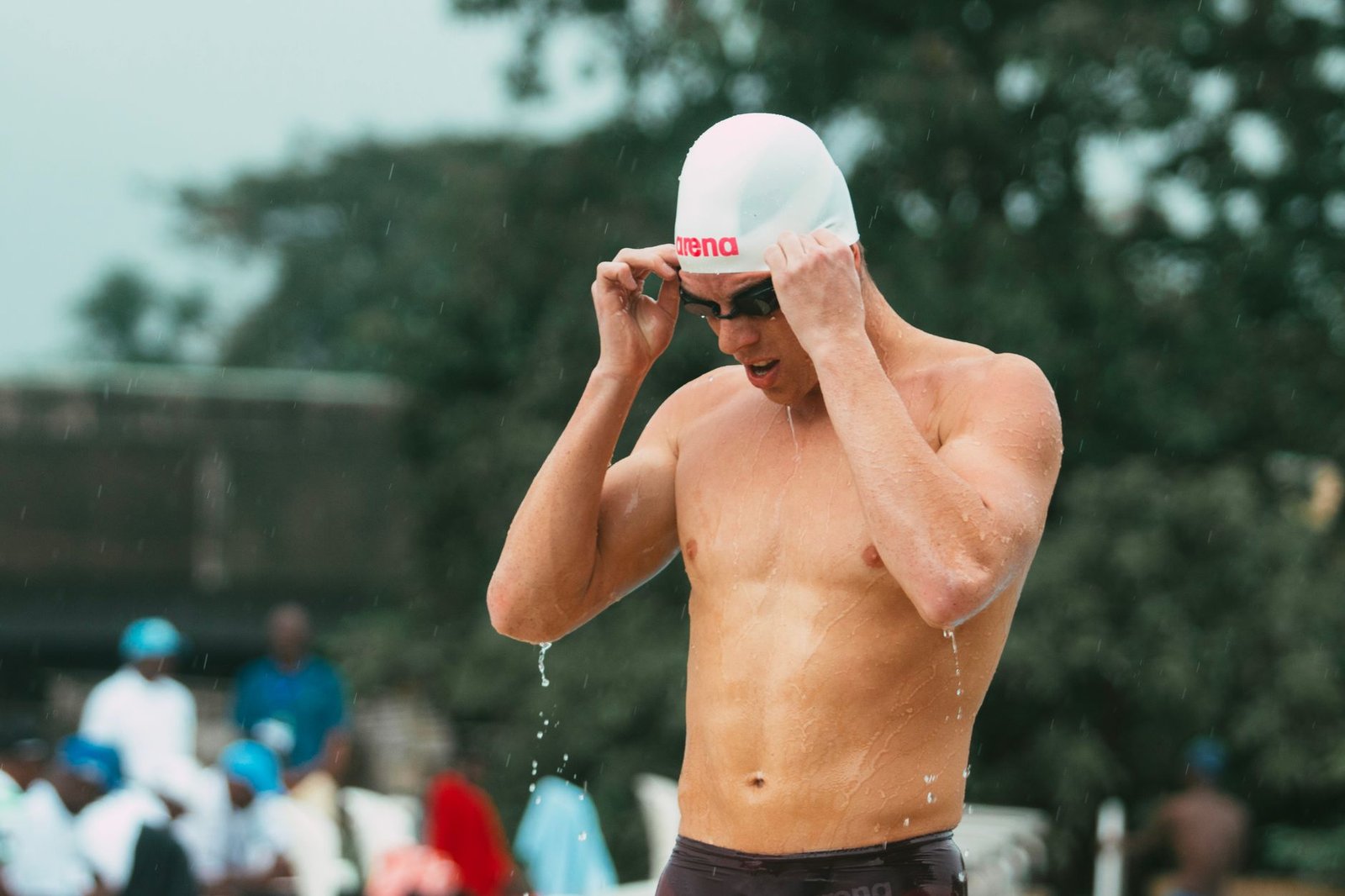
For normal open-water training, wearing goggles over your swim cap is usually easier because you can adjust the strap, clear fog, or reseat a leak without removing the cap. For triathlon races and crowded mass starts, many swimmers wear the goggles under the cap so the strap is less likely to be kicked, pulled, or knocked loose. The most secure race setup is often cap, goggles, then a second cap over the strap.
The mistake is thinking one rule works for every swim. A quiet lake session, a cold-water neoprene cap swim, and a crowded triathlon start are not the same problem. You are choosing between two priorities: easy adjustment and strap security.
Why this small detail matters more in open water
In a pool, a bad setup is annoying. You stop at the wall, fix it, and keep going. In open water, there is no wall. A loose strap can become a leak. A leak can become fog. Fog can turn into poor sighting, and poor sighting can pull you off course before the swim has really started.
The cap also changes how the goggle strap behaves. Silicone caps are smooth. Neoprene caps are thicker. Race caps can be tight and slippery. If your strap sits on top of the cap, it is easier to adjust but also easier to disturb. If the strap sits under the cap, it is more protected but harder to fix once you are in the water.
Option 1: goggles over the swim cap
This is the simplest setup and the one most swimmers naturally use during training. Put the cap on first, then place the goggles over the cap. The strap stays visible and easy to move.
Best for
- Training swims where adjustment matters more than strap protection.
- Solo lake swims or relaxed group sessions.
- Testing new goggles, new lens tints or new strap positions.
- Swimmers who often need to clear fog or reseat a lens.
Watch out for
- A strap that slides up the back of a slippery cap.
- Goggles being bumped loose in a crowded start.
- Hair or cap wrinkles under the gasket creating small leaks.
- Over-tightening because the strap feels less anchored.
Over-the-cap is also the best way to test goggles before committing to a race setup. If a pair leaks when it is easy to adjust, it will not magically become reliable just because you bury the strap under a cap.
Option 2: goggles under the swim cap
This setup protects the strap. Put the goggles on first, then pull the cap over the strap so the cap holds it in place. It is common in triathlon because the first few minutes of a swim can be messy: elbows, hands, feet, nervous swimmers and sudden contact.
Best for
- Triathlon races with close contact at the start.
- Swimmers worried about goggles being knocked off.
- Mass starts, beach starts and buoy turns with heavy traffic.
- Race caps that must stay visible over your own cap or goggles.
Tradeoffs
- Harder to adjust once the cap is in place.
- Can create pressure if the cap pulls the strap too low.
- Can disturb the seal when you stretch the cap over the goggles.
- Not ideal if your goggles fog often and need frequent resets.
The triathlon compromise: cap, goggles, second cap
Many race-day swimmers use a layered setup: one cap on the head, goggles over that cap, then the race cap over the goggle strap. This gives you a smoother surface under the strap while still protecting the strap from being pulled off.
- Put on your first cap. This can be your personal silicone cap or thermal cap, depending on conditions.
- Place goggles over the first cap. Set the gasket gently, then position the strap where it feels stable without being over-tight.
- Pull the race cap over the strap. Do this slowly so you do not move the lenses or roll the gasket.
- Run one final seal check. Press the lenses lightly, blink, look left and right, then sight forward once before entering the water.
This is not required for every race, but it is a reliable option when the swim start is crowded or the course has a lot of contact around the first buoy.
Which setup should you use?
| Situation | Better setup | Why it works |
|---|---|---|
| Solo open-water training | Goggles over cap | Easy to adjust, clear fog, loosen pressure or test a new fit. |
| Small group lake swim | Usually over cap | Contact risk is low, so comfort and adjustability matter more. |
| Triathlon rolling start | Under cap or double-cap setup | Extra strap security helps if swimmers bunch together near the first buoy. |
| Mass start or beach start | Double-cap setup | Protects the strap while keeping the goggles seated before impact and chop. |
| Cold-water neoprene cap | Test both before deciding | Thicker caps can change strap angle and pressure more than silicone caps. |
| Goggles fog easily | Over cap for training, tested setup for race | You need access to reset them, but race-day security still matters. |
A practical test before your next race
The best setup is not the one that sounds fastest. It is the one that stays boring when the water gets busy. Use one short training swim to test your exact cap, goggles and lens choice.
- Test over the cap for 10 minutes. Swim easy, sight every 6 to 10 strokes, and notice whether the strap moves.
- Stop and change to under the cap. Do not adjust the lenses once the cap is on. Swim again and notice pressure, leaks and comfort.
- Practice one fast reset. If the goggles leak or fog, see how long it takes to fix them with each setup.
- Finish with a race-style effort. Swim 2 to 3 minutes harder with sighting, chop if available, and a few turns around a buoy or landmark.
Common mistakes that cause leaks or panic
- Changing the setup on race morning. If you trained over the cap, do not suddenly bury the strap under a race cap without testing it.
- Pulling the cap over the goggles too aggressively. This can roll the gasket or shift the nose bridge just enough to create a leak.
- Using the cap to fix a bad fit. A cap can protect the strap, but it cannot turn the wrong goggle shape into the right one.
- Setting the strap too high. A high strap may slide up the back of the head, especially on a smooth silicone cap.
- Setting the strap too low. A low strap can pull the goggles into the eye sockets and create pressure marks.
- Ignoring lens and fog issues. Strap security is useless if you cannot see the buoy. Use your lens choice and anti-fog routine together.
How this connects to leaks, fogging and sighting
Cap placement rarely works alone. It affects the whole goggle system. If the cap pulls the strap down, the gasket pressure changes. If the strap moves during sighting, a small leak can start. If water enters one lens, fogging often follows. Then sighting gets worse, and suddenly a minor setup issue becomes a navigation problem.
If your goggles leak
Start with fit and strap tension before blaming the cap. Read why open water goggles leak and how tight open water goggles should be.
If you lose direction
Make sure your setup lets you sight without lifting your head too high. Pair this with sighting without losing rhythm and why you swim off course.
Final recommendation
For training, wear your goggles over the cap unless you have a specific reason not to. It keeps adjustment simple and makes it easier to learn what the goggles are doing. For racing, especially triathlon, test an under-cap or double-cap setup before race day. If it feels stable, comfortable and boring after several hard sighting efforts, use it.
The best open-water setup is not the most complicated one. It is the one that lets you forget about your goggles after the first stroke.
Related guides