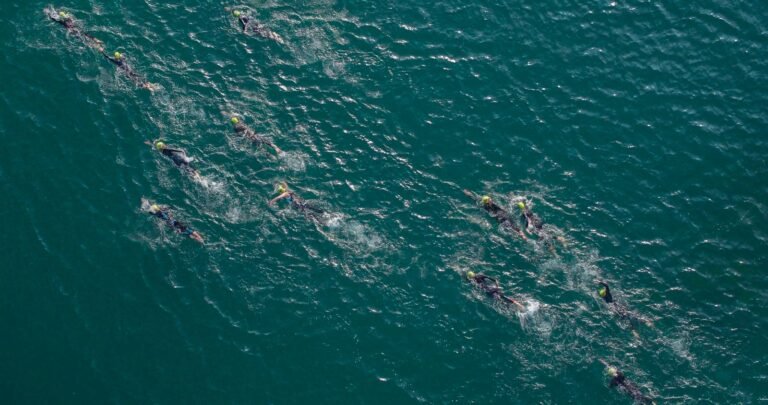
The same goggles can feel perfect at 7 a.m. and wrong by 9 a.m.
Open water is never just “bright” or “dark.” The sky changes, the water color changes, wind changes the surface, and the angle of the sun can turn an easy sighting line into a wall of glare. Good goggle choice is not about owning the most expensive pair. It is about matching the day you actually have.
The quick answer
Weather should change your goggle choice because it changes three things at once: how much light reaches your eyes, how clearly you can sight, and how stable your goggles need to feel in moving water. Use darker mirrored or polarized lenses for hard sun and glare, clear or light lenses for cloud, rain and dawn, wider-view goggles for chop or crowded water, and a second backup pair when the forecast is uncertain.
The mistake many swimmers make is choosing goggles at home based on the forecast icon. A sun symbol does not tell you the sun angle. A cloud symbol does not tell you whether the water will be flat or wind-streaked. A race email saying “calm conditions expected” does not tell you what the first turn buoy will look like when two hundred swimmers are kicking between you and the horizon.
Instead of asking, “What are the best open water goggles?” ask, “What will I need to see during the first ten minutes of this swim?” That shift makes the choice more practical and less random.
Start with the sky, then look at the water
Most swimmers choose lens tint by looking upward. That helps, but it is incomplete. The sky tells you how much light is available. The water tells you how that light will behave.
The sky controls brightness
Hard sun, heavy cloud, rain and fog all change how much light gets through the lens. This is where clear, amber, smoke, mirrored and photochromic choices matter.
The water controls difficulty
Flat lake water, brown river water, ocean chop and low-angle glare all change how easy it is to recognize a buoy or shoreline. This is where field of view, contrast and lens darkness become more important.
For a deeper lens-only breakdown, read the open water goggle lens color guide. This article looks at the bigger decision: how weather changes the entire setup.
Weather-by-weather goggle choices
Use this table as a race-morning shortcut. It is not a rigid rulebook. It is a way to avoid the most common mismatch: wearing the pair that worked last weekend when today’s light and water are completely different.
| Condition | What changes in the water | Best lens direction | Fit or frame priority | Common mistake |
|---|---|---|---|---|
| Hard midday sun | High brightness, surface sparkle, eye fatigue over longer swims. | Mirrored, smoke, polarized or darker photochromic. | Comfort matters because squinting makes pressure feel worse. | Using clear lenses and spending the whole swim tense around the eyes. |
| Low sun at dawn or sunset | Glare comes straight across the water and can hide the buoy. | Polarized, bronze, amber-smoke or moderate mirrored lens. | Wide view helps you catch landmarks beside the glare line. | Choosing a lens that is too dark before the sun actually rises. |
| Heavy cloud | Lower contrast, flatter water color, buoys may look dull. | Clear, light smoke, amber or light photochromic. | Field of view and anti-fog are more important than glare control. | Wearing mirrored lenses out of habit and making the course feel dim. |
| Rain | Water drops, darker sky, more frequent sighting interruptions. | Clear or light tint unless the rain passes into bright sun. | Secure strap and stable seal matter because you may lift to sight more often. | Rubbing the inside lens after rain and damaging anti-fog coating. |
| Wind and chop | Buoys disappear between waves, breathing side may become limited. | Moderate tint matched to light; avoid lenses that reduce contrast too much. | Stable seal, wider view and a strap that will not creep. | Prioritizing lens color while ignoring whether the goggles stay planted. |
| Foggy or misty morning | Landmarks blur, shorelines fade, air-water temperature can trigger lens fog. | Clear or amber. | Anti-fog routine and quick landmark recognition matter most. | Expecting a dark race lens to work because the day may brighten later. |
| Changing forecast | The swim may begin dim and finish bright, or the reverse. | Photochromic or bring two pairs: one light, one darker. | Backup pair should already be tested, not brand new. | Trying to solve every condition with one extreme lens. |
The three-part decision framework
When conditions are messy, simplify the choice. Do not start with brand, price or what another swimmer is wearing. Start with the actual swim environment.
This is why two swimmers in the same race may make different choices. A front-pack triathlete comfortable in chaos may choose a low-profile mirrored racing goggle. A newer open water swimmer on the same beach may be better with a wider, more forgiving pair that makes the course feel less claustrophobic.
Sunny does not always mean darkest lens
Bright sun makes swimmers reach for the darkest mirrored lens they own. Sometimes that is exactly right. But sunlight in open water is not uniform. It moves across the course. It changes when you turn around a buoy. It reflects differently on flat water than on chop.
For long ocean swims or sunny lake races, glare control matters. A mirrored or polarized lens can reduce eye strain and make the surface feel calmer. But if the course has shaded sections, murky water or an early start, a lens that is too dark can make every sighting look feel delayed. You lift, hesitate, look again, and the rhythm breaks.
For product-specific glare options, use the sunny open water goggles guide and the polarized goggles roundup.
Cloudy water needs contrast, not drama
Overcast days can feel easy from shore. There is no harsh sun, no squinting and no obvious glare. But once you swim out, the world can flatten. Gray sky, dark water and dull buoy colors blend together, especially when you are breathing hard and only getting a half-second look.
For these swims, clear, amber and light smoke lenses are usually safer than dark mirrored lenses. The goal is not to make the world look stylish. The goal is to recognize shapes quickly: buoy, kayak, pier, tree line, building, shoreline break.
- Use clear or light lenses when the sky is gray and the water is dark.
- Choose amber when you want more contrast without making the view too dim.
- Keep mirrored lenses for days when glare is the main problem, not low contrast.
- Test the lens while looking toward the actual course, not just at your feet on the beach.
If your local water is often dark, shaded or muddy, also read the guide to goggles for murky open water swimming.
Wind and chop change the fit requirement
On calm water, you can get away with goggles that are merely comfortable. In chop, comfort is not enough. You need a seal that stays predictable when your head angle changes, a strap that does not creep, and enough field of view to catch the buoy when a wave blocks your first sighting look.
The lens still matters, but the frame becomes more important than swimmers expect. In rougher water, you may breathe less on one side, sight more often, lift your head slightly higher and get hit by small waves during the recovery. A pair that felt perfect in the pool can start to leak at the outer corner because your face and head position are changing constantly.
Stable seal
Look for a gasket that seals without needing painful strap tension. Over-tightening often makes rough-water leaks worse.
Usable side vision
Wide view helps when the buoy disappears behind chop and you need to catch a landmark off to the side.
Tested strap setup
Do not experiment with strap placement on race morning. Know whether you prefer straps over or under the cap.
For a rough-water buying angle, see best goggles for rough ocean swimming. For technique, pair this with sighting without losing rhythm.
Rain and fog make anti-fog care more important
Rain itself is not always the problem. The bigger issue is what swimmers do when rain, mist or cold air makes visibility feel messy. They touch the lens. They rinse aggressively. They rub the inside surface with a towel. Then the anti-fog coating that survived weeks of training gets damaged ten minutes before the start.
On wet race mornings, keep the routine boring. Rinse only if needed. Let the inside lens stay protected. Use anti-fog before the swim, not after panic has already started. If drops collect on the outside, dip the goggles briefly and let water sheet across the lens instead of rubbing.
- Prepare the lens before leaving transition. Do not wait until you are standing in a crowd with cold hands.
- Check the view toward the first buoy. The parking lot may look clear while the course line looks gray and flat.
- Avoid touching the inside lens. Most race-morning lens problems get worse after swimmers start wiping.
- Keep a dry case or bag for the backup pair. A second pair is less useful if it is already wet, scratched or fogged.
For a full routine, use the race-morning goggle routine and the guide on how to stop goggles fogging in open water.
When the forecast is uncertain, bring two pairs
If you only take one idea from this guide, make it this: uncertain weather deserves a two-pair plan. That does not mean packing your whole swim drawer. It means bringing one light-visibility pair and one glare-control pair, both already tested.
Pair one: light or clear
Use this for dawn, cloud, rain, fog, shaded courses, murky water and any start where seeing the buoy matters more than reducing brightness.
Pair two: smoke, mirrored or polarized
Use this for hard sun, open ocean glare, long exposed lake swims and courses where you will spend a lot of time looking toward reflected light.
The key is deciding at the water, not at home. Stand where you can see the first buoy or the first turn. Put the goggles over your eyes for ten seconds. Look at the actual line you will swim. The right choice usually becomes obvious when you test the view under race conditions.
If you race triathlons, read best backup goggles for triathlon race day for a deeper race-bag setup.
A simple race-morning weather check
This takes less than two minutes and prevents most bad lens choices.
- Look toward the first buoy. Do not judge from the transition area. Face the actual swim direction.
- Check whether the sun is above, behind or directly across the water. Low sun across the surface is often harder than high sun overhead.
- Notice water texture. Flat water rewards lens choice. Choppy water rewards field of view and stable fit.
- Identify a second landmark. Pick something larger than the buoy in case the buoy disappears behind swimmers or waves.
- Try the lens for ten seconds. If you hesitate to find the target while standing still, it will be worse while swimming.
- Commit before the crowd builds. Last-minute swapping in a nervous start corral leads to strap mistakes and foggy fingerprints.
Common weather-related goggle mistakes
- Choosing by brightness only. Brightness matters, but contrast, chop and sighting angle matter too.
- Using the same race lens for every event. A lens that works for a sunny ocean swim may be wrong for a shaded lake start.
- Ignoring wind. Wind changes how often you sight and how stable your goggles need to feel.
- Waiting until the start line to test visibility. That is when nerves are highest and adjustments get sloppy.
- Packing an untested backup pair. A backup pair that leaks is not a backup. It is just extra plastic in your bag.
- Assuming photochromic solves everything. Adaptive lenses are useful, but fit, anti-fog care and sighting landmarks still matter.
Final takeaway
Weather changes your goggle choice because open water visibility is fragile. A small change in sun angle, cloud cover, wind or water color can turn a comfortable swim into a guessing game. The best swimmers do not choose goggles once and forget about it. They read the water, test the sighting line, and bring a backup when conditions are uncertain.
For most open water swimmers, the strongest setup is simple: one clear or light-tint pair, one glare-control pair, and enough experience with both that race morning does not become a gear experiment. The goal is not to own more goggles. The goal is to spend less of the swim thinking about them.