A crowded triathlon swim can turn a perfectly fitted pair of goggles into a race-ending distraction. One elbow, hand, or foot at the wrong angle can break the seal, flood a lens, or pull the strap off your head. If you want to know how to keep goggles from getting knocked off in a triathlon swim, the answer is not simply “tighten them more.” A secure race setup combines fit, strap placement, cap strategy, start position, and practice under contact.
This guide focuses on the moments when goggles are most vulnerable: beach starts, mass starts, buoy turns, and the first 200 meters when swimmers are compressed together. The goal is simple—keep your goggles sealed, keep moving, and avoid turning a small hit into a full race reset.
Why Goggles Get Knocked Off in Triathlon Swims
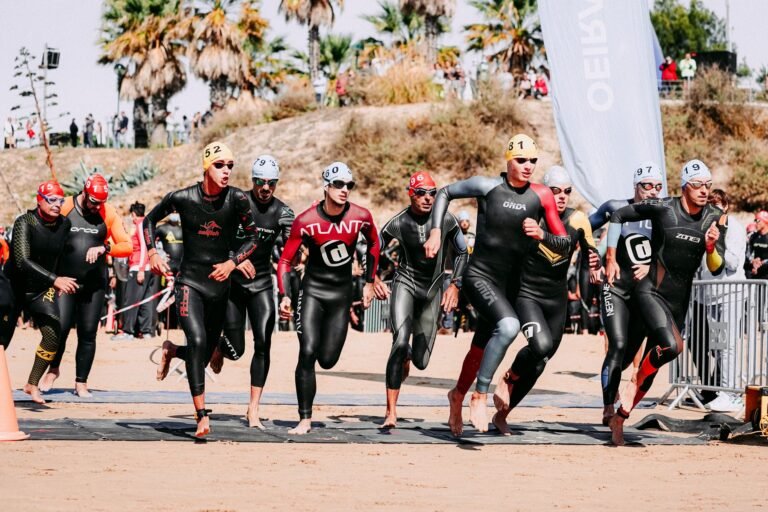
Open-water race contact is different from pool swimming. In a crowded start, arms cross, feet kick high, swimmers accelerate unevenly, and everyone is trying to claim clean water at the same time. A goggle strap that feels secure in training can suddenly be exposed to sideways force.
The most common failures are:
- A hand catches the strap from behind.
- An elbow hits the lens frame and breaks the seal.
- A foot clips the goggles during drafting or overtaking.
- The cap shifts and drags the strap out of position.
- The swimmer overtightens the goggles before the start, making the frame easier to dislodge when hit.
Wahoo’s race-day guidance notes that group swimming can knock goggles off and specifically recommends wearing the strap under the swim cap for racing. REI also recommends placing the strap under the cap and bringing a second pair in case a strap breaks. Those two habits solve a large percentage of avoidable race-morning problems before the gun even goes off.

How to Keep Goggles From Getting Knocked Off: The Most Secure Setup
Option 1: Goggles under the race cap
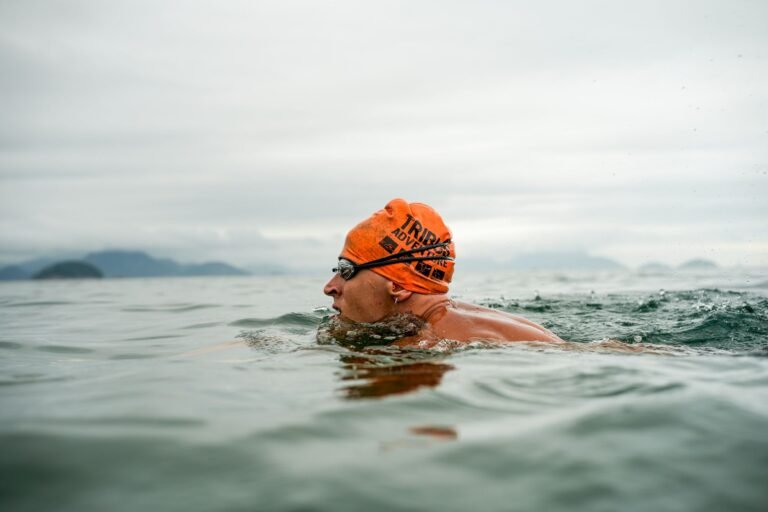
For a crowded triathlon start, one of the simplest protective setups is to put your goggles on first and pull the race cap over the strap. The cap creates a layer over the strap so another swimmer is less likely to hook it directly.
This does not make the goggles impossible to move, but it reduces the chance of a full strap pull. The important part is testing the setup in training. A cap can change strap height, press the frame into the eye socket, or slightly disturb the gasket if you put it on too aggressively.
Our guide on whether open-water goggles should go over or under the swim cap explains the tradeoffs in more detail.
Option 2: Cap, goggles, second cap
For athletes who want more protection, a layered setup can work well: first cap, goggles over that cap, then the official race cap over the strap. This gives you the ability to position the goggles normally while still covering the strap with an outer layer.
The downside is extra pressure and heat. If the second cap pulls the strap downward, it can create a leak before contact even happens. Test it during a hard open-water session before using it in a race.
Do not solve insecurity with excessive strap tension
Tight goggles are not automatically secure goggles. If the frame shape does not fit your face, more tension can distort the gasket and increase pressure without improving stability. A good race pair should seal at moderate tension and stay stable when you sight, breathe hard, and shake your head.
Use our guide to how tight open-water goggles should be if you are unsure whether you are relying too much on the strap.
Choose Goggles That Handle Contact Better
Some goggle designs are naturally better suited to crowded starts than others. The key features are not marketing labels; they are structural details that help the frame stay attached when the water gets messy.
Look for a split or double strap
A split strap creates two contact points on the back of the head. That spreads tension and makes it harder for the entire goggle to shift from one small pull. A single thin strap can work perfectly in training, but a wider or double arrangement gives you more stability when the start becomes physical.
Use a frame that seals without extreme suction
Compact racing goggles can feel very secure, but if they depend on deep suction and high tension, a direct hit can be uncomfortable and may break the seal abruptly. For many triathletes, a mid-size open-water frame gives a better balance of protection, comfort, and visibility.
The Arena Cobra Tri Swipe Mirror is a good example of a race-oriented design for athletes who prefer a lower-profile fit. For swimmers who want a softer, more forgiving frame, the Zoggs Predator Flex Polarized is worth comparing.
Check the strap and gasket before race week
One recent triathlon discussion highlighted a failure that had nothing to do with race contact: a swimmer discovered immediately before an Ironman 70.3 start that part of the goggle seal had detached after long-term use. The lesson is simple—expensive goggles are not maintenance-free.
Inspect your race pair several days before the event. Look for cracks, stretched silicone, loose gasket edges, damaged buckles, and strap wear. Do not wait until you are standing in the start pen.

The First 200 Meters: Where Your Goggles Are Most Vulnerable
The beginning of the swim is usually the highest-risk period for contact. Swimmers are close together, pacing is uneven, and many athletes are still trying to establish rhythm. Your best defense is not aggression. It is positioning and control.
Start where your pace belongs
If you start too far forward, faster swimmers will come over and around you. If you start too far back, you may spend the first several minutes overtaking through traffic. Both situations increase contact.
Our triathlon swim start position guide explains how to choose a line based on your pace, confidence, and tolerance for contact.
Keep your head stable when contact happens
If a hand brushes your goggles and the seal still holds, do not immediately stop and grab them. Keep swimming for one or two strokes and assess. Many minor hits feel worse than they actually are.
If the lens floods, move slightly toward open water if possible, roll enough to breathe safely, and reseat the goggle with one hand. A full stop in the middle of dense traffic can create more contact than the original problem.
Do not chase the feet directly in front of you
Drafting can save energy, but sitting too close to a swimmer’s feet increases the chance of taking a kick to the face. Stay close enough to benefit without placing your goggles directly in the kick zone. If the swimmer ahead has a wide or erratic kick, move slightly to one side.
What to Do if Your Goggles Are Knocked Loose
You need a simple response plan before it happens. Panic costs more time than the adjustment itself.
- Keep breathing. Roll or switch to breaststroke for a few seconds if needed.
- Move out of the main line. Take two or three strokes toward clearer water if traffic is heavy.
- Reseat one side at a time. Press the leaking lens gently back into place rather than ripping the whole pair off.
- Check the strap position. If the strap has moved high or low, reset it before tightening.
- Resume rhythm gradually. Do not sprint immediately to recover lost seconds.
If the strap comes completely off but the goggles remain around your neck or under the cap, stop safely and reset them. If the pair is lost entirely, continue only if you can navigate safely and race rules allow it. This is exactly why a backup strategy matters before the start.
Should You Carry Backup Goggles to the Swim Start?
Yes, especially for longer triathlons. You may never use them, but a second pair protects against a broken strap, damaged gasket, scratched lens, or last-minute fit problem.
Keep the backup pair somewhere you can actually access before entering the water. Some athletes place them in a morning-clothes bag, hand them to a supporter, or keep them with race gear until the final call to the start area.
Our best backup goggles for triathlon race day guide explains what makes a good spare pair.
Check current triathlon open-water goggle options on Amazon.
Race-Week Contact Test: Practice Before the Event
You do not need teammates to punch you in the face to prepare for a crowded start. A controlled training drill is enough.
- Wear your exact race cap-and-goggle setup.
- Swim next to one or two partners with intentionally tight spacing.
- Practice breathing while another swimmer’s arm occasionally brushes yours.
- Do several buoy turns together instead of one at a time.
- Practice one controlled goggle reseat while treading water or using easy breaststroke.
The goal is not to make contact normal. It is to make your response automatic. If a goggle takes a hit during the race, you want your first reaction to be calm assessment rather than panic.
Race-Morning Checklist for Secure Goggles
- Inspect the strap, buckle, gasket, and lens edges.
- Confirm the dry seal before leaving transition.
- Use moderate strap tension—not maximum tension.
- Put the strap under the cap for a crowded race start.
- Check that the cap has not shifted the gasket.
- Carry a tested backup pair.
- Do not experiment with a new strap position on race morning.
- Choose a start position that matches your real swim pace.
Final Take: Secure Goggles Are a System, Not a Strap Setting
Knowing how to keep goggles from getting knocked off in a triathlon swim comes down to more than tightening the strap. The most reliable setup combines a goggle that fits your face, a protected strap under the cap, sensible start positioning, routine equipment checks, and practice dealing with minor contact.
Your goggles should disappear from your attention once the race begins. Build the setup in training, inspect it before race week, and give yourself a backup plan so one accidental hit does not define the entire swim.
Want help choosing a race-ready pair for your face shape, lens needs, and swim conditions? Use the Open Water Goggles Finder to narrow the options before your next open-water race.