A swim mask looks tempting when normal goggles keep pressing into your eye sockets or the buoy seems to disappear every time you lift your head. It also looks bulky enough to make some swimmers wonder if it belongs in open water at all.
The useful answer is not “masks are better” or “real swimmers use goggles.” A swim mask is a better tool for some open-water problems, and the wrong tool for others.
The real difference is not just size
Most swimmers notice the obvious difference first: a swim mask is larger. The more important difference is where it places pressure. A compact goggle usually seals close around the eye socket. A mask-style design spreads the seal farther out on the face, which can feel less sharp during a long swim.
That does not automatically make a mask more comfortable. If the frame is too wide, too tall, or too curved for your face, it can leak just as easily as a smaller goggle. The benefit is that a good mask gives you a more forgiving seal and a wider window to look through. For open water, those two things can matter more than they do in a pool lane.
A swim mask is not a shortcut around fit. It is a different fit strategy.
If your current issue is eye-socket pressure after longer swims, start with the guide on open-water goggles that hurt after 30 minutes. If the problem is water entering at the corners, the better starting point may be why open-water goggles leak before assuming a mask will fix it.
When a swim mask makes sense
A mask is most useful when open-water visibility and comfort are the problems you are actually trying to solve. It is not mainly about speed. It is about staying calm, seeing more, and not thinking about your goggles every few minutes.
You swim longer than a normal pool set
A short pool session can hide pressure problems. A 45-minute lake swim usually does not. If compact goggles feel fine at the start and then become distracting around the orbital bone or bridge of the nose, a wider soft-seal mask can be a reasonable move.
This is where models in the same broad family as the Aqua Sphere Vista Pro Swim Mask or Aqua Sphere DEFY Ultra Swim Mask make sense to compare. The point is not that every swimmer needs a large mask. The point is that long-swim comfort often improves when pressure is moved away from the tight eye-socket zone.
You struggle to sight without lifting too high
Open water punishes narrow vision. If you have to lift your head too much just to find the buoy, your hips drop, your rhythm breaks, and the next ten strokes feel like you are restarting the swim. A wider field of view will not fix poor sighting technique, but it can make the job less fussy.
For more on that skill side, read the guide to wide-view goggles for ocean swimming and the article on sighting without losing rhythm. A mask can help, but it should support the technique rather than replace it.
You are new to open water and need calm more than speed
Beginners often buy goggles that look fast because fast-looking goggles seem more serious. That can backfire. If your first open-water swims are mostly about relaxing, breathing, looking around, and not feeling boxed in, a mask-style fit can be less intimidating.
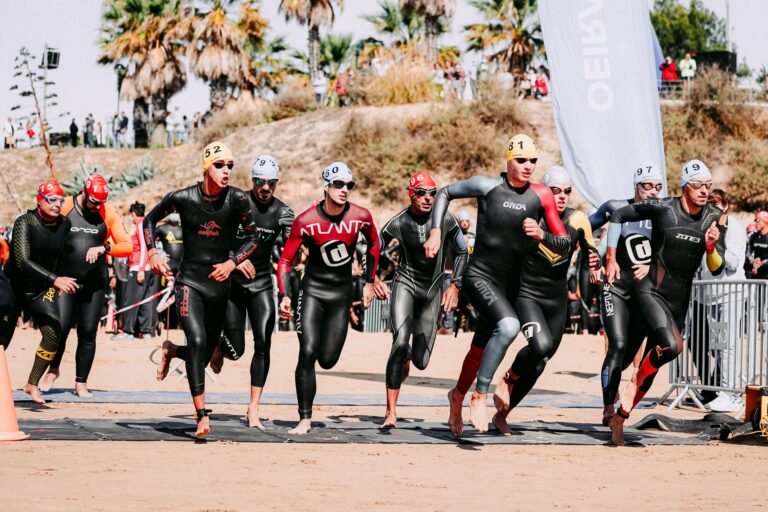
There is a tradeoff. A larger mask can feel more noticeable on the face. It may not be the first choice for a crowded triathlon start. But for early lake sessions, ocean acclimation, and relaxed endurance swimming, the extra visibility can be more useful than a sleek profile.
When compact goggles are still the better choice
A compact goggle is not inferior. It is simply built around different priorities. If your swim includes aggressive starts, tight turns around buoys, close contact with other athletes, or a strong preference for a smaller frame, compact goggles may be the safer buy.
The ROKA R1 Goggle sits more on the race-oriented side of the open-water spectrum. It is the type of choice to consider when you want sighting help and open-water design without moving into a full mask shape. For swimmers coming from pool training or racing, a compact model may also feel more familiar.
A mirrored pool/race style such as the Speedo Vanquisher 3.0 Mirrored can also make sense for outdoor pool sessions or race-prep work, but it is not a comfort-first swim mask. If the buying problem is long-distance pressure, do not expect a smaller racing-style frame to behave like a soft wide-view mask.
The middle ground: wide-view goggles that are not full masks
Not every swimmer has to choose between a tiny race goggle and a full swim mask. There is a middle category: goggles with a wider lens and more forgiving frame, but still a smaller feel than a mask.
The Aqua Sphere Kayenne Compact Fit is a useful example of that middle ground for swimmers who want more visibility than a narrow pool goggle, but do not want a large mask sitting across the face. It is especially relevant if normal masks feel too wide or if smaller-face fit is part of the problem.
This is why the best buying decision is not “mask or goggles?” It is more useful to ask where your current pair fails: pressure, sighting, leaking, light, or race stability. The Open Water Goggles Finder is built around that kind of problem-first choice.
How to test the decision before race day
If you are deciding between a mask and compact goggles, do not make the first test on race morning. A swim mask can feel calm in the changing room and then feel too present once you start breathing hard. Compact goggles can feel perfect for five minutes and then start pressing after half an hour.
A better test is simple:
- Wear the goggles dry for a minute without cranking the strap.
- Look up, down, and side to side as if you are sighting buoys.
- Do one short open-water or outdoor-pool session before committing.
- Notice whether the problem is pressure, leak, glare, fog, or bulk.
Do not judge only by the first push-off. Judge by the point when your breathing is settled and you have stopped thinking about the gear. That is when the real fit usually shows up.
What about kids and nervous swimmers?
For kids, a mask-style goggle can sometimes be more comfortable because the seal is less concentrated around the eyes. The Aqua Sphere Seal Kid 2 Swim Mask is the kind of product to compare if the problem is a child who dislikes tight eye cups or keeps adjusting normal goggles during swim lessons.
For open-water adults who feel nervous, the same principle applies, but the product choice should still be based on fit. A mask that leaks will not feel calming. A mask that fits well can make the water feel less visually cramped.
So, should you buy a swim mask for open water?
Buy a swim mask if your current goggles make long swims uncomfortable, if you want a wider view for lakes or ocean swimming, or if sighting feels harder than it should. Do not buy one just because it looks more “open-water.” A bulky mask that does not match your face is still the wrong goggle.
Choose compact open-water goggles if you are preparing for a triathlon start, prefer a lower-profile feel, or already know that larger frames move around on your face. If you are between the two, start with a wider-view goggle rather than jumping straight to the largest mask available.
The right answer is the one that removes the problem you actually have in the water. For some swimmers, that is a swim mask. For others, it is a better-fitting compact goggle.
Not sure which swim goggles are right for you?
Answer a few quick questions about where you swim, your face fit, lens needs, and comfort priorities.