If you are choosing between compact open-water goggles and a mask-style design, the question is not which one looks more serious. The better question is what usually goes wrong in your swims.
Compact goggles are easier to race in, easier to keep low on the face, and usually better when the start is crowded. Mask-style goggles give many swimmers a wider view and a more forgiving seal, but they can feel bulky if you want a close, race-like fit.
The practical answer: choose compact goggles if you care most about race-day stability, low drag, and a secure feel in a pack. Choose mask-style goggles if you care more about long-swim comfort, easier sighting, and less pressure around the eye socket.
This is a useful buying problem because both styles can be correct. A swimmer training for a first lake event may have a better day in a comfortable wide-view mask. A triathlete used to fast pool goggles may feel more confident in a compact frame. Trouble starts when you buy for the swimmer you want to look like, not the conditions you actually swim in.
The shape changes how the swim feels
Compact goggles sit closer to the eye socket. They usually have a smaller lens, a more controlled seal, and less material for waves or another swimmer’s hand to catch. That is why many pool racers and triathletes gravitate toward compact shapes.
Mask-style goggles spread the seal over a larger area of the face. Instead of pressing tightly into the eye socket, they often rest around it. For some swimmers, that immediately feels calmer. For others, the larger frame feels like too much equipment on the face.
If your current goggles hurt after half an hour, buying an even smaller race pair usually does not fix the problem.
That is where this choice connects with the goggles that hurt after 30 minutes. Pressure that appears only after 30 or 40 minutes often points to frame shape, gasket depth, or nose bridge fit. A different style can be more useful than another tiny adjustment to the strap.
When compact goggles make more sense
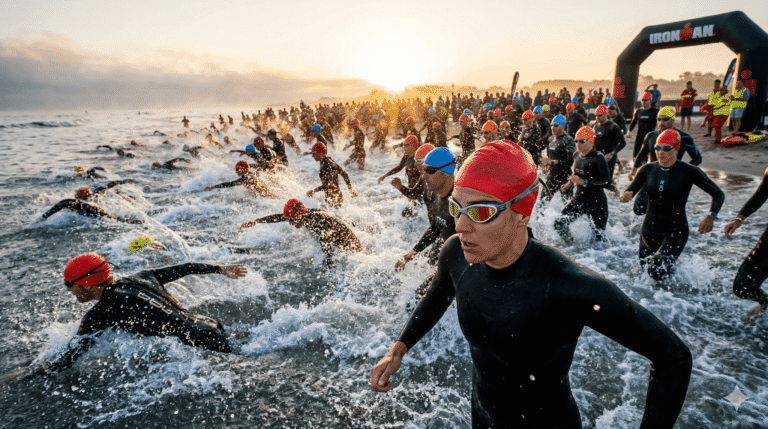
Compact goggles are a better fit for swimmers who want the goggle to stay put during speed, turns, rough starts, and close contact. In triathlon, that matters. The first few minutes of the swim can be messy, even if you start wide or seed yourself carefully.
A compact pair also makes sense if you already know that larger masks feel distracting. Some swimmers notice the frame edge, the extra lens area, or the way the seal sits higher on the cheek. If that bothers you in training, it will probably bother you more on race morning.
Compact examples to compare: The ROKA R1 is the more open-water-specific compact option in this group, with a race and sighting angle. The Speedo Vanquisher 3.0 Mirrored is more of a familiar pool-training/race-prep shape. It can work outdoors for swimmers who already like that kind of fit, but it is not the first place I would send someone who mainly wants pressure relief.
For triathlon starts, it also helps to read the triathlon swim start position guide. A stable goggle can make the first buoy feel less chaotic, but the best goggle still has to match your start position and comfort level in a crowd.
When a mask-style goggle is the smarter buy
Mask-style open-water goggles are not only for beginners. They are often a good answer for swimmers who keep running into the same two problems: limited sighting and face pressure.
The wider lens area can make it easier to pick up buoys, kayaks, shorelines, and other swimmers without lifting the head as dramatically. That does not replace good sighting technique, but it can reduce the feeling that you are looking through a narrow tunnel.
The second advantage is comfort. A larger seal can distribute pressure away from the eye socket. That is not a guarantee; a mask can still leak if it does not match your face. But for long lake swims, relaxed ocean sessions, and newer open-water swimmers, the comfort tradeoff is often worth it.
Mask-style examples to compare: The Aqua Sphere Vista Pro and Aqua Sphere DEFY Ultra are the types of designs to look at if your main complaint is narrow visibility or pressure from smaller goggles. They make more sense for long-swim awareness than for someone trying to keep the smallest possible race profile.
If you are still unsure whether a mask belongs in your gear bag, the dedicated swim mask for open water guide goes deeper into that decision. This article is more about the buying fork in the road: compact control versus mask-style forgiveness.
The middle ground: wider goggles without a full mask feel
Not every swimmer has to choose one extreme. Some goggles give you a wider view than a small race frame without feeling like a full mask. That middle category is useful if you want better awareness but do not want the bulk of a mask-style design.
It is also where face size matters. A swimmer with a smaller or narrower face may find many masks too wide, while a tiny racing goggle may feel sharp around the socket. In that case, a compact-fit wide-view design can be a more realistic compromise.
Middle-ground option: The Aqua Sphere Kayenne Compact Fit is worth comparing if you want more visibility than a small race goggle but do not want a full mask-style fit. It is still important to check the current lens version and size details before buying, especially if you are choosing for a smaller face.
Use the leak pattern to choose the shape
Leak location tells you more than the product photo. If water enters near the inner corner of the eye, the nose bridge or lens spacing may be wrong. If it enters at the outer corner, the frame may be too narrow or the gasket may not sit flat. If the whole seal breaks when you lift your head to sight, the goggle may not be stable enough for open-water movement.
For a deeper breakdown, read why open-water goggles leak. For this buying decision, keep the rule simple: do not use strap tension to force the wrong shape onto your face. If the dry fit already feels uneven, open water will usually make it more obvious.
Which style should you buy first?
If this is your first open-water pair, start with the problem you are trying to avoid.
- If you are nervous about visibility and sighting, lean toward a wider-view or mask-style design.
- If you are training for a crowded triathlon start, lean toward a compact, stable frame.
- If smaller goggles always hurt, do not assume a race pair will become comfortable after you break it in.
- If masks always feel bulky, a middle-ground wide-view goggle may be a better compromise.
The first open-water swim goggles guide is a good next read if you are buying for your first lake or ocean session. If you already know you care most about sighting, the wide-view ocean goggles guide can help narrow the options further.
A practical way to test before race day
Try the goggles dry first, without cranking the strap. Press them lightly into place. If the seal already needs force, that is a warning. Then wear them with your swim cap for a few minutes. Look left, right, and slightly up, the way you would when sighting. A good open-water fit should not depend on holding your face perfectly still.
In the water, give the pair at least one continuous swim of 20 to 30 minutes before trusting it for a race. Five comfortable minutes at the shoreline does not tell you much about long-swim pressure, fogging, or whether the seal shifts when you sight repeatedly.
Final recommendation
Buy compact goggles if you want race security, a smaller profile, and a fit that stays controlled in faster or more crowded swimming. Buy mask-style goggles if your real problem is comfort, sighting, or pressure during longer open-water sessions.
If your answer is still split, that is not unusual. Many open-water swimmers eventually keep two pairs: one compact pair for race starts and faster sessions, and one wider or more forgiving pair for long training swims. The right choice is the one that solves your actual problem, not the one that looks more advanced on the product page.
Not sure which shape fits your swim?
Answer a few quick questions about where you swim, your face fit, lens needs, and comfort priorities.
For a broader product-selection framework, use the open-water goggles buying guide. If you are choosing specifically for a long-course triathlon, the Ironman goggles guide is the better next step.