This guide is for general information and gear planning. If you have eye-health concerns, a complex prescription, or recurring irritation, speak with an optometrist or qualified eye-care professional.
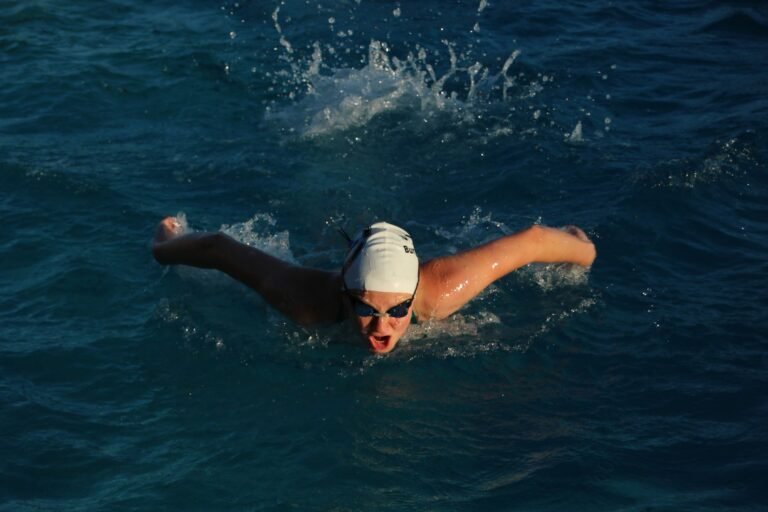
Swimming with contact lenses can feel like the simplest way to see clearly during an open-water swim or triathlon. You keep your normal vision correction, wear standard goggles, and avoid changing into prescription eyewear in transition. The problem is that official eye-health guidance is much less relaxed about water exposure than many swimmers are.
The CDC advises contact-lens wearers to remove lenses before swimming, because water can carry microorganisms and can cause soft lenses to change shape, swell, or adhere to the eye. The FDA likewise advises against exposing contacts to pool, lake, or ocean water. For open-water swimmers, that means the real question is not only whether your goggles seal well. It is how to build a vision setup that still lets you sight buoys, exit safely, and move through transition without unnecessary eye-health risk.
Swimming With Contact Lenses: What the Official Guidance Says
Both the CDC and the FDA recommend keeping contact lenses away from water. Their concern is not just chlorine or salt. Natural and treated water can contain microorganisms capable of causing serious eye infections.
One organism that receives particular attention is Acanthamoeba, which can cause a rare but severe corneal infection. That risk is one reason official guidance does not treat a good goggle seal as a complete substitute for removing contacts before swimming.
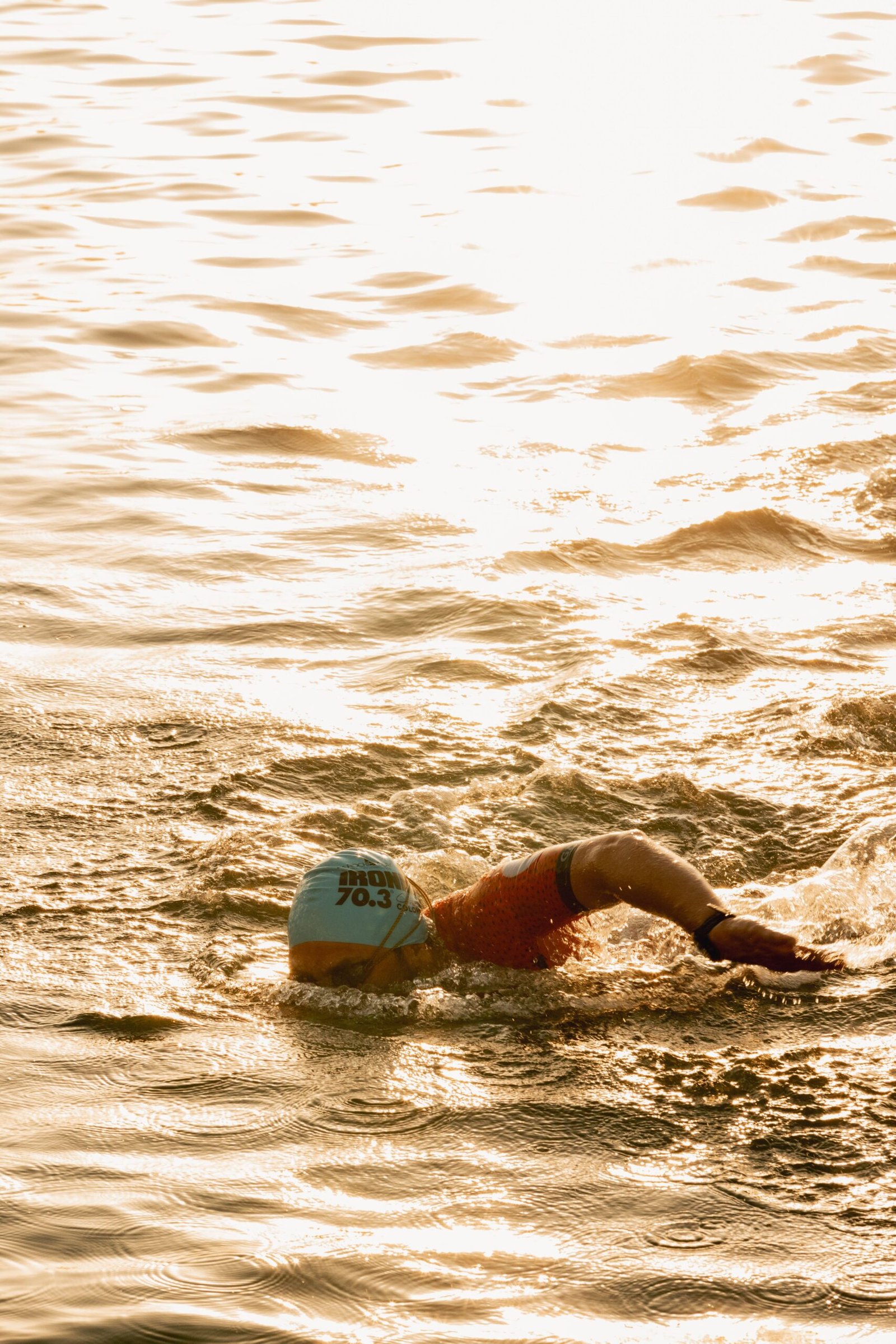
For triathletes, this can be inconvenient because good vision matters immediately after the swim. You may need to locate the exit, identify your bike rack, read signs, and move quickly through a crowded transition area. The safest planning approach is to solve the vision problem before race morning rather than assume standard goggles plus contacts are automatically enough.
Why Open Water Makes the Contact-Lens Question Harder
1. A goggle seal is not perfectly reliable
Even excellent goggles can take on a small amount of water during a long swim, a wave hit, a crowded race start, or an aggressive sighting movement. A seal that works perfectly in a pool may behave differently under chop, sunscreen, cap pressure, or race contact.
That is why fit still matters, even if you choose prescription goggles instead of contacts. Before race day, use a dry suction test and then test the pair during real open-water sighting. Our guide on how to test swim-goggle fit before open water explains what to look for before committing to a long session.
2. Open-water visibility has higher stakes
In a pool, you can often tolerate a slightly blurry wall or lane line. In open water, you need enough clarity to identify buoys, shore markers, safety craft, other swimmers, and the swim exit. If your vision correction is inadequate, navigation gets harder and anxiety can rise quickly.
3. Transition adds another vision problem
A triathlon swim does not end when you stand up. You still need to navigate to T1. If you rely on strong prescription glasses, plan where they will be and how quickly you can put them on. Many races have procedures for athletes who need glasses at swim exit, but that varies by event, so check the athlete guide in advance.
Prescription Swim Goggles Are Usually the Cleaner Solution
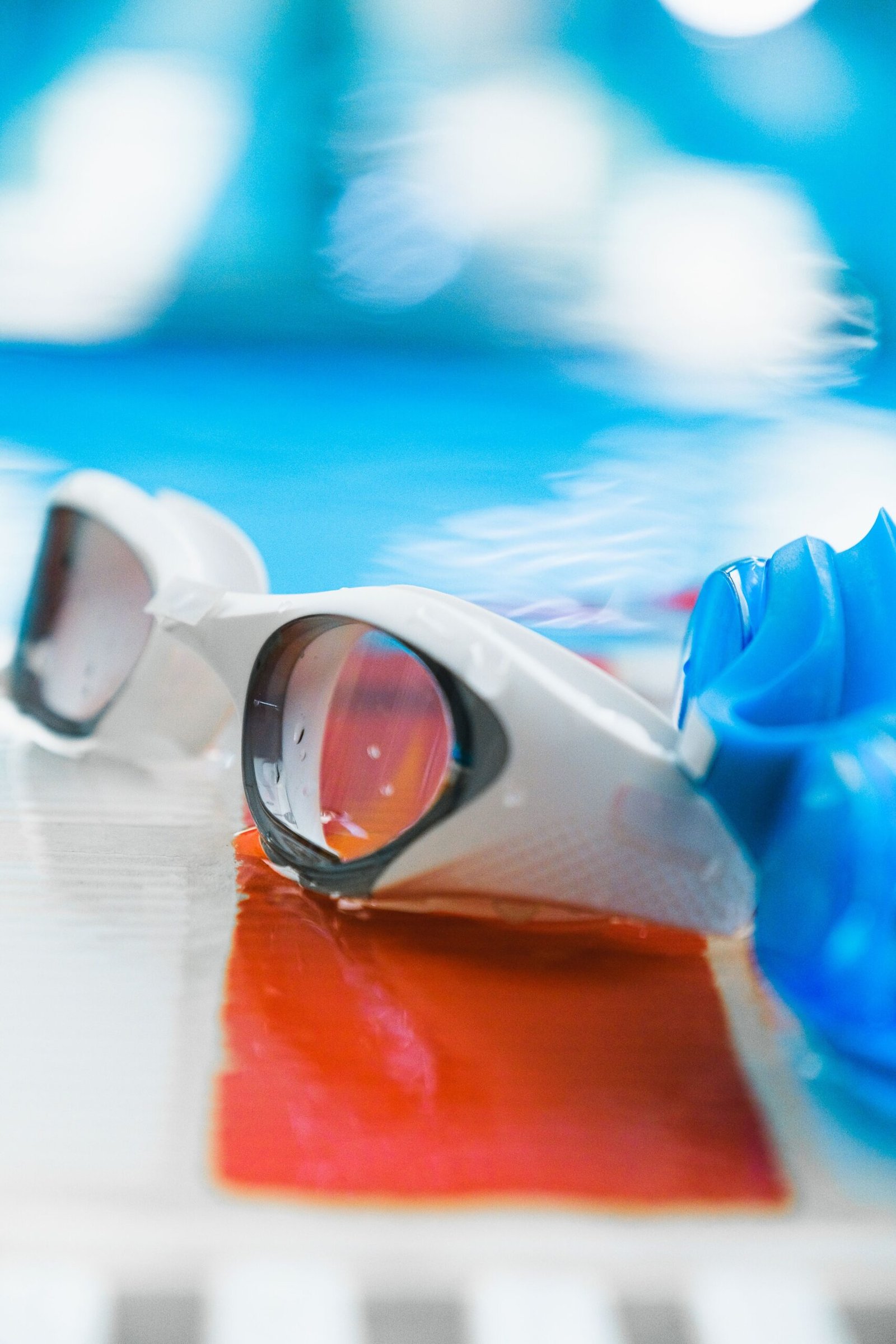
For swimmers who need vision correction, prescription or optical swim goggles are the most direct alternative to wearing contacts in the water. They combine the basic function of goggles with built-in optical correction, allowing you to see more clearly without exposing contact lenses to lake, ocean, or pool water.
They are not all the same. Some use fixed diopter steps, while others allow separate left and right lens strengths. Premium custom options may support more specific prescriptions. If your left and right eyes differ substantially, or if you have significant astigmatism, a standard off-the-shelf optical pair may not be enough.
Start with our best prescription swim goggles for open water guide. It compares several approaches, including step-diopter, modular, and custom optical options.
For a budget-oriented example, the Sporti S2 Optical can make sense for swimmers who want basic prescription-style correction, though its field of view and open-water performance are more limited than a purpose-built premium race goggle.
Check current prescription swim-goggle options on Amazon.
How to Choose Prescription Goggles for Open Water
Match the correction closely enough to navigate
You do not necessarily need perfect everyday vision underwater. You need enough correction to identify buoys, course markers, the shoreline, and the swim exit comfortably. Many optical goggles are sold in diopter increments rather than exact eyeglass prescriptions, so choosing the correct strength may involve some rounding.
If your prescription is complex, ask an eye-care professional how to translate it into a practical swim-goggle setup rather than guessing.
Do not sacrifice field of view
A prescription lens is useful only if the frame also works for open water. Narrow racing goggles may provide crisp correction but make sighting feel cramped. For triathlon, prioritize a frame that gives you enough peripheral vision to track swimmers and identify landmarks without excessive head lifting.
Choose a lens tint for the conditions you actually race in
Clear prescription lenses are useful for low light, indoor training, and heavily overcast starts. Smoke or mirrored options can be better in bright conditions if they are available in your required optical strength. If your priority is race-day visibility, do not choose a darker lens only because it looks faster.
Test seal and comfort under race conditions
Wear the exact swim cap, wetsuit, or neoprene hood you plan to use. Practice sighting. Swim hard for several minutes. If the goggles leak when you lift your head, solve that before race day. Tightening the strap harder is not always the answer; frame shape and gasket geometry matter too.
What If You Still Choose to Swim With Contacts?
Some swimmers continue to wear contacts for convenience, but that does not change the official guidance. The CDC and FDA recommend removing contacts before swimming. If water does get on your lenses, the CDC advises removing them as soon as possible and either discarding them or cleaning and disinfecting them overnight before reuse, depending on the lens type.
If you experience eye pain, unusual redness, light sensitivity, blurred vision, or persistent irritation after swimming, remove the lenses and contact an eye-care professional promptly. Those symptoms should not be treated as a normal part of open-water training.
For race planning, the better approach is to build redundancy: prescription goggles for the swim, prescription glasses or sunglasses in transition, and a clearly rehearsed T1 routine.
A Practical Triathlon Vision Setup
For many athletes who normally wear glasses, a simple setup works well:
- Swim: prescription or optical goggles matched closely enough to your distance vision.
- Swim exit: keep the goggles on until you reach your glasses if your uncorrected vision is very poor.
- T1: put on prescription sunglasses or sports glasses before leaving transition.
- Bike: use secure eyewear that stays stable under your helmet.
- Run: continue with the same glasses or switch only if you have practiced the change.
If the race offers a glasses table or special-needs process at swim exit, confirm it in the athlete guide instead of assuming it will be available.
Race-Week Checklist for Swimmers Who Need Vision Correction
- Test your prescription goggles in open water, not only in the pool.
- Confirm you can identify buoys at realistic race distance.
- Check the seal while sighting and during short race-effort bursts.
- Pack a backup pair of goggles.
- Keep prescription glasses or sunglasses in a predictable place in transition.
- Review the race’s swim-exit and glasses-table policy.
- Do not introduce a new vision setup on race morning.
Frequently Asked Questions
Can swim goggles keep contact lenses completely dry?
A well-fitting pair can reduce water exposure, but no goggle seal should be assumed to be perfect under all open-water conditions. Waves, race contact, strap movement, and repeated sighting can all introduce leaks.
Are prescription swim goggles good enough for triathlon?
For many athletes, yes. The key is having enough correction to sight, navigate the swim exit, and reach your transition eyewear confidently. The best choice depends on your prescription, face shape, preferred lens tint, and field-of-view needs.
What if my prescription is very different in each eye?
Look for modular optical systems that allow different left and right lenses, or consider a custom option. Standard fixed-strength goggles may not provide a comfortable compromise if the difference is large.
What if I have astigmatism?
Basic step-diopter goggles usually correct simple spherical prescriptions only. If astigmatism significantly affects your distance vision, ask an optometrist about custom swim-goggle options or a race-day vision strategy that better matches your prescription.
Final Take: Build Your Vision Plan Before Race Day
Swimming with contact lenses may feel convenient, but current CDC and FDA guidance recommends keeping contacts away from swimming water. For open-water swimmers and triathletes, prescription goggles are usually the cleaner way to maintain useful vision without relying on contacts under a goggle seal.
The right setup is the one you have already tested: enough correction to sight clearly, a secure seal that holds during real open-water movement, and a transition plan that gets your normal glasses or sunglasses onto your face quickly.
Need help narrowing down the right frame, lens type, or prescription-friendly option? Use the Open Water Goggles Finder to match goggles to your swim conditions, fit needs, and vision priorities.