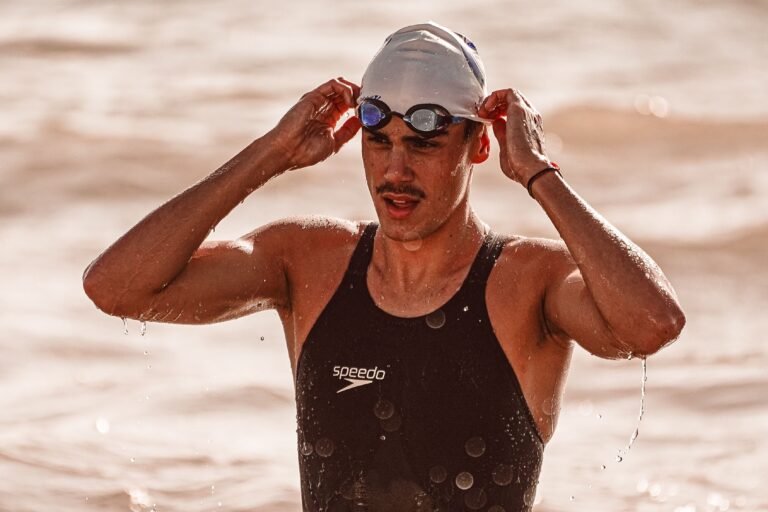
If standard goggles pinch at the temples, leave deep marks, or start leaking as soon as you loosen the strap, you may simply need a frame designed for a broader face. The best open water goggles for wide faces should seal without excessive tension, give you enough lens width for sighting, and stay comfortable through long lake, ocean, or triathlon swims.
That sounds simple, but “wide face” is not the same as “large goggles.” A truly good fit comes from the relationship between lens width, gasket shape, nose-bridge spacing, frame flexibility, and how the seal sits around your eye sockets. This guide focuses on those details so you can stop overtightening a narrow frame and choose a goggle that fits your face more naturally.
Best Open Water Goggles for Wide Faces: Quick Picks
- Best overall wide-view fit: Aqua Sphere Kayenne
- Best for changing light: Aqua Sphere Kayenne Pro Photochromatic
- Best flexible-frame option: Zoggs Predator Flex Reactor
- Best for mixed sun and cloud: Zoggs Predator Flex 2.0 Polarized Ultra Photochromatic
These models are not interchangeable. Some prioritize panoramic visibility, while others emphasize flexible fit or adaptive lenses. The right choice depends on where your face feels pressure now and what conditions you swim in most often.
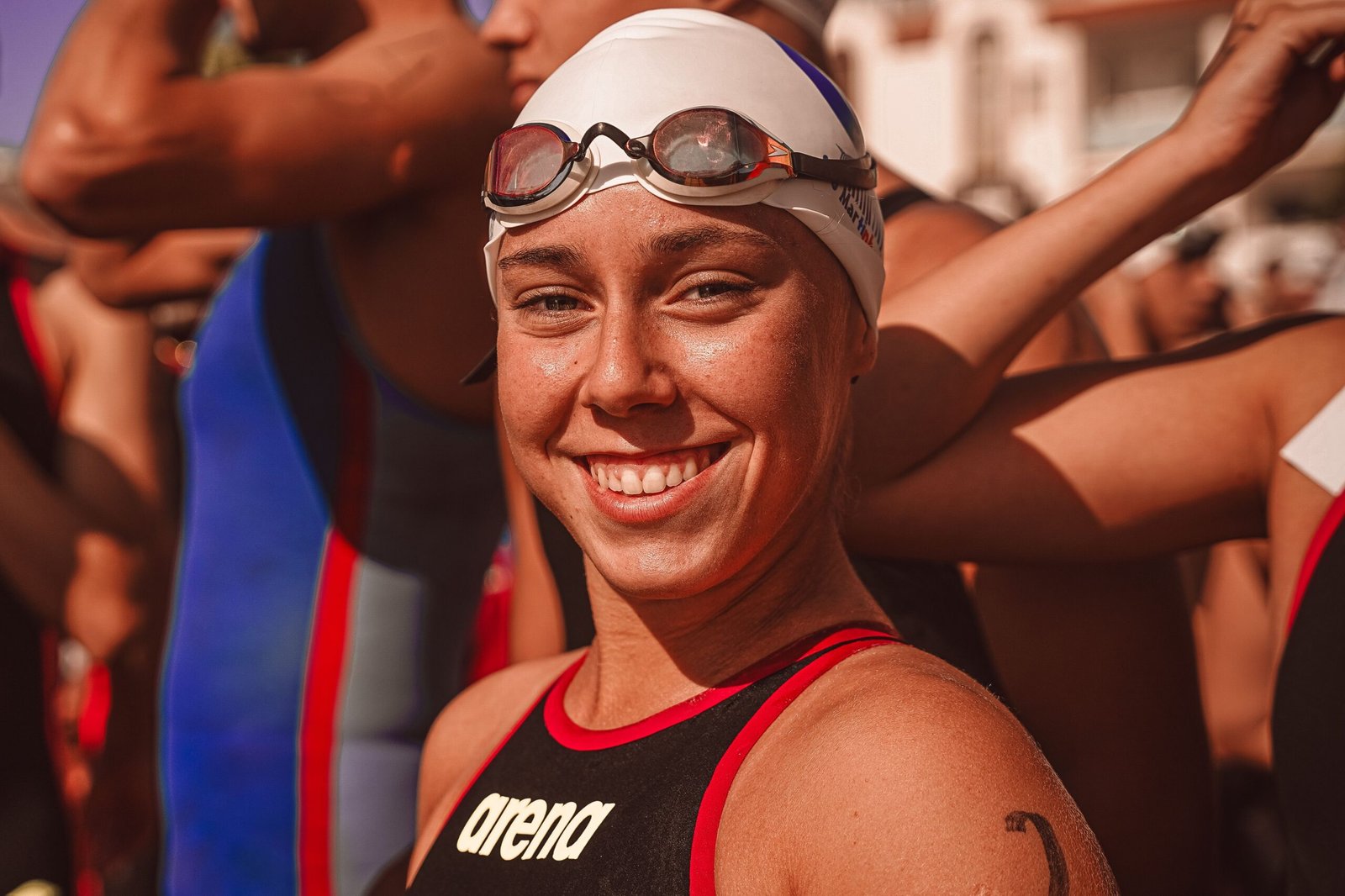
Why Standard Goggles Often Fail on Wide Faces
Most swimmers assume leaking means the strap is too loose. In reality, a narrow frame on a wider face often creates the opposite problem: the swimmer tightens the strap to force the gaskets into place, increasing pressure at the outer eye sockets and temples while still failing to create an even seal.
That can produce three familiar symptoms:
- Temple pressure or headaches after 20–30 minutes.
- A seal that feels secure on land but leaks when you sight or turn your head.
- Deep marks around the outer corners of the eyes after long swims.
If that sounds familiar, read our guide on open-water goggles that hurt after 30 minutes. It explains how pressure, frame geometry, and overtightening interact.
A wider face needs more than a longer strap
The strap only holds the goggle in position. It cannot change the width of the frame. If the lens cups naturally sit too close together, extra strap tension may pull the outer gasket edges away from the face instead of helping them seal.
For open water, that matters even more because sighting, chop, and race contact all challenge the seal. A frame that barely works while standing still is unlikely to feel better after 1,500 meters.
What to Look for in Goggles for a Wide Face
1. Curved or panoramic lenses
Wide-view open-water goggles often use larger curved lenses. That can help wider faces because the lens and gasket assembly spans more of the face without forcing the frame inward. The added peripheral vision is also useful for buoy sighting and awareness around other swimmers.
2. Flexible frame construction
A flexible frame can adapt better to facial width than a rigid, narrow racing goggle. That does not mean every soft goggle fits every wide face, but flexibility can reduce the feeling that the frame is being pulled sideways across your eye sockets.
3. A gasket that sits outside the tightest part of the eye socket
Very compact racing goggles sit close to the orbital bone. If you have a broad face, a slightly larger gasket can distribute pressure across a wider area and feel more stable over long sessions.
4. Enough nose-bridge room
Some swimmers think they have a wide-face problem when the real issue is nose-bridge spacing. If the bridge is too narrow, each lens can be pulled inward, which increases pressure and encourages leaks at the outer edges.
Before buying, use the fit process in our open-water goggle fit test. The dry suction test can quickly reveal whether the frame shape matches your face before you tighten the strap.
Aqua Sphere Kayenne: Best Overall for Wide Faces
The Aqua Sphere Kayenne is one of the clearest starting points for swimmers who want more room across the face. Its large curved lenses create a wide field of view, and our product database classifies it as suitable for medium and wide face shapes.
That makes it especially useful for open-water swimmers who dislike the compressed feel of compact race goggles. The tradeoff is size: the Kayenne is bulkier than a low-profile racing model. For most long-course swimmers, however, comfort and visibility matter more than a small hydrodynamic advantage.
Best for: lake swimmers, ocean swimmers, first-time triathletes, and anyone who values panoramic sighting.
Watch for: swimmers with very narrow faces may prefer the Compact Fit version instead.
Aqua Sphere Kayenne Pro Photochromatic: Best for Wide Faces and Changing Light
If you want the Kayenne-style wide fit but regularly start in dim conditions and finish in sun, the Aqua Sphere Kayenne Pro Photochromatic adds an adaptive lens option to the same general wide-view concept.
Photochromic lenses are useful when the light changes during long swims. They are particularly practical for sunrise training, variable cloud, and triathlon starts where committing to a very dark or very clear lens can feel risky.
Best for: wide-face swimmers who want one pair for mixed light.
Watch for: dedicated polarized or mirrored lenses may still handle intense midday glare better.
Zoggs Predator Flex Reactor: Best Flexible-Frame Option
The Zoggs Predator Flex Reactor is another strong option because its flexible frame is designed to adapt around the face rather than relying on a rigid shell. Our product database marks it as suitable for medium and wide face shapes.
The Reactor also uses a photochromic lens, making it useful when cloud and sun alternate during outdoor swims. For a swimmer whose main problem is temple pressure, the flexible construction may feel more natural than a compact racing goggle.
Best for: comfort-focused open-water swimmers and triathletes who train in mixed weather.
Watch for: the frame has a more comfort-oriented feel than a minimal racing socket.
Zoggs Predator Flex 2.0: Best for Mixed Light and Surface Glare
The Zoggs Predator Flex 2.0 Polarized Ultra Photochromatic combines a wide-face-friendly classification with a comfort-oriented frame and lens behavior intended for changing open-water light.
For swimmers who often move between cloud, sun, and reflective surface glare, that combination can be attractive. It is not automatically better than the Reactor or Kayenne Pro; the more important question is which gasket geometry seals naturally on your face.
Check current wide-fit open-water goggle options on Amazon.
How to Tell if a Goggle Is Too Narrow for Your Face
Use this simple test before blaming the strap:
- Press the goggles gently against your face without using the strap.
- Check whether both gaskets sit flat at the same time.
- Notice whether the outer edges feel stretched toward your temples.
- Put the strap on loosely.
- Look up, down, left, and right, then mimic a sighting motion.
If the seal only works when the strap is very tight, the frame may be too narrow or the gasket shape may simply be wrong for you.
Do not use pressure as a substitute for fit
A common mistake is to keep tightening until the leak stops. That can work for a few minutes, but long open-water swims expose the weakness of that strategy. Pressure builds, the gasket deforms, and the frame can become more sensitive to movement.
The goal is a seal that feels stable at moderate strap tension. Your goggles should stay on your face because the gasket shape matches you, not because the strap is pulling hard enough to force them into place.
Wide Face vs Large Goggle: They Are Not the Same
A large swim mask can feel roomy, but size alone does not guarantee a wide-face fit. Some oversized goggles still have a relatively narrow nose bridge or gasket spacing. Conversely, some mid-size goggles use a flexible frame that fits broad faces very well.
This is why “bigger” should not be your only filter. Focus on how the seal lands around the eyes, how much pressure you feel at the temples, and whether the lenses remain stable when you sight.
If you are deciding between a standard goggle and a larger mask-style design, see our guide to compact vs mask-style open-water goggles.
Lens Choice Still Matters After You Solve the Fit
Once you find a frame that fits a wide face properly, choose the lens for your normal swim conditions:
- Clear or light tint: dawn, dusk, heavy cloud, shaded water.
- Smoke: versatile daytime use in moderate sun.
- Polarized: strong reflected glare from bright water.
- Photochromic: changing light during long sessions or early starts.
- Mirrored: bright sun when glare and brightness are the main problem.
For a deeper comparison, use our open-water goggle lens color guide.
Race-Day Setup for Wide-Face Goggles
Do not make race morning the first time you test a wider frame. Wear it with the exact cap, wetsuit, and sunscreen routine you plan to use. Practice several hard sighting lifts and at least one short race-pace effort.
Then check two things: does the frame shift when your head lifts, and does the seal remain comfortable when your heart rate rises? A slightly larger frame can be excellent for open water, but only if the strap position keeps it stable during movement.
Always pack a backup pair. Even a perfectly fitted goggle can be damaged, scratched, or accidentally lost before the start.
Final Verdict: Best Open Water Goggles for Wide Faces
The best open water goggles for wide faces are the ones that seal with moderate strap tension, avoid temple pressure, and give you enough lens width for confident sighting. The Aqua Sphere Kayenne is an excellent starting point for wide-view comfort, while the Kayenne Pro Photochromatic adds flexibility for changing light. The Zoggs Predator Flex Reactor and Predator Flex 2.0 are strong alternatives for swimmers who prefer a more flexible frame.
Do not chase the biggest goggle or the tightest strap. Choose the frame whose gasket sits naturally on your face, then match the lens to the light conditions you actually swim in.
Want a faster way to narrow the options? Use the Open Water Goggles Finder to match your face shape, swim conditions, and lens needs with suitable open-water goggles.