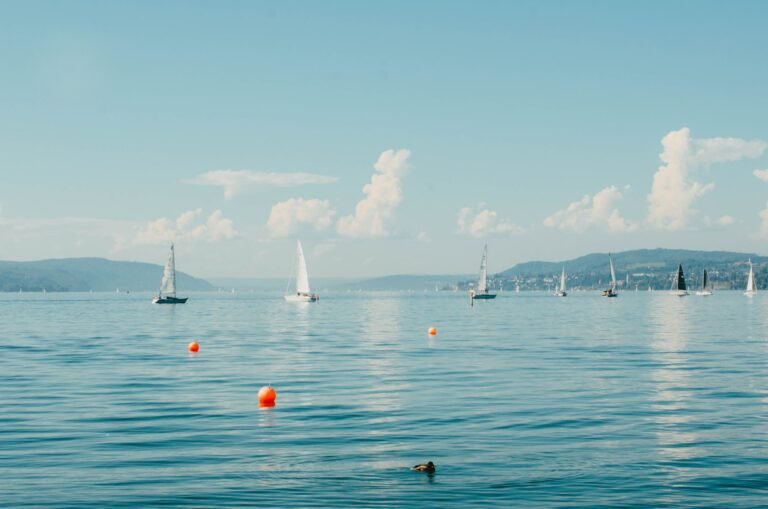
Low sun can make a calm swim feel messy before the first buoy.
The water might be flat, the air might be perfect, and your goggles might be the same pair you trust every weekend. Then you turn toward the first buoy and the sun sits directly on the line you need to swim. Suddenly sighting is not a small head lift anymore. It becomes a guess, a squint, and a break in rhythm.
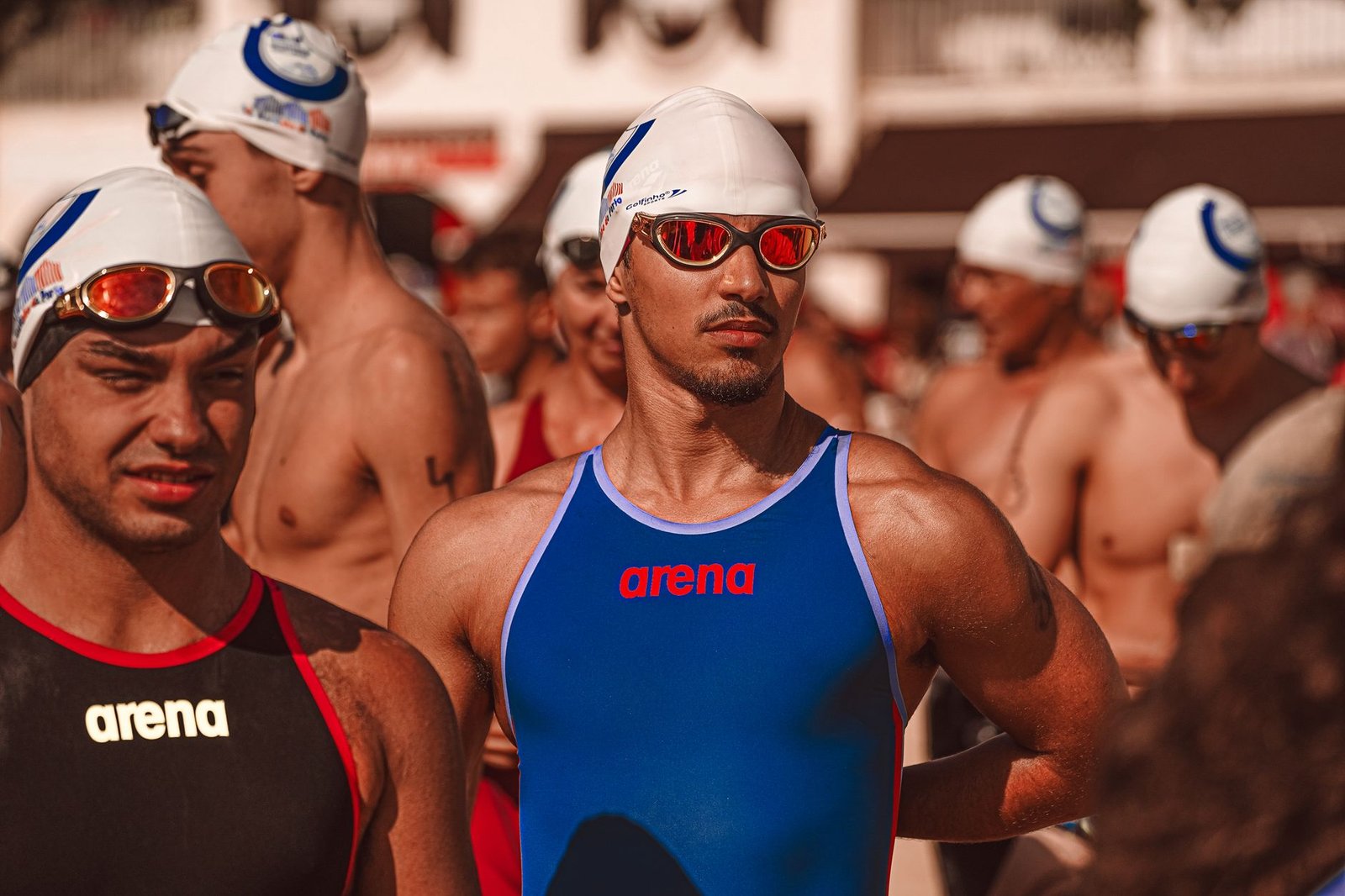
The quick answer
When swimming in low sun, do not solve the problem with lens darkness alone. Choose goggles that reduce glare without making the water too dim, breathe to the side that keeps the sun out of your eyes when possible, sight from larger landmarks instead of only the buoy, and use a calmer two-look rhythm instead of lifting your head higher every time the target disappears.
Low sun is different from normal bright sun because it comes across the surface instead of from above. That angle can hide buoys inside a strip of reflection, especially in the first or last part of the day. A dark mirrored lens may help if the course stays bright, but it can also make shaded water, brown lake water or cloud cover feel too flat.
The goal is not to block the sun completely. The goal is to keep enough contrast to recognize the course quickly, then return your face to the water before your hips drop and your stroke rhythm falls apart.
Why low sun is harder than regular glare
Midday glare is uncomfortable, but it is usually predictable. You feel brightness across the whole view. Low sun is more selective. It can blind one direction, one turn buoy, or one half of the breathing cycle while the rest of the course still looks manageable.
It hides the target line
The buoy may be visible when you stand on shore, then vanish once your eyes are only a few inches above the surface.
It changes by direction
A lens that feels perfect on the out-and-back may feel too dark or too bright after the first turn.
It makes swimmers over-lift
When the first look fails, many swimmers lift higher, pause longer and start kicking down instead of swimming forward.
Choose the sighting target before choosing the lens
Most swimmers start with goggles. On a low-sun course, start with the target. If the buoy sits in the glare line, it may be the worst thing to sight from. A tree line, pier, building, hill, flag, roof or tall shoreline object may be easier to recognize in a half-second glance.
- Stand at water level. Do not judge from the car park, transition fence or beach path. Your swim view is much lower.
- Look toward the first buoy with your goggles on. If the buoy disappears inside reflection while you are standing still, it will not get easier while swimming.
- Pick one large landmark behind or beside the buoy. The landmark should be visible even when the buoy is blocked by swimmers, chop or glare.
- Choose a second landmark after the first turn. Low sun often becomes a different problem once the course angle changes.
- Test the lens against the landmark, not your hand. A lens can look good on shore and still fail when you look across water.
This is where a wide field of view can help, not because it magically removes glare, but because it gives you more chances to catch the shoreline around the bright strip of water. For gear options, see the guide to wide-view swim goggles for ocean swimming.
The lens choice: reduce glare without killing contrast
Low sun tempts swimmers into the darkest lens they own. Sometimes that is the right call. But for dawn starts, changing cloud or shaded water, maximum darkness can make the course feel dull and slow to read.
| Low-sun condition | Lens direction | Why it works | What to avoid |
|---|---|---|---|
| Clear sunrise, glare straight across the water | Polarized, bronze-smoke, mirrored or moderate smoke | Reduces the harsh reflection while keeping the horizon readable. | Clear lenses if you already know you squint hard in glare. |
| Dawn start before the sun is fully up | Clear, amber, light smoke or photochromic | Keeps the water bright enough while still giving some comfort as light increases. | Very dark mirrored lenses that make the first ten minutes feel dim. |
| Cloud moving across a low sun | Amber-smoke, light smoke or photochromic | Handles mixed brightness better than an extreme lens. | Choosing only for the brightest moment you saw on the beach. |
| Brown lake or shaded river with glare patches | Amber, clear-smoke or light tint | Preserves contrast in darker water while softening brightness. | Dark lenses that make the whole course look flat. |
| Ocean swim with sun behind the first buoy | Polarized or mirrored with reliable anti-fog | Controls surface glare and eye fatigue during repeated sighting. | A narrow pool goggle that limits side landmarks. |
For a broader breakdown of clear, smoke, mirrored, amber and polarized lenses, use the open water goggle lens color guide. If your swim is simply bright and exposed all the way, the sunny open water goggles guide may be more relevant.
Use the “two-look” sighting rhythm
In low sun, the first sighting look is often imperfect. The instinct is to lift higher and longer. That usually costs more speed than it returns in accuracy. A better approach is to plan for a quick confirmation look over two strokes.
This rhythm works because it removes panic from the first missed sighting. You are not trying to solve the whole course with one glance. You are building direction from quick, repeatable information.
Adjust your breathing side when the sun is annoying
Low sun does not only affect sighting. It can affect breathing. If every breath turns toward the sun, you may start closing one eye, lifting higher, tightening the neck or rushing the inhale. That tension often shows up as crooked swimming.
You do not need perfect bilateral breathing to manage this. You just need options. In training, practice a few short blocks where you breathe away from the glare, then switch back before you feel strained. In a race, even a temporary change for the first buoy can keep the start calmer.
- If the sun is on your right, test whether left-side breathing keeps your face more relaxed.
- If you breathe only to one side, sight slightly earlier so you are not forced to lift and breathe at the same time.
- If chop blocks one side, prioritize safe breathing first and use landmarks on the next sighting lift.
- If glare makes you tense, lower the stroke rate slightly for ten strokes instead of fighting the water.
If you often drift to one side, pair this with why you swim off course in open water.
A simple low-sun drill for training
You do not need a race to practice this. Pick a safe open water venue, swim parallel to shore, and use a fixed object that sits near the glare line. The aim is not to swim hard. The aim is to learn how little you need to lift to stay oriented.
- Warm up for five minutes. Let your breathing settle before adding sighting pressure.
- Pick one difficult target. Choose a buoy, dock, tree or building near the low-sun reflection.
- Swim 12 strokes relaxed. Do not sight yet. Feel your normal rhythm.
- Use two quick looks. First look for shape, second look for direction. Do not stop the stroke.
- Correct gently. Make a small angle change over several strokes instead of steering hard with one arm.
- Repeat with a different breathing side. Notice whether one side makes the glare feel less disruptive.
Do this for a few short repeats. Stop before the drill becomes sloppy. You are teaching your eyes and stroke to stay calm when visibility is imperfect.
Race morning: decide from the waterline, not the forecast
Forecasts are useful, but they do not tell you the exact sun angle at the first buoy. Walk to the waterline early enough to make a calm decision. Put on each possible pair of goggles and look at the course for ten seconds.
Bring a light pair
Clear, amber or light smoke gives you a safer option if the start is darker than expected, the water is brown, or cloud covers the sun before the gun.
Bring a glare-control pair
Smoke, mirrored, polarized or bronze-smoke helps when the course points into reflection and you know brightness will build quickly.
The backup pair should not be brand new. A perfect lens is useless if the gasket leaks, the strap creeps, or the nose bridge feels wrong after five minutes. For a complete setup, read best backup goggles for triathlon race day and race-morning goggle routine.
Common mistakes in low-sun swims
- Choosing the darkest lens automatically. It may help with glare but hurt contrast if the swim starts before full daylight.
- Sighting only from the buoy. A buoy inside reflection can vanish. Use a larger landmark behind it.
- Over-lifting after a missed look. More height does not always mean more information. It often means dropped hips.
- Ignoring breathing side. Glare during breathing can create tension even when sighting looks fine.
- Testing goggles while looking down. Look toward the actual first buoy. That is the view that matters.
- Changing strap setup at the start line. Low sun already adds stress. Do not add an untested adjustment.
Final takeaway
Low sun rewards swimmers who stay calm and practical. You do not need a dramatic sighting style or a special race-day trick. You need a lens that keeps the course readable, a landmark bigger than the buoy, a breathing plan that keeps your neck relaxed, and a rhythm that lets you recover after a missed look.
If the sun sits on the swim line, expect the first few minutes to feel imperfect. That does not mean the swim is going badly. It means you should use shorter looks, smaller corrections and better landmarks. The less you fight for a perfect view, the easier it is to keep moving in the right direction.
Related guides
Not sure which swim goggles are right for you?
Answer a few quick questions about where you swim, your face fit, lens needs, and comfort priorities.