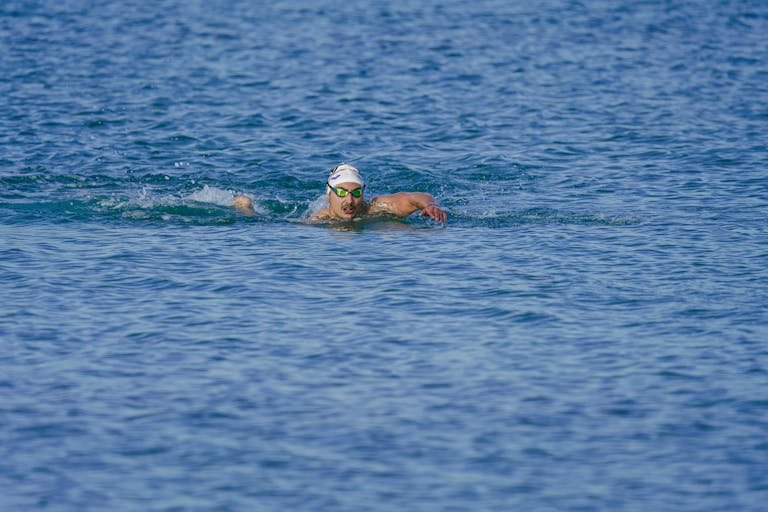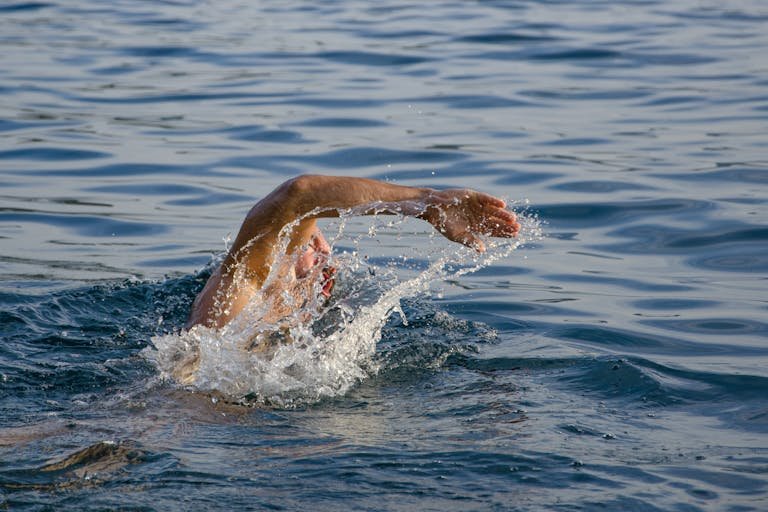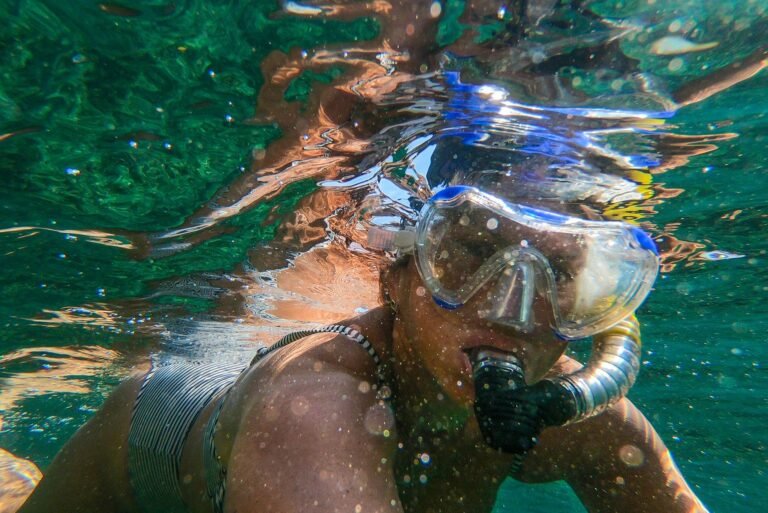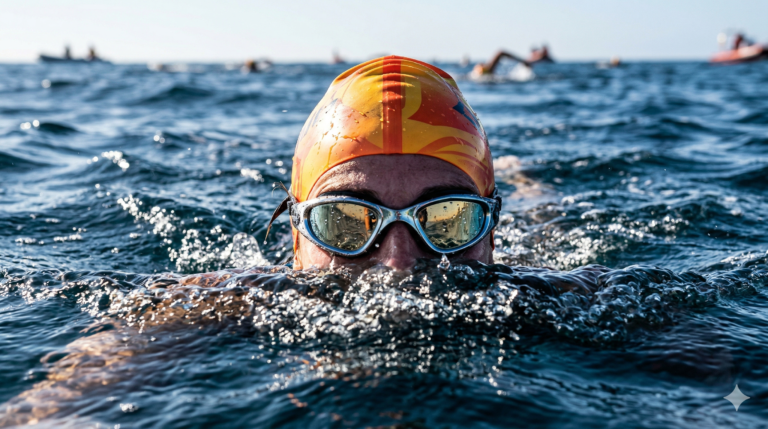
Side glare is easy to underestimate until every breath points straight into the bright side of the course. The buoy may still be there. You just get one half-second look through reflected light, chop, and a lens that may be too dark, too narrow, or simply wrong for that angle.
This guide is for swimmers who breathe mostly to one side and notice that open-water visibility gets worse whenever the sun is on that side of the body.
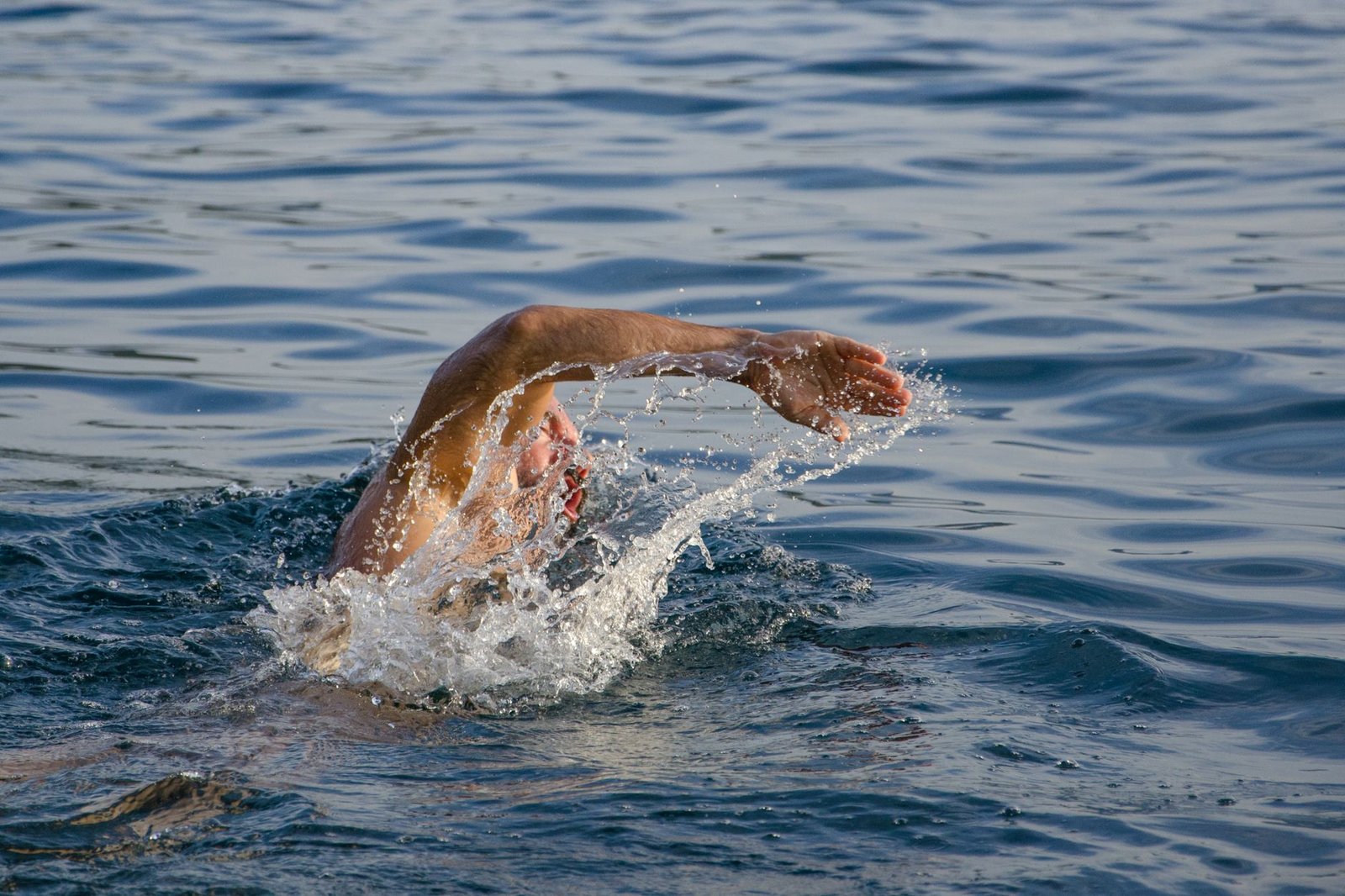
The practical answer: if glare hits hardest when you breathe to one side, look for goggles with enough glare control for that side angle, enough field of view to recover the buoy quickly, and a lens tint that is not so dark that clouds or shaded water become harder to read.
This is not the same problem as general sunny swimming. A swimmer looking straight ahead into bright water can usually adjust the sighting rhythm. A one-sided breather has a narrower window. The head turns, the eye opens, the water reflects, and the next breath is already happening.
Why side glare feels worse than front glare
When glare is directly ahead, you can sometimes choose a larger landmark, change your sighting timing, or pick up the buoy slightly earlier. Side glare is more awkward because it interrupts the breath. You are trying to inhale, keep the stroke relaxed, and gather information at the same time.
If you always breathe to the right and the sun sits low on the right side of the course, every breath can feel like a small flash. Some swimmers respond by lifting the head higher. That usually makes the stroke less steady and can make sighting more tiring.
The goal is not to make the water look dark. The goal is to keep enough contrast that you can find the next reference point without fighting the lens.
The technique side matters too. The guide to sighting without losing rhythm is worth reading if the problem is mostly navigation. This article stays focused on the buying decision: which kind of goggle makes that side-glare problem easier to manage.
Start with the direction of the light
Before buying another pair, think about where the sun usually sits during your swims. Midday glare, low morning glare, and late-afternoon glare do not behave the same way.
Hard midday sun usually calls for stronger light reduction. Low sun can be trickier. A lens that is very dark may reduce brightness, but it can also flatten the water and make buoy colors less obvious when the sun slips behind cloud or the course turns into shade.
Simple field check: stand where you normally enter the water and turn your head as if you were breathing. If the glare is strongest on one side, choose the lens for that side angle, not only for the view when you look straight ahead.
When mirrored or smoke lenses help
For bright outdoor water, a mirrored or smoke lens can make breathing-side glare less harsh. That does not mean every mirrored lens is right. Some are comfortable in full sun but too dim for cloudy lake mornings. Others are fine for pool racing but do not give enough open-water awareness.
The Speedo Vanquisher 3.0 Mirrored is the kind of compact mirrored option that can make sense for swimmers who already like a pool-style fit and want a darker lens for outdoor glare. It is not the first recommendation for someone whose main issue is long-swim pressure or wide sighting, but it is a reasonable comparison point if compact fit is part of the appeal.
For a broader explanation of tint choices, use the open-water lens color guide. If most of your swims are in strong sun, the sunny open-water goggles guide goes deeper into glare-control options.
When wider-view goggles make the bigger difference
Some glare problems are not only about brightness. They are about time. If you only get a brief look while breathing and the lens feels narrow, you may not collect enough information before the head returns to neutral.
That is where wider-view open-water goggles can help. They will not remove glare by themselves, but they can make it easier to catch the buoy, shoreline, kayak, or turn marker without an exaggerated head lift.
Product direction: the ROKA R1 is worth comparing if you want a more race-oriented open-water shape with forward visibility. The Aqua Sphere Vista Pro or Aqua Sphere DEFY Ultra make more sense if your priority is wide awareness and a more forgiving mask-style feel for long swims.
If you are choosing between these styles, the open-water goggles buying guide and the weather-based goggle choice guide can help you sort out whether your real need is glare reduction, field of view, or comfort.
Do not buy the darkest lens automatically
A very dark lens can feel reassuring on the product page. It looks like the obvious answer to glare. In actual open water, it can create a different problem if the course turns away from the sun, clouds roll in, or the water is already dark.
For low sun, the better choice is often a lens that reduces harsh reflection without making everything flat. That may mean smoke, mirrored smoke, or a balanced outdoor tint rather than the darkest possible option. The article on swimming in low sun is a useful companion if your swims often happen at sunrise or sunset.
Fit still matters when glare is the complaint
It is easy to blame the lens when the real issue is movement. If the goggles shift every time you rotate to breathe, the image will feel unstable even with the right tint. A goggle that leaks slightly on the breathing side can also make glare feel worse because you start blinking, squinting, or interrupting the stroke to clear water.
Run the open-water fit test before trusting a new pair. Turn your head to the breathing side, look toward the brightest part of the course, and notice whether the seal changes. If the fit only works when your face stays still, it is not a dependable open-water fit.
For narrower faces: the Aqua Sphere Kayenne Compact Fit is a useful comparison point if larger wide-view goggles feel bulky but small race goggles create pressure or leak near the nose. It is still important to check the current size and lens version before buying.
How to choose for your actual breathing pattern
If you breathe mostly to one side, do not pretend you will become fully bilateral before your next race. It is a good skill to develop, but gear should match the swimmer you are today.
- If your breathing side faces open sun, prioritize glare control and a stable seal.
- If your breathing side faces shore, rocks, kayaks, or spectators, prioritize field of view and contrast.
- If the course changes direction often, avoid a lens that only works in one lighting condition.
- If you race in a crowd, make sure the fit stays secure during contact, not only during relaxed training.
The triathlon swim start position guide is helpful if glare combines with crowding near the first buoy. Those two problems together can make a swimmer over-lift the head and drift off line.
Final recommendation
For one-sided breathing glare, buy for the angle of the breath, not only for the brightness of the day. If you want a compact, race-oriented feel, compare an open-water-specific option like the ROKA R1 with a familiar mirrored training/racing shape like the Speedo Vanquisher 3.0 Mirrored. If your bigger problem is awareness, pressure, or long-swim comfort, compare wider-view designs such as the Aqua Sphere Vista Pro or Aqua Sphere DEFY Ultra instead.
The wrong choice is usually the extreme one: a lens so dark it only works in full sun, or a narrow frame that forces you to lift your head higher just to find the buoy. Choose the pair that helps you breathe, look, and return to rhythm without making the swim feel busier than it already is.
Not sure which goggles match your swim conditions?
Answer a few quick questions about where you swim, your face fit, lens needs, and comfort priorities.
If you are still comparing lens types, start with the open-water lens color guide. If the problem changes with wind, clouds, or race start time, use the weather-based goggle choice guide next.