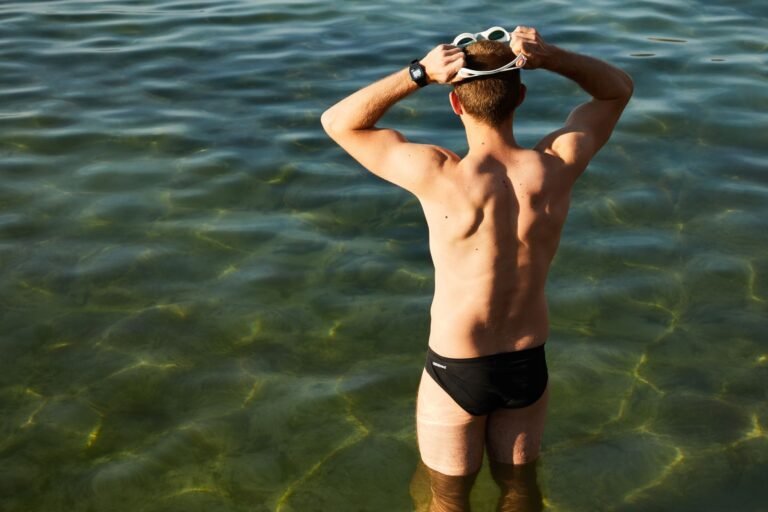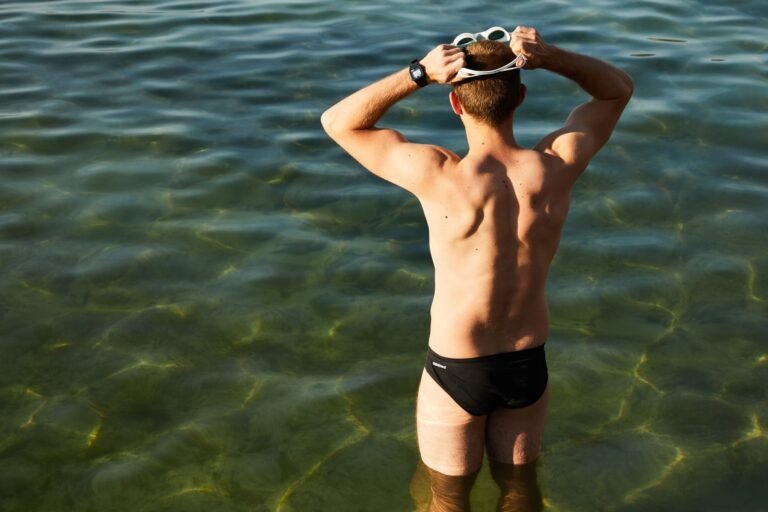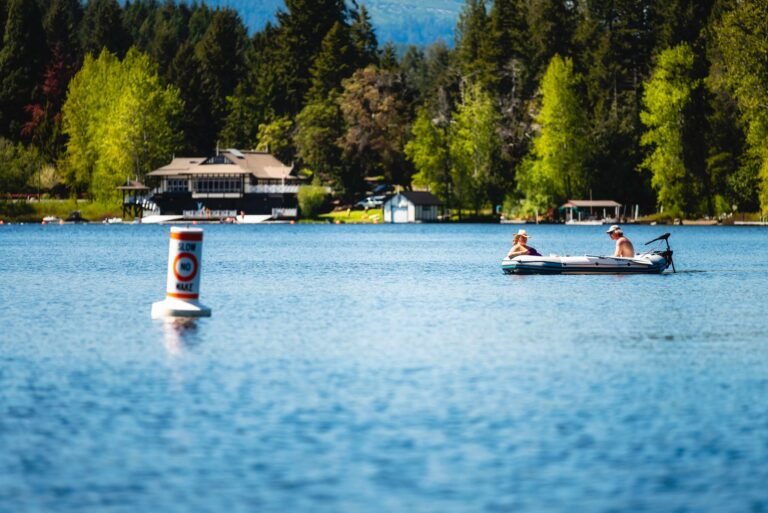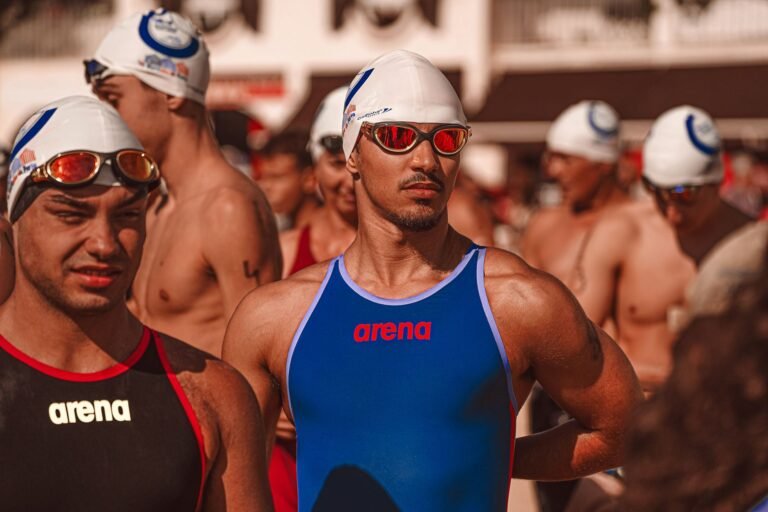
Buying goggles for your first open-water swim is not the same as buying a fast-looking pair for the pool. In the pool, you know where the walls are, the water is flat, and the light is predictable. In a lake or ocean, you are asking the goggles to help you stay calm, see where you are going, and avoid wasting half the swim adjusting the strap.
The safest first pair is usually not the smallest, darkest, or most race-like option. It is the pair that seals without being forced, gives you enough vision to sight comfortably, and matches the light you are actually going to swim in.

Quick answer: for a first open-water swim, prioritize comfort, a forgiving seal, and easy sighting over a low-profile racing shape. A wide-view goggle or swim-mask style can be the better first choice if you are nervous, swimming longer than a short test session, or still learning how to sight.
There is already a full beginner open-water goggles guide on this site, so this article is narrower. It is about the first buying decision: what should you actually buy before the first lake or ocean swim, when you do not yet know whether glare, chop, fog, pressure, or sighting will be your biggest problem?
Do not start with the pair that looks fastest
Racing goggles can be excellent once you know what you like. They sit close to the face, move less on dives and turns, and often feel clean in the water. That does not automatically make them the right first open-water choice.
A first open-water swim is full of new information. The water may feel colder than expected. You may lift your head more often to sight. You may breathe higher, turn wider, or pause for a moment near a buoy. A tiny pair of goggles with a narrow gasket can work, but it gives you less margin if the fit is not already right.
Your first pair should make the swim quieter. If the goggles become the thing you keep thinking about, they were the wrong first pair.
The three decisions that matter before the first swim
1. Comfort before speed
If the swim is mostly about getting comfortable outside the pool, choose a shape that gives your eye sockets a little more forgiveness. Long-swim pressure is not always obvious in the first minute. A pair can feel fine in your bathroom mirror and still start pressing around the eyes after twenty or thirty minutes.
If eye pressure is already a concern, read the guide on goggles that hurt after 30 minutes before buying anything too compact. For many first-timers, a wider comfort goggle such as the Aqua Sphere Kayenne Compact Fit is easier to live with than a sharp race profile. If you want even more room around the eyes, a mask-style option such as the Aqua Sphere Vista Pro or Aqua Sphere DEFY Ultra can be a reasonable first open-water choice.
2. Enough vision to sight without panic
Sighting is one of the first things that surprises pool swimmers. You do not need a goggle that turns your head into a glass dome, but you do need enough forward and side awareness to find buoys, kayaks, shorelines, or turn markers without lifting your head too high every few strokes.
This is where many beginner purchases go wrong. A narrow pool-racing fit may be familiar, but if it makes the course feel small and busy, you will sight more often and swim less smoothly. The open-water goggles buying guide goes deeper into lens and field-of-view tradeoffs, but for a first swim the simple rule is this: visibility should feel easy, not impressive on paper.
3. A lens that matches the day, not the product photo
Mirrored lenses can look like the obvious outdoor choice, and they are useful in bright sun. The problem is that first open-water swims often happen early in the morning, under clouds, in shaded lakes, or in mixed light. A lens that is too dark can make the water feel less predictable.
If the swim is bright and exposed, a mirrored option such as the Speedo Vanquisher 3.0 Mirrored can make sense, especially if you already know that style fits your face. If the swim starts early or the course is shaded, a lighter lens or clear wide-view option may be less stressful. The open-water goggle lens color guide is worth checking before choosing a tint.
A first swim is not the best time to learn that your lens is too dark, your strap slips under a cap, or your gasket leaks when you lift your head. Test the goggles in the pool first, even if the real goal is open water.
When a swim mask is the better first purchase
Some swimmers should not fight with compact goggles on the first open-water outing. If you already know that regular goggles leave deep pressure marks, leak near the outer corners, or make you feel boxed in, a swim-mask style deserves a serious look.
A mask is not automatically better. It can feel bulkier, and some triathletes prefer a smaller profile in crowded race starts. But for a first lake swim, casual ocean session, or longer comfort-focused swim, the easier seal and wider view can make the whole experience less distracting.
The swim mask vs goggles guide explains that tradeoff in more detail. In practical terms, the Aqua Sphere Vista Pro and Aqua Sphere DEFY Ultra are the type of options to compare if comfort and sighting matter more than a tiny race feel.
When compact goggles still make sense
Compact goggles are not the enemy. If you are coming from pool training, already have a face shape that fits low-profile goggles well, and plan to do triathlon starts or faster open-water sessions, a smaller goggle can still be the right buy.
The difference is that compact goggles demand a better fit from the start. You do not want to buy them only because they look more serious. You want them because the seal is stable, the nose bridge does not pinch, and the lens is usable in the light you expect.
For a race-oriented first open-water pair, the ROKA R1 is more aligned with triathlon sighting and forward visibility than a generic pool goggle. A pool favorite like the Speedo Vanquisher 3.0 Mirrored can still work for some swimmers, but it is a better choice if you already know that Vanquisher-style goggles fit you well.
Do one boring test before you trust the goggles
Before the first open-water swim, wear the goggles in the pool long enough for small problems to show up. Five minutes is not enough. Swim with them for a normal session, sight a few times, adjust your cap, and notice whether the seal changes when you lift your head.
- If water enters near the inner eye, the bridge or gasket shape may be wrong.
- If water enters near the outer corner, the frame may be too narrow or too rigid for your face.
- If the goggles hurt only after a longer swim, the issue is often pressure, not toughness.
- If the lens feels too dark indoors, it may also be too dark for cloudy or shaded open water.
If leaking is already your main worry, start with why open-water goggles leak. A first open-water swim is much easier when the goggle has already earned your trust in calmer water.
What to buy if you are still unsure
If you do not yet know your open-water preferences, buy for the least dramatic swim experience. That usually means a comfortable seal, moderate or clear visibility, and enough field of view to sight without feeling trapped. You can always move toward a race-specific shape later.
For comfort-first beginners: compare the Aqua Sphere Kayenne Compact Fit, Aqua Sphere Vista Pro, or Aqua Sphere DEFY Ultra. These make the most sense when you want easier visibility and less eye-socket pressure.
For first triathlon training: compare the ROKA R1 if sighting and race-day stability matter, or the Speedo Vanquisher 3.0 Mirrored if you already like that pool-style fit and need a mirrored outdoor lens.
Check the current lens version, size, and color before buying. Amazon listings can change, and the same product family may include clear, smoke, mirrored, polarized, or compact-fit variants.
One piece of gear that is not goggles
If this is your first open-water swim, do not treat goggles as the only safety-related decision. A brightly colored swim buoy can make you easier to see and gives you a place to pause if you need to settle your breathing. The open-water swim buoy guide is a useful next read if you are swimming outside a supervised race or organized group.
The practical recommendation
For most first-time open-water swimmers, the smartest first buy is a comfortable wide-view goggle or swim mask with a lens that suits the actual conditions. Do not chase the smallest race profile unless you already know that style fits your face and the swim will reward it.
If you are choosing today, start with the problem you most want to avoid: pressure, leaking, glare, poor sighting, or race-day instability. That will tell you more than any generic top-picks list.