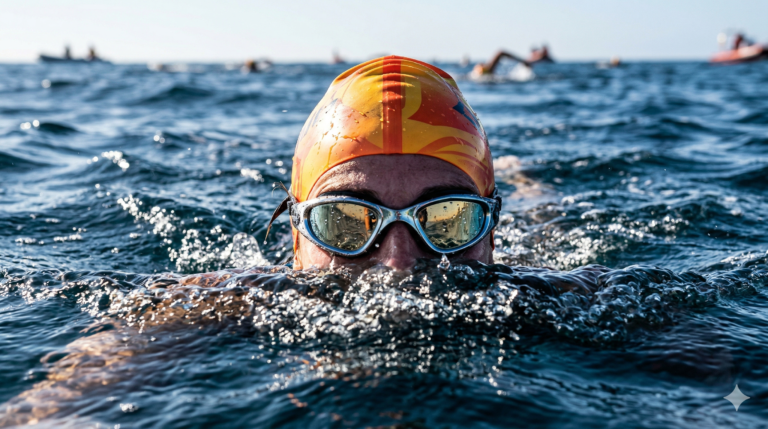
Imagine standing on the shoreline at 6:00 AM. The air is freezing, and the lake is pitch black. You dive in, wearing your trusty, dark-tinted racing goggles. For the first thirty minutes, you are essentially swimming blind in the dark. Then, as you round the final turn of the course, the sun breaches the horizon directly in front of you. Suddenly, the water transforms into a blinding, shimmering mirror. You cannot see the safety kayaks, you cannot spot the finish line, and every time you lift your head to breathe, you are blinded by the intense horizontal glare.
If you have ever participated in an open-water triathlon or a long-distance ocean swim, you know this scenario all too well. In the unpredictable wild, the sun is both your greatest ally and your absolute worst enemy. Choosing the right lens technology is not a matter of looking cool; it is a critical safety and navigation decision.
When shopping for premium open-water eyewear, you will inevitably run into the two titans of lens science: Polarized and Photochromic (also known as transition) lenses. But what exactly is the difference? Do you really need to spend the extra money on these technologies? In this comprehensive 2026 gear guide, the experts at OpenWaterGoggles.com will break down the exact physics of how these lenses work, their specific strengths and weaknesses, and help you definitively settle the photochromic vs polarized swim goggles debate.
1. The Science of Polarized Lenses: The Glare Killer
To understand polarized lenses, we must first understand how light travels. Normally, sunlight scatters in all directions (vertically, diagonally, horizontally). However, when sunlight hits a flat, reflective surface—like the hood of a car or a calm ocean swell—the light waves align and reflect horizontally into your eyes. This concentrated, horizontal light is what we call “glare.”
Standard mirrored lenses simply make everything darker, like turning down the brightness on a TV. They do not selectively block glare. Polarized lenses, on the other hand, are coated with a highly specialized microscopic chemical film. The molecules in this film are lined up parallel to each other, acting like microscopic vertical blinds on a window. They allow vertical light to pass through so you can see clearly, but they completely block the horizontal light waves bouncing off the water.
When to use Polarized Goggles: If you are swimming in the middle of a bright, sunny day, or if you are doing a race where you know you will be swimming directly into the rising or setting sun, polarized lenses are absolutely non-negotiable. By actively neutralizing the blinding glare, they eliminate eye fatigue and stop you from desperately squinting every time you use the alligator-eyes sighting technique. We highly recommend exploring models like the ZIONOR wide-view polarized goggles or the 3D-scanned Magic5 for optimal sun protection.
2. The Science of Photochromic Lenses: The Shape-Shifter
While polarized lenses are fantastic for bright conditions, they pose a serious problem if the weather suddenly changes. If a massive storm cloud rolls in, or if you are swimming in a dark, tree-covered river, polarized lenses can make your vision dangerously dark.
Enter Photochromic lenses. Also known as transition lenses, these marvels of modern chemistry adapt to their environment. The plastic lenses are embedded with millions of microscopic silver halide or silver chloride molecules. When these molecules are exposed to Ultraviolet (UV) light from the sun, they undergo a rapid chemical reaction, changing their shape and absorbing light. This causes the lens to turn dark.
The moment you swim into the shade, or the sun goes down, the UV radiation disappears. The molecules snap back to their original shape, and the lens becomes crystal clear again. This transition process usually takes about 30 to 60 seconds.
When to use Photochromic Goggles: These are the ultimate “Dawn Patrol” weapons. If your training swims or Ironman races start in the pitch-black darkness of the early morning and finish hours later under a blazing sun, photochromic goggles are the only tool you need. They adapt flawlessly, saving you from having to carry two different pairs of open water swimming goggles in your transition bag.
3. Head-to-Head Comparison: Which is Right For You?
Deciding between photochromic vs polarized swim goggles comes down to one single question: What time of day do you usually swim?
Choose Polarized If:
- You primarily swim in the mid-morning or afternoon when the sun is at its brightest.
- You struggle with severe eye fatigue or headaches from squinting against the water’s surface.
- You need maximum contrast to spot orange and yellow navigation buoys against blue ocean waves.
Choose Photochromic If:
- You are an early riser who swims from dark into the sunrise.
- You live in a region with highly unpredictable weather where sunny skies can turn to dark clouds in minutes.
- You want one versatile pair of goggles that works equally well in the indoor pool and the outdoor lake.
4. Protecting Your Premium Lenses
Whether you choose polarized or photochromic technology, you are making a significant financial investment in your vision. These chemical layers are sensitive and require proper swim goggle care.
Never leave photochromic goggles baking in the hot sun on the dashboard of your car, as extreme heat can permanently damage the transition molecules. For both lens types, the absolute golden rule applies: Never touch the inside of the glass. The premium anti-fog coatings on the inside of the lens will be instantly destroyed by the oils on your fingers. Always rinse them in cold, fresh water after your swim and store them in a hard-shell protective case.
The Final Verdict
Your vision is the most important sense you have in the wild water. Do not let cheap, un-tinted plastic ruin your race day. Evaluate your primary swimming environment, analyze your race times, and invest in the science that will keep your eyes open, your stroke rate high, and your mind completely focused on the finish line.
Do polarized swim goggles work in overcast weather?
While polarized lenses excel at blocking horizontal glare, they inherently reduce the overall amount of light entering your eyes. In heavily overcast or dark environments, they can make your vision too dark, making it hard to spot navigation buoys.
How long do photochromic swim goggles take to transition?
High-quality photochromic lenses typically take between 30 to 60 seconds to fully darken when exposed to direct UV sunlight, and slightly longer to return to a completely clear state when you move into the shadows.
Can a lens be both polarized and photochromic?
Yes, but they are rare and very expensive. Some elite tactical goggles combine both technologies, offering glare reduction alongside UV-reactive darkening, but for most open-water swimmers, choosing one dedicated technology based on race time is more efficient.
Will mirrored lenses prevent glare as well as polarized lenses?
No. Mirrored lenses simply reflect a percentage of overall light away from your eyes, making things dimmer. Polarized lenses contain a chemical filter that actively blocks the specific horizontal light waves that bounce off the water and cause blinding glare.
Disclaimer: OpenWaterGoggles.com is a member of the Amazon Associates program and earns from qualifying purchases. When you purchase new swim gear through our carefully selected links, we earn a commission at no additional cost to you.