Open Water Swimming Guide
Open water swimming can feel exciting, challenging, and intimidating at the same time. Unlike pool swimming, you may deal with waves, cold water, limited visibility, changing weather, other swimmers, and unfamiliar swim routes.
This FAQ guide answers common open water swimming questions about beginner safety, goggles, gear, sighting, anxiety, training, and race-day preparation.
Quick Answers for Beginners
Is open water swimming safe?
It can be safe when conditions, supervision, ability level, and preparation are appropriate. Beginners should avoid swimming alone.
What gear do beginners need?
A comfortable pair of goggles, bright swim cap, suitable swimsuit or wetsuit, and safe swim location are the basics.
What goggles are best?
Beginners usually do best with comfortable, wide-view goggles that seal well and match the light conditions.
Open Water Swimming Safety FAQs
Is open water swimming safe for beginners?
Open water swimming can be safe for beginners when the conditions are appropriate, the swimmer stays within their ability level, and the swim is done with proper supervision or support. Beginners should start in calm, familiar, lifeguarded, or organized swim areas when possible.
Avoid starting alone in cold, rough, deep, or unfamiliar water. Open water adds risks that are not present in a pool, including currents, boat traffic, weather changes, low visibility, and fatigue.
Should I swim alone in open water?
It is generally better not to swim alone in open water. Swim with a partner, group, coach, lifeguarded venue, or organized event whenever possible.
If you train in open water regularly, consider using a bright swim cap and tow buoy to improve visibility. A swim buoy can help others see you, but it is not a replacement for safe planning and appropriate supervision.
What should I know before my first open water swim?
Before your first open water swim, check the water temperature, weather, entry and exit points, swim route, visibility, local rules, and whether there are lifeguards or safety support. Start short and easy.
Your first goal is not speed. Your first goal is comfort, breathing control, sighting practice, and learning how open water feels compared with a pool.
Do I need a wetsuit for open water swimming?
You may need a wetsuit if the water is cold, if the event requires one, or if you want added warmth and buoyancy. In warm water, a swimsuit may be enough.
Wetsuits can help with flotation and warmth, but they can also feel restrictive if you are not used to them. Test your wetsuit before race day or longer swims.
How do I stay calm in open water?
Start slowly, focus on long exhales, sight a nearby target, and avoid rushing the first few minutes. If you feel anxious, slow your stroke, switch to an easier stroke if needed, and focus on the next buoy or landmark.
For more help, read our guide on how to deal with pre-race nerves before open water swimming.
Gear and Goggles FAQs
What goggles are best for open water swimming?
The best open water goggles should seal comfortably, resist fogging, provide enough visibility for sighting, and match your usual swim conditions. Many swimmers prefer wide-view goggles for lakes and oceans because they make it easier to see buoys, shorelines, and other swimmers.
Start with our guide on how to choose open water swimming goggles.
Are polarized goggles good for open water?
Yes. Polarized goggles are useful for sunny open water because they help reduce glare from sunlight reflecting off the water surface. They are especially helpful for bright ocean swims, lake swims, and outdoor pool training.
They may be too dark for early morning, cloudy, or indoor swims. See our guide to the best polarized goggles for open water swimming.
Should open water goggles be clear or tinted?
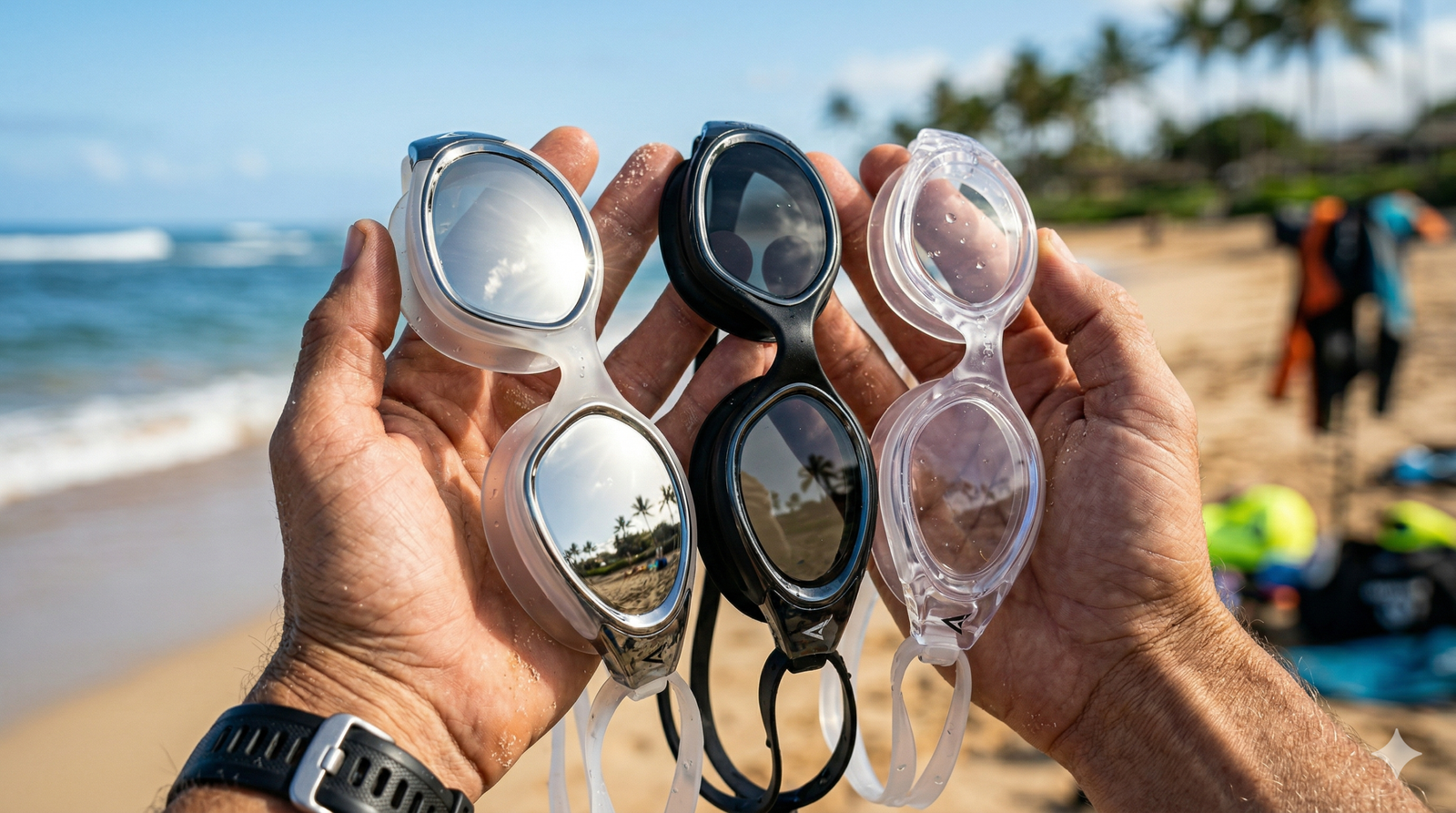
Clear lenses are better for low light, cloudy conditions, indoor pools, and early morning swims. Tinted, smoke, mirrored, or polarized lenses are better for bright sun and glare.
Many regular open water swimmers keep two pairs: one clear or light-tint pair for low light, and one darker or polarized pair for sunny conditions.
How do I stop goggles fogging in open water?
Use goggles with a reliable anti-fog coating, avoid rubbing the inside of the lenses, rinse gently after swims, and store them in a protective case. Anti-fog coatings wear down over time, especially if the inner lens is rubbed or scratched.
If fogging is your main problem, compare our picks for the best anti-fog swim goggles for open water.
Why do my goggles leak in open water?
Goggles usually leak because the gasket does not match your face shape, the nose bridge is wrong, the strap is too loose, or the frame shifts when you sight forward. Over-tightening can sometimes make leaking worse by distorting the seal.
Test the seal before swimming. Press the goggles gently to your face without the strap. If they hold light suction briefly, the fit is more likely to work.
Should I bring backup goggles?
Yes, especially for races, group swims, or longer open water sessions. A backup pair can help if your main goggles break, fog, leak, or have the wrong lens tint for the conditions.
For race day, many swimmers bring one darker lens pair and one clear or light-tint pair.
Lens and Visibility FAQs
Are wide-view goggles better for open water?
Wide-view goggles are often better for open water because they improve peripheral awareness and make sighting easier. They can help you see buoys, other swimmers, waves, shorelines, and nearby activity more comfortably.
Some experienced racers still prefer compact race goggles because they feel faster and more secure. Compare options in our wide-view swim goggles guide.
What lens color is best for open water swimming?
The best lens color depends on light conditions. Clear lenses are best for low light. Smoke or tinted lenses work for general outdoor swimming. Mirrored and polarized lenses are better for bright sun and glare.
Are photochromic goggles worth it?
Photochromic goggles can be worth it if your swim conditions often change between sun, clouds, and shade. They adjust tint based on light exposure, making them more versatile than a fixed dark lens.
For a deeper comparison, read photochromic vs polarized swim goggles.
Do prescription goggles work for open water?
Yes. Prescription or optical swim goggles can help nearsighted swimmers sight buoys, shorelines, and other swimmers more clearly. They are especially useful for swimmers who do not want to wear contact lenses in the water.
Compare options in our guide to the best prescription swim goggles for open water.
Training and Technique FAQs
How do I sight while open water swimming?
To sight, lift your eyes just enough to see forward, then return your face to the water and continue swimming. Try not to lift your whole head too high because that can drop your hips and slow you down.
Practice sighting in the pool by picking a target at the end of the lane and lifting your eyes briefly every few strokes.
How often should I sight?
It depends on conditions. In calm water with clear landmarks, you may sight less often. In chop, current, crowded races, or unfamiliar water, you may need to sight more frequently.
Beginners may start by sighting every 6–10 strokes until they feel more confident swimming straight.
How do I swim straight in open water?
Practice balanced breathing, relaxed body rotation, and regular sighting. Many swimmers drift because they breathe more comfortably to one side, pull unevenly, or sight too rarely.
A GPS watch or swim app can help you review whether your route was straight. See our guide to swim apps and technology for open water progress.
How do I train for my first open water swim?
Build pool endurance first, then gradually add open water practice in safe conditions. Practice sighting, relaxed starts, breathing control, and swimming continuously without pushing off a wall.
Start with short, calm sessions and increase distance gradually.
How do I deal with waves or chop?
Shorten the stroke slightly, keep breathing relaxed, sight more often, and avoid fighting the water. In choppy conditions, it can help to breathe away from incoming waves when possible.
Strong core and shoulder stability can also help. Read our dryland training guide for open water swimmers.
Race-Day and Triathlon FAQs
What goggles should I use for a triathlon?
Triathlon goggles should be comfortable, secure, anti-fog, and suitable for race-day light conditions. Many triathletes prefer polarized or tinted goggles for bright open water and clear or light lenses for early starts.
For long events, see our guide to the best swim goggles for Ironman races.
Should I start at the back if I am nervous?
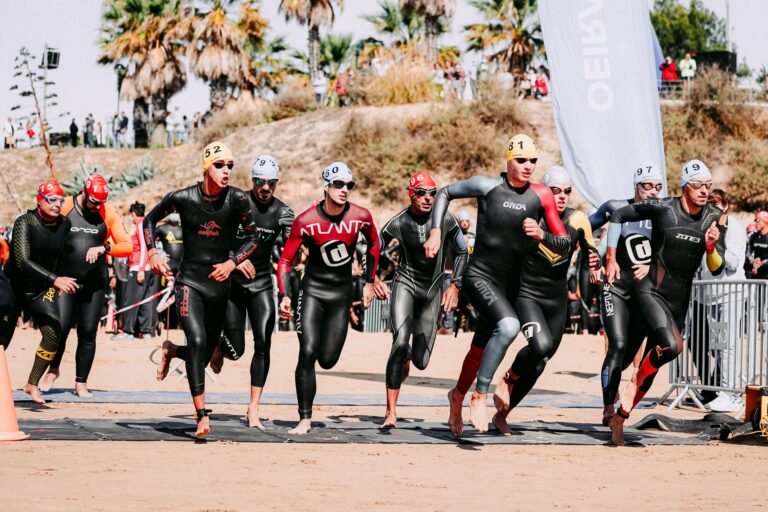
Starting slightly to the side or behind the main group can reduce contact and give you more space. This can be a smart choice for beginners or swimmers who feel anxious in crowded starts.
How do I avoid panic during a triathlon swim?
Start at a controlled pace, focus on long exhales, avoid the most crowded line if needed, and think only about the next buoy or landmark. If panic rises, slow down and reset your breathing.
Read our guide on how to manage pre-race nerves before open water swimming.
What should I do before race morning?
Test your goggles, wetsuit, swim cap, and race-day routine before the event. Review the course map, know the first buoy, prepare a backup goggle pair, and avoid trying new gear on race day.
Beginner Open Water Swimming Checklist
Use this checklist before your first open water swim or race. It is not a full safety plan, but it covers common beginner mistakes.
Before you swim:
- Choose a safe, appropriate swim location.
- Avoid swimming alone, especially as a beginner.
- Check water temperature, weather, and local conditions.
- Wear goggles that are already tested and comfortable.
- Use a bright swim cap for visibility.
- Consider a tow buoy for training visibility and storage.
- Know your entry and exit points.
- Start with a short, controlled swim.
- Practice sighting and relaxed breathing.
- Stop or ask for help if you feel unsafe.
Recommended Guides for New Open Water Swimmers
These guides go deeper into the most common beginner questions about goggles, confidence, training, and race-day preparation.
Final Thoughts
Open water swimming becomes easier when you understand the basics: safe conditions, reliable goggles, calm breathing, regular sighting, gradual training, and good judgment.
You do not need perfect gear or perfect confidence to begin. Start small, swim with support, choose appropriate conditions, and build experience over time.
Start With the Right Goggles
If you are new to open water, comfortable goggles with good visibility can make your first swims feel less stressful.