There is a massive misconception in the triathlon and marathon swimming community that the only way to swim faster is to spend countless hours staring at the black line at the bottom of a chlorinated pool. While logging high-volume yardage in the water is undeniably essential for aerobic conditioning, it is only one half of the athletic equation. The secret to truly dominating the ocean, fighting through aggressive cross-currents, and finishing a 2.4-mile Ironman swim with fresh legs lies completely outside of the water.
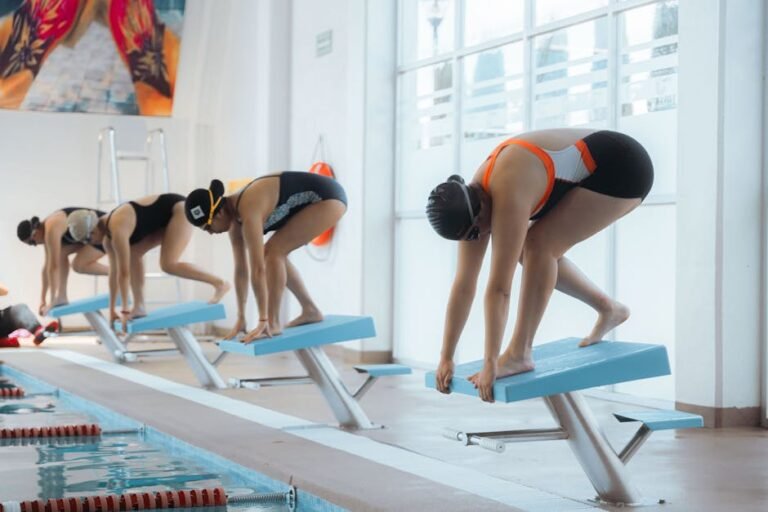
Welcome to the grueling, highly effective world of dryland training. While pool athletes utilize dryland training to build the strength, power, and stability sprint freestylers need to explode off the block, nail the turn, and hold speed to the wall, open-water swimmers require a radically different approach. In the ocean, there are no walls to push off every 25 yards to give your shoulders a two-second microscopic rest. You are forced into a state of continuous, relentless pulling against a dynamic, shifting environment.
To conquer this environment, your body must be functionally bulletproof. You need an iron-clad core to maintain a high hip position in choppy waves, immense latissimus dorsi (lat) endurance to sustain your stroke rate, and resilient rotator cuffs to prevent the catastrophic shoulder injuries that plague long-distance swimmers.
In this comprehensive 2026 guide, the performance experts at OpenWaterGoggles.com will break down exactly why dryland is the ultimate competitive advantage. We will provide you with a detailed breakdown of the biomechanics involved, reveal the exact exercises you need to perform, and teach you exactly what to do and how to program it into your weekly triathlon training schedule.
Quick Guide: The Open Water Dryland Weekly Split
Programming your dryland routine can be confusing. You do not want to lift so heavy that you are too sore to swim the next day. To optimize recovery and performance, we recommend a 3-day-per-week dryland split focused on functional strength rather than bodybuilding mass.
| Training Day | Primary Focus | Key Movement Patterns | Estimated Duration |
|---|---|---|---|
| Monday | Core Stability & Anti-Rotation | Planks, Russian Twists, Pallof Press | 30 Minutes |
| Wednesday | Pull Power & Shoulder Endurance | Resistance Band Pulls, Pull-ups, Rows | 45 Minutes |
| Friday | Pre-hab & Explosive Power | Kettlebell Swings, Scapular Retractions | 30 Minutes |
(Note: Always perform dryland training either on different days than your heavy swim workouts, or perform the dryland session your swim to ensure your technique in the water is not compromised by muscular fatigue).
Pillar 1: Core Stability and Anti-Rotation
When most amateur swimmers think of core training, they think of doing hundreds of crunches to get a six-pack. In the open water, a six-pack is completely useless. What you actually need is “Anti-Rotation” and isometric stability.
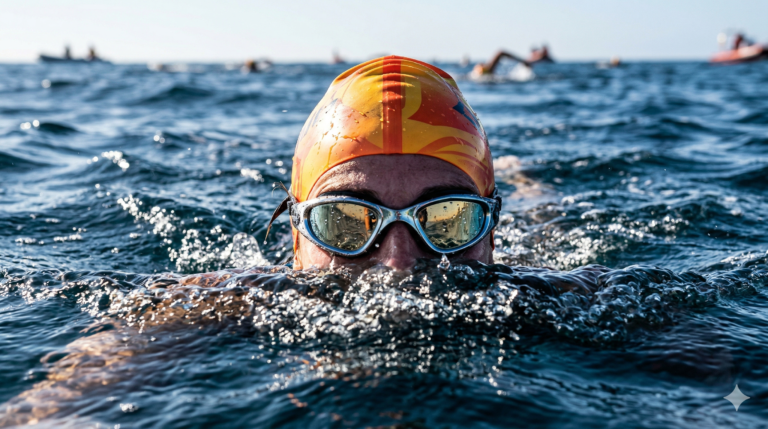
Your core is the biological transmission of your body. It connects the power generated by your freestyle arm pull to the propulsion generated by your flutter kick. In the ocean, waves will constantly hit you from the side, trying to roll you over. Furthermore, when you lift your head to look through your wide-view swim goggles to sight a buoy, your hips will naturally want to sink. A brutally strong core prevents your hips from dropping and stabilizes your spine against the chaotic forces of the water.
1. The Hollow Body Hold This is the single most important core exercise a swimmer can do. It directly mimics the perfectly streamlined, high-hip position you must maintain in the water to eliminate hydrodynamic drag.
- How to do it: Lie flat on your back. Press your lower back violently into the floor so there is zero gap between your spine and the mat. Squeeze your glutes, point your toes, and lift your legs six inches off the floor. Simultaneously, extend your arms straight above your head and lift your shoulder blades off the floor. Your body should form a slight “U” or hollow bowl shape.
- Programming: 4 sets of 45 to 60-second holds.
2. The Pallof Press (Anti-Rotation) When you pull water with your right arm, your body naturally wants to twist to the right. The Pallof press trains your core to resist this twisting motion, ensuring all your energy pushes you straight forward toward the finish line rather than spinning you side to side.
- How to do it: Attach a resistance band to a pole at chest height. Stand perpendicular to the pole, holding the band with both hands against your sternum. Step away until there is high tension on the band. Slowly press the band straight out in front of you. The band will desperately try to snap you back toward the pole. Use your obliques and core to resist the rotation. Hold for 3 seconds, then slowly bring it back to your chest.
- Programming: 3 sets of 12 reps per side.
3. Weighted Russian Twists While resisting rotation is key, you also need controlled, powerful rotation to drive your freestyle stroke. The Russian twist builds the rotational power necessary to drive your hips and maximize your reach on every single stroke.
- How to do it: Sit on the floor, lean back at a 45-degree angle, and lift your feet off the ground so you are balancing on your glutes. Hold a medicine ball or a dumbbell. Powerfully twist your torso to the right, tapping the weight on the floor, and then immediately twist to the left. Keep your spine perfectly straight; do not hunch your shoulders.
- Programming: 4 sets of 30 total reps (15 per side).
Pillar 2: Developing Unstoppable Pull Power
If you want to swim faster, you have to pull more water, and you have to pull it with more force. It is that simple. You must utilize training methods that actually build pull power and speed. The primary muscle group responsible for dragging you across a 2.4-mile Ironman course is the latissimus dorsi (the large, V-shaped muscles on your back), supported by the triceps and the chest.
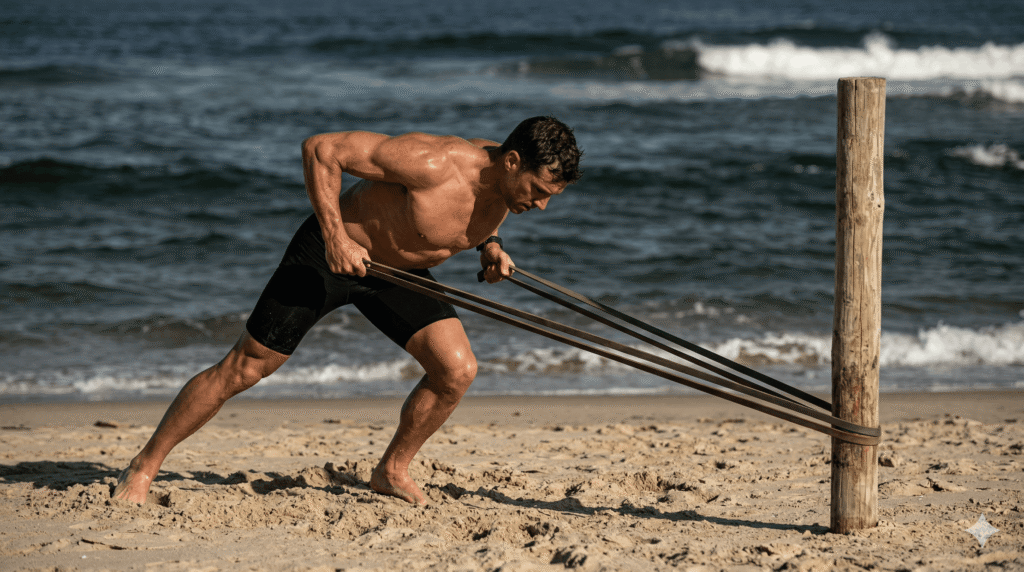
1. Resistance Band Early Vertical Forearm (EVF) Pulls The high-elbow catch (EVF) is the holy grail of freestyle mechanics. You cannot practice this effectively with heavy dumbbells; you must use resistance bands. Bands provide ascending resistance, meaning the harder you pull, the more resistance they offer—exactly like water.
- How to do it: Loop a pair of stretch cords or surgical tubing around a secure post at waist height. Bend over at the waist until your torso is parallel to the ground. Keep your elbows pointing toward the sky. Initiate the pull by bending your wrists and forearms downward, locking your elbows in a high position (creating a massive paddle with your entire forearm). Once your forearm is pointing straight down, powerfully pull your hands back past your hips, flexing your triceps at the end.
- Programming: 4 sets of 20 to 25 reps. High volume is required here to simulate the endurance needed for open water.
2. The Strict Pull-Up There is no better exercise for raw lat strength than the classic pull-up. If you can effortlessly pull your entire body weight over a bar, pulling yourself through a liquid medium becomes exponentially easier.
- How to do it: Grab a pull-up bar with a pronated (overhand) grip slightly wider than shoulder-width. Start from a dead hang. Retract your scapula (pull your shoulder blades down and back), and pull your chest up to the bar. Lower yourself slowly and under control. Do not use momentum or “kipping” to cheat the movement.
- Programming: 4 sets to muscular failure. If you cannot do a pull-up, use heavy resistance bands looped around your feet for assistance, or perform negative pull-ups (jumping up to the bar and lowering yourself as slowly as possible).
3. Single-Arm Dumbbell Rows Freestyle is an asymmetrical stroke. You are never pulling with both arms at the exact same time. Therefore, training your arms unilaterally (one at a time) is crucial to correct muscle imbalances that could cause you to swim in circles in the open water.
- How to do it: Place your left knee and left hand on a flat bench. Keep your back perfectly flat. Hold a heavy dumbbell in your right hand, letting it hang straight down. Powerfully row the dumbbell up to your right hip, squeezing your right lat intensely at the top. Lower it slowly.
- Programming: 3 sets of 8 to 10 reps per arm (Go heavy to build raw strength).
Pillar 3: Injury Prevention and Pre-Hab
The repetitive nature of swimming is brutal on the human shoulder. Over the course of a marathon swim, you will rotate your shoulder joint tens of thousands of times. If your rotator cuff is weak, you will eventually develop “Swimmer’s Shoulder” (impingement syndrome), which can end your season instantly. Pre-hab (preventative rehabilitation) is mandatory.
1. Band External and Internal Rotations The rotator cuff consists of four tiny muscles that stabilize the humerus bone in the shoulder socket. They are not designed for massive power; they are designed for stability.
- How to do it: Tie a light resistance band to a pole at elbow height. Stand sideways to the pole. Keep your elbow pinned aggressively against your ribs, bent at a 90-degree angle. For internal rotation, pull the band inward across your stomach. For external rotation, stand facing the other way and pull the band outward, away from your stomach.
- Programming: 3 sets of 15 reps per arm, per direction. Use very light resistance. You should feel a deep burn inside the shoulder joint, not the chest or back.
2. Scapular Wall Slides Many swimmers suffer from internally rotated, hunched shoulders due to overdeveloped chest muscles and weak upper backs. This exercise forces perfect posture and opens up the chest cavity, allowing for deeper, more efficient breathing in the water.
- How to do it: Stand with your heels, glutes, upper back, and head completely flat against a wall. Raise your arms to a 90-degree “goalpost” position, ensuring your elbows and the back of your wrists are touching the wall. Slowly slide your arms straight up above your head without letting your elbows or wrists lose contact with the wall.
- Programming: 3 sets of 12 reps. It looks easy, but it is incredibly agonizing for athletes with poor shoulder mobility.
The Subtle Art of Warming Up: Race Day Dryland
Dryland training is not just for the gym during the off-season. It is a critical component of your race-day execution. Many amateur triathletes make the catastrophic mistake of standing perfectly still, shivering on the freezing beach for thirty minutes before the starting gun fires.
If you dive into the freezing ocean with stiff, cold muscles, your stroke mechanics will instantly fall apart, and you run a massive risk of tearing a rotator cuff. To prevent this, you must master the subtle art of warming up.
Fifteen minutes before your wave starts, you must execute a dynamic dryland warm-up on the sand. Do not perform static stretching (touching your toes and holding it); static stretching relaxes the muscles and decreases explosive power. Instead, perform dynamic movements to elevate your core temperature, lubricate your shoulder joints with synovial fluid, and physically burn off the excess adrenaline that fuels panic.
Execute 3 rounds of the following dynamic circuit on the beach:
- 50 High-Knees (Jogging in place)
- 20 Large Arm Circles (Forward and Backward)
- 15 Torso Twists (Swinging your arms side to side to loosen the spine)
- 10 Explosive Squat Jumps
By the time you finish this circuit, you should be lightly sweating inside your wetsuit. Your muscles are now primed, elastic, and ready to aggressively attack the mass start.
The Mental Edge: Forging a Bulletproof Mindset
Physical preparation through dryland training directly influences psychological stability. Mental training is one of the most powerful tools in a swimmers arsenal–and one of the most neglected. The open water is inherently chaotic and intimidating, but your mind is the ultimate weapon.
When you invest months of hard work into building an iron-clad core and unstoppable lat endurance in the gym, you develop a profound sense of physical self-belief. This allows you to develop a bulletproof mindset for practice and competition. You no longer stand on the beach wondering if your arms will give out at mile two. You know for a fact that your body has been forged under heavy resistance and is more than capable of surviving the distance.
This deep physical confidence is the absolute key to using pre-race nerves for faster swimming when it counts. Instead of interpreting the butterflies in your stomach as a sign of impending failure or panic, you recognize them as a biological signal that your powerful, highly-trained muscles are primed with adrenaline and ready to unleash violence on the water. Trust the grueling work you put in on the dryland mats, trust your premium leak-proof goggles to guide your path, and channel your aggressive energy strictly into your stroke rate.
Frequently Asked Questions (FAQ)
Q: Will lifting heavy weights on dryland make me too bulky and slow me down in the water? A: This is a very common myth. Swimming is highly dependent on power-to-weight ratio and hydrodynamics. Unless you are eating a massive caloric surplus and training specifically like a professional bodybuilder, lifting heavy weights 3 days a week will not make you bulky. It will make your muscles incredibly dense and neurologically efficient, allowing you to pull more water with significantly less effort.
Q: Can I just run or cycle instead of doing resistance training for my dryland? A: Running and cycling are fantastic for building your cardiovascular aerobic base, which is obviously crucial for triathlons. However, they do absolutely nothing to build the upper-body pulling power, the lat endurance, or the core anti-rotation stability required to swim efficiently. You must incorporate resistance training (weights or bands) to specifically target the swimming musculature.
Q: Should I do my dryland workout before or after my swim practice? A: If you must do them on the same day, it is highly recommended to swim first and perform your dryland training afterward. Swimming is a highly technical sport that relies heavily on “feel for the water.” If you exhaust your lats and core in the gym and then jump into the pool, your mechanics will be sloppy, your elbows will drop, and you will reinforce terrible stroke habits. Swim while you are neurologically fresh, and lift when you are fatigued.
Q: How do I prevent my resistance bands from snapping and injuring me? A: Safety is paramount. Before every single dryland session, physically inspect your rubber resistance bands for micro-tears, discoloration, or dry rot caused by UV sunlight. Never attach a band to an unstable object like a loose door handle. Always use a dedicated anchor point, and replace your bands immediately if you see any signs of severe wear and tear.
The Final Verdict
Swimming fast in the open water is not a magic trick; it is an equation of applied physics. You must reduce drag by maintaining a high, perfectly streamlined body position, and you must increase propulsion by delivering devastatingly powerful pulls. Neither of these can be maximized simply by swimming endless, slow laps in a pool.
By committing to a rigorous, 3-day-per-week dryland training program, you will transform your body into a highly efficient aquatic engine. Build the anti-rotational core stability to conquer the choppy waves, forge the lat power to pass your competitors, and bulletproof your shoulders to ensure you never miss a race due to injury.
Combine your new physical power with elite, wide-view open water goggles to navigate perfectly, conquer your pre-race nerves, and we will see you crushing your personal bests out in the wild.