Training & Mindset
Feeling nervous before an open water swim is normal. Cold water, crowded starts, waves, deep water, visibility, and race pressure can all make even experienced swimmers feel tense before the start.
This guide explains practical ways to manage pre-race nerves before open water swimming, including race-week preparation, breathing drills, gear checks, warm-up habits, and what to do if anxiety appears during the swim.
Quick Answer: How Do You Calm Pre-Race Nerves?
The best way to calm pre-race nerves is to reduce uncertainty. Know the course, test your goggles, practice your start routine, warm up gradually, use controlled breathing, and begin the swim at a manageable pace instead of sprinting with the crowd.
Control What You Can
Prepare your goggles, wetsuit, swim cap, timing chip, nutrition, and race morning plan before you arrive at the venue.
Calm Your Breathing
Use slow exhales before the swim start to reduce tension and avoid breath-holding in the first few minutes.
Start Smooth, Not Fast
The goal of the first few minutes is rhythm and control. You can build speed after your breathing settles.
Why Pre-Race Nerves Happen in Open Water
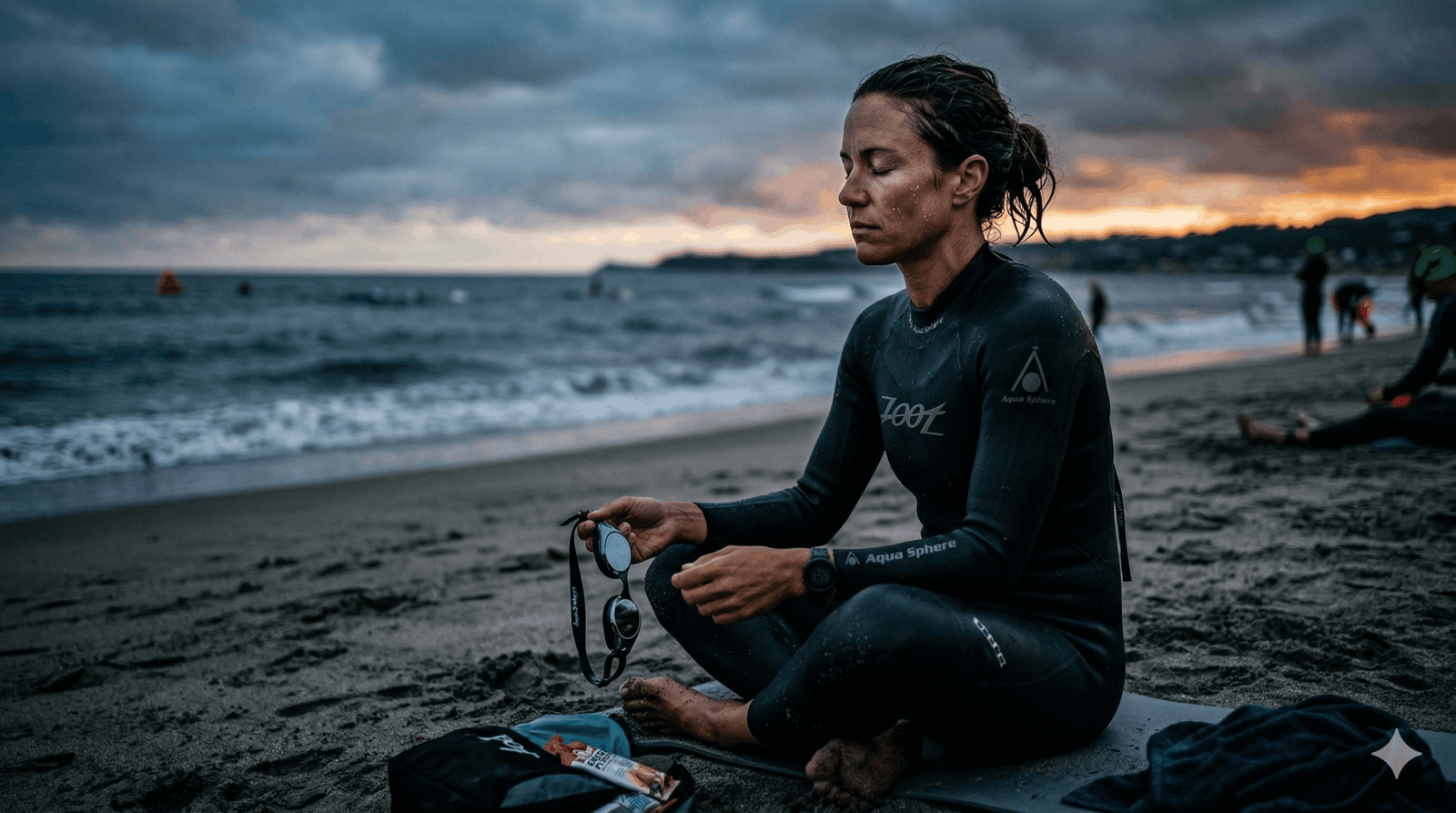
Open water swimming can feel unpredictable. Unlike pool swimming, you may deal with cold water, limited visibility, other swimmers around you, waves, currents, buoys, and a start line full of adrenaline.
Nervousness does not mean you are unprepared. It usually means your body is responding to uncertainty. The goal is not to eliminate nerves completely. The goal is to turn them into manageable energy.
| Common Trigger | What It Feels Like | What Helps |
|---|---|---|
| Cold water | Breath catches, chest feels tight, body tenses | Gradual water entry and slow exhales |
| Crowded start | Fear of contact, splashing, or losing space | Start to the side or slightly behind the main pack |
| Deep or dark water | Feeling exposed or disoriented | Focus on breathing rhythm and the next buoy |
| Foggy or leaking goggles | Loss of confidence and poor sighting | Test goggles early and bring a backup pair |
| Race pressure | Rushing, overthinking, starting too fast | Use a short race-morning checklist and controlled start |
A Simple Calm-Down Plan Before the Swim
You do not need a complicated mental routine. A simple, repeatable plan works best because it gives your brain something familiar to follow when the race environment feels busy.
Use this 5-step pre-swim plan:
- Check your goggles, cap, timing chip, and wetsuit fit.
- Look at the course and identify the first buoy or sighting target.
- Enter the water gradually if the event allows warm-up.
- Take 5–10 slow breaths with longer exhales.
- Start the swim at a controlled pace for the first few minutes.
Race Week Preparation for a Calmer Start
Race-day nerves are easier to manage when fewer things are uncertain. The week before your event is the time to check gear, confirm logistics, and practice your routine.
Practice in Similar Conditions
If possible, do at least one swim in similar light, water temperature, goggles, wetsuit, and pacing conditions before race day.
Test Your Goggles
Make sure your goggles do not leak, fog quickly, or feel painful under your swim cap. Never save a brand-new pair for race morning.
Know the Course
Review the swim map, buoy turns, exit location, water start type, and whether the start is rolling, wave-based, or mass start.
Prepare a Backup Pair
Bring a second pair of tested goggles with a different lens tint in case the light is darker or brighter than expected.
If you are preparing for a long triathlon swim, see our guide to the best swim goggles for Ironman races.
Race Morning Routine
Race morning can feel chaotic. A short routine helps you avoid rushing, forgetting gear, or making last-minute changes that increase anxiety.
| Time | What to Do | Why It Helps |
|---|---|---|
| Before leaving | Check goggles, cap, wetsuit, timing chip, towel, nutrition | Reduces last-minute panic |
| At the venue | Find swim start, exit, gear area, toilets, and warm-up space | Makes the race environment feel familiar |
| 30–45 minutes before | Put on wetsuit gradually and check comfort | Prevents rushed gear adjustment |
| 15–20 minutes before | Warm up lightly and review first buoy target | Creates focus and direction |
| Final 5 minutes | Use slow breathing and keep thoughts simple | Controls adrenaline before the start |
Breathing Drills Before the Swim Start
Nervous swimmers often breathe too fast or hold their breath without realizing it. Simple breathing drills can help you relax your shoulders, control your pace, and enter the water with a calmer rhythm.
Long Exhale Breathing
This is the easiest drill to use before a race because it does not require counting perfectly.
- Inhale comfortably through the nose or mouth.
- Exhale slowly for 6–8 seconds.
- Relax your jaw and shoulders.
- Repeat for 1–3 minutes before the start.
Box Breathing
This drill works well when you feel mentally scattered before the race.
- Inhale for 4 seconds.
- Hold for 4 seconds.
- Exhale for 4 seconds.
- Hold for 4 seconds.
How Goggles Affect Pre-Race Confidence
Goggles may seem like a small detail, but they can strongly affect confidence. Fogging, leaking, painful pressure, or the wrong lens tint can make a nervous swimmer feel less in control.
A reliable pair of goggles helps you sight buoys, see other swimmers, and avoid stopping to adjust your gear. For open-water beginners, this can make the swim feel much less stressful.
If Fogging Makes You Anxious
Choose goggles with stronger anti-fog performance and avoid touching the inside of the lens before the race.
If Sighting Worries You
Choose wide-view goggles that make it easier to see buoys, shorelines, and nearby swimmers.
If Bright Sun Bothers You
Polarized or mirrored goggles can help reduce glare from the water surface during sunny swims.
If You Are New to Open Water
Beginner-friendly goggles should be comfortable, easy to adjust, and wide enough to support confident sighting.
What to Do If Anxiety Hits in the Water
Sometimes nerves do not disappear after the start. If anxiety hits during the swim, the goal is to slow the situation down and regain control step by step.
If you feel panic or rising anxiety:
- Slow your stroke rate instead of fighting the water.
- Exhale fully into the water to avoid breath-holding.
- Switch to breaststroke or easy backstroke if the event allows and you need to reset.
- Move to the side of the group if crowded water is the trigger.
- Pick the next buoy or landmark instead of thinking about the whole distance.
- Remind yourself that a slower start is better than a panicked start.
Beginner-Friendly Open Water Confidence Checklist
Beginners often feel nervous because open water has more unknowns than a pool. This checklist helps reduce those unknowns before your event or first group swim.
| Before the Swim | Why It Helps |
|---|---|
| Swim with a group, coach, or organized event | Improves safety and confidence |
| Practice in shallow or calm open water first | Builds familiarity gradually |
| Use tested goggles and a backup pair | Reduces gear-related stress |
| Know the course or swim area | Reduces uncertainty |
| Practice sighting before race day | Helps you stay on course |
| Start away from the most crowded line | Reduces contact and early panic |
New to open water? Start with our guide to the best open water swimming goggles for beginners.
Common Mistakes That Make Nerves Worse
Starting Too Fast
A fast start can spike breathing and make the swim feel harder than it needs to. Start smooth and build after you settle.
Trying New Gear on Race Day
New goggles, a new wetsuit, or a new cap setup can create unexpected problems. Test everything before race morning.
Standing Too Long in the Crowd
If crowds make you anxious, position yourself calmly and avoid getting trapped in the most intense start area.
Ignoring the First Buoy
Know your first sighting target before the gun starts. Uncertainty in the first minute often increases nerves.
Gear That Can Reduce Race-Day Stress
Gear cannot remove nerves completely, but reliable gear can reduce unnecessary stress. The most important item is a tested pair of goggles that works in your race conditions.
Anti-Fog Goggles
Better lens clarity can make sighting easier and reduce the urge to stop and adjust.
Clear or Light-Tint Backup Pair
A backup pair helps if your main goggles are too dark for early morning or cloudy race conditions.
Swim Buoy for Training
For training swims, a swim buoy can improve visibility and provide storage. It is not a replacement for proper safety planning.
Swim Tracking App
Tracking your progress in training can make race day feel more familiar and less uncertain.
Frequently Asked Questions
Is it normal to feel nervous before an open water swim?
Yes. Open water swimming can feel unpredictable because of cold water, deep water, crowds, waves, and race pressure. Pre-race nerves are common for beginners and experienced swimmers.
How do I stop panicking during an open water swim?
Slow down, focus on exhaling fully, switch to an easier stroke if allowed, move to the side of the group, and focus on the next buoy or landmark instead of the whole distance.
Should I start at the back if I am nervous?
Starting slightly to the side or behind the main pack can help reduce contact and give you more space. This is often a good choice for beginners or anxious swimmers.
Can goggles help with open water anxiety?
Good goggles can help by improving visibility, reducing fogging, and making sighting easier. They will not remove all nerves, but reliable gear can reduce unnecessary stress.
What breathing technique helps before a race?
Long exhale breathing is simple and effective. Inhale comfortably, then exhale slowly for 6–8 seconds while relaxing your shoulders and jaw.
Should I do a warm-up before an open water race?
If the event allows it, a gentle warm-up can help your body adjust to the water and reduce the shock of the start. Keep it easy and controlled.
Final Verdict
Pre-race nerves before open water swimming are normal. The goal is not to eliminate every nervous feeling, but to build a routine that helps you feel prepared, calm, and in control.
Prepare your gear, test your goggles, know the course, breathe slowly, start smooth, and give yourself permission to settle into the swim gradually. A calm start is often faster and safer than a rushed one.
Next Step
If fogging, leaking, or poor visibility adds to your race nerves, start by choosing goggles that fit your swim conditions.