Open water swimming is fiercely unpredictable. Whether you are facing the freezing temperatures of a coastal trek, diving into deep lakes and quarries, or battling the chop of an ocean swim, your environment is constantly changing.
For triathletes, one of the biggest challenges—and a major source of pre-race nerves—is visibility. You have spent months dialing in your stroke, building your physical endurance, and practicing visualization for your big race. But all that mental training can be derailed if you cannot sight the next buoy because of blinding sun glare or foggy lenses.
When upgrading your gear, you will face the ultimate debate: Photochromic vs Polarized swim goggles. Both are premium technologies, but they serve very different purposes. In this guide, our gear analyst Marcus Vane breaks down the lens science, compares them head-to-head, and helps you choose the perfect pair so you can focus on your swim, your way.
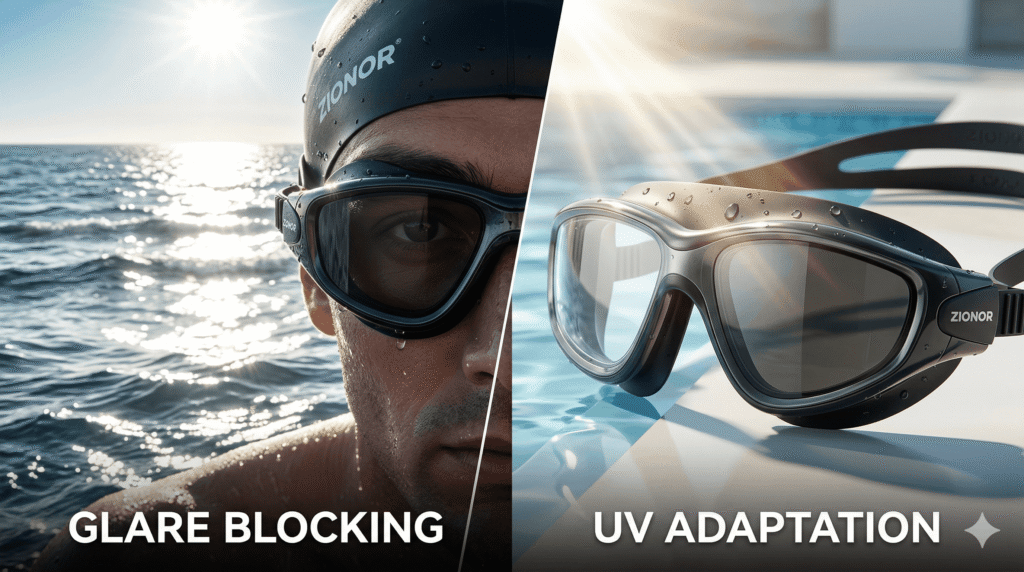
The Science of Polarized Swim Goggles
If you have ever driven a car at sunset, you know how blinding the glare off the road can be. The same thing happens on the water.
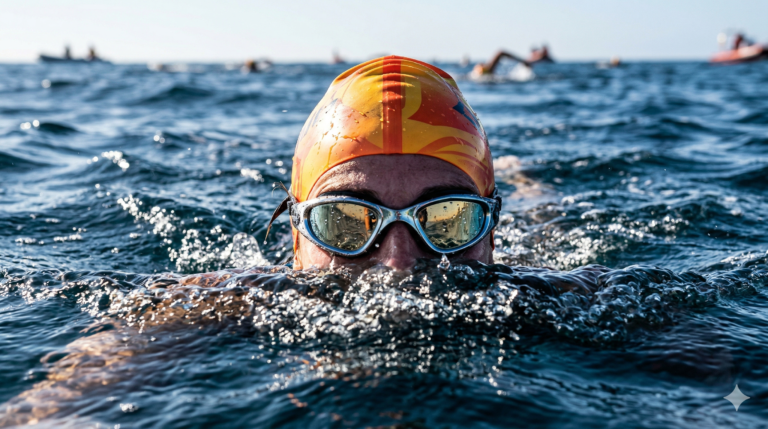
How they work: Polarized lenses are treated with a special chemical filter that actively blocks horizontal light waves. When sunlight bounces off the surface of a lake or ocean, it creates a harsh, horizontal glare. Polarized goggles completely neutralize this glare, allowing you to see past the reflection and reducing massive eye fatigue.
Best used for:
- Mid-day ocean swimming when the sun is directly overhead.
- Triathlons where you must sight buoys while swimming directly into the sun.
- Swimmers who suffer from light sensitivity or headaches after long outdoor sessions.
The Magic of Photochromic Swim Goggles
Photochromic lenses (often called transition lenses) are the chameleons of the swimming world. They are designed to adapt to your environment.
How they work: These lenses contain special molecules that react to ultraviolet (UV) light. When you are in the dark or indoors, the lenses remain completely clear. But the moment you step outside and are exposed to UV rays, the lenses automatically darken to protect your eyes. When the sun goes behind a cloud, they lighten up again.
Best used for:
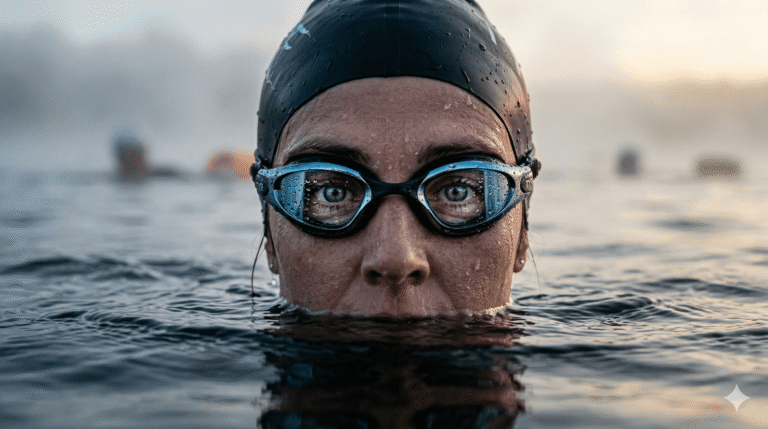
- “Dawn patrol” swims where you start in the dark and finish after the sun rises.
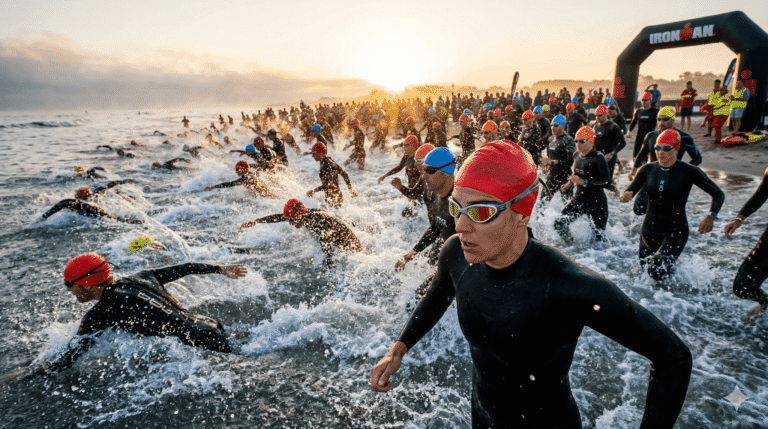
- Ironman races with early morning mass starts.
- Swimmers who train indoors during the week but race outdoors on the weekends, allowing them to use one single pair of goggles for both.
Head-to-Head Comparison: Which Should You Buy?
To help you make the best choice, we put these technologies through our rigorous 60-minute endurance testing in real open-water lakes. Here is how they stack up:
1. Sighting Buoys in Harsh Glare
- Winner: Polarized. While photochromic lenses darken to make bright light comfortable, they do not filter out the specific horizontal glare bouncing off the waves. If you are swimming in an ocean with heavy sun reflection, polarized lenses are the only way to get crystal-clear buoy sighting.
2. Versatility in Changing Weather
- Winner: Photochromic. If you dive into a lake at 5:30 AM, polarized lenses will be dangerously dark. Photochromic lenses give you perfect clear vision in the dark and seamlessly transition to tinted lenses as the sun comes up. They are the ultimate “set it and forget it” gear.
3. Indoor Pool to Open Water Transition
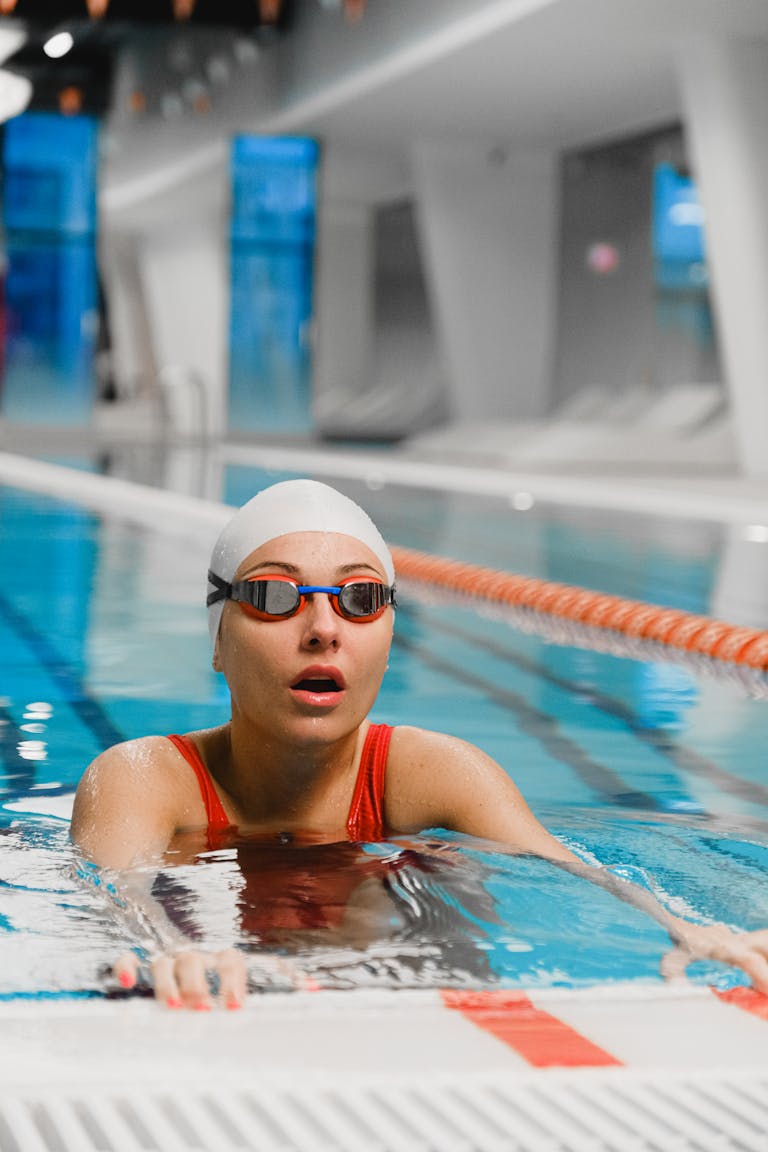
- Winner: Photochromic. Polarized lenses are generally too dark for poorly lit indoor pools. Photochromic goggles remain 100% clear indoors, making them the best two-in-one investment for year-round training.
Top 2026 Gear Recommendations for Open Water
Whether you choose polarized or photochromic, investing in high-quality gear is essential. Here are our top-tested picks for your next race:
- For Custom Fit (Say Goodbye to Leaks): Look into the Magic5 Custom Goggle. These are 3D-scanned via an app to fit the exact contours of your face, meaning you can get either polarized or mirrored options without ever worrying about goggle marks or leaks again.
- For Anti-Fog Reliability: Fog is the enemy of visibility. The Arena Cobra Ultra Mirror Swipe features revolutionary Swipe technology. If they start to fog, you simply swipe the inside of the lens with your finger to reactivate the coating, which lasts 10x longer than standard models.
- For the Tech-Obsessed: If you want data, the FORM Smart Swim 2 is a game-changer. It features a built-in heart rate monitor and an augmented reality (AR) display that projects your stroke rate and pacing directly into your line of sight.
The Mental Edge: Gear and Pre-Race Nerves
As elite coaches point out, mental training is one of the most powerful tools in a swimmer’s arsenal, yet it is often the most neglected. When you stand at the edge of the water, understanding the risks of cold water and hypothermia is stressful enough. You need to focus on the subtle art of warming up and executing your race plan.
Struggling with pre-race nerves is completely normal. However, true confidence comes from eliminating variables. When you equip yourself with the right photochromic or polarized lenses, you remove the anxiety of “What if I can’t see the buoy?” or “What if the sun blinds me?”. Trusting your gear allows you to properly channel your pre-race nerves into explosive speed, helping you set goals that drive real performance.
The Final Verdict
If you exclusively swim outdoors in bright, sunny conditions, Polarized swim goggles are your ultimate weapon against glare and eye fatigue.
However, if you are an early riser tackling dawn patrols, or a triathlete who trains indoors and races outdoors, Photochromic swim goggles offer unmatched versatility.
Ready to upgrade your vision? Check out our massive guide on the Best Polarized Goggles for Open Water Swimming to see our top 10 ranked picks for this year!